With tariffs and regulations accelerating, companies are turning to intelligent classification and ESG‑aligned supplier data to stay ahead.
← Blog home
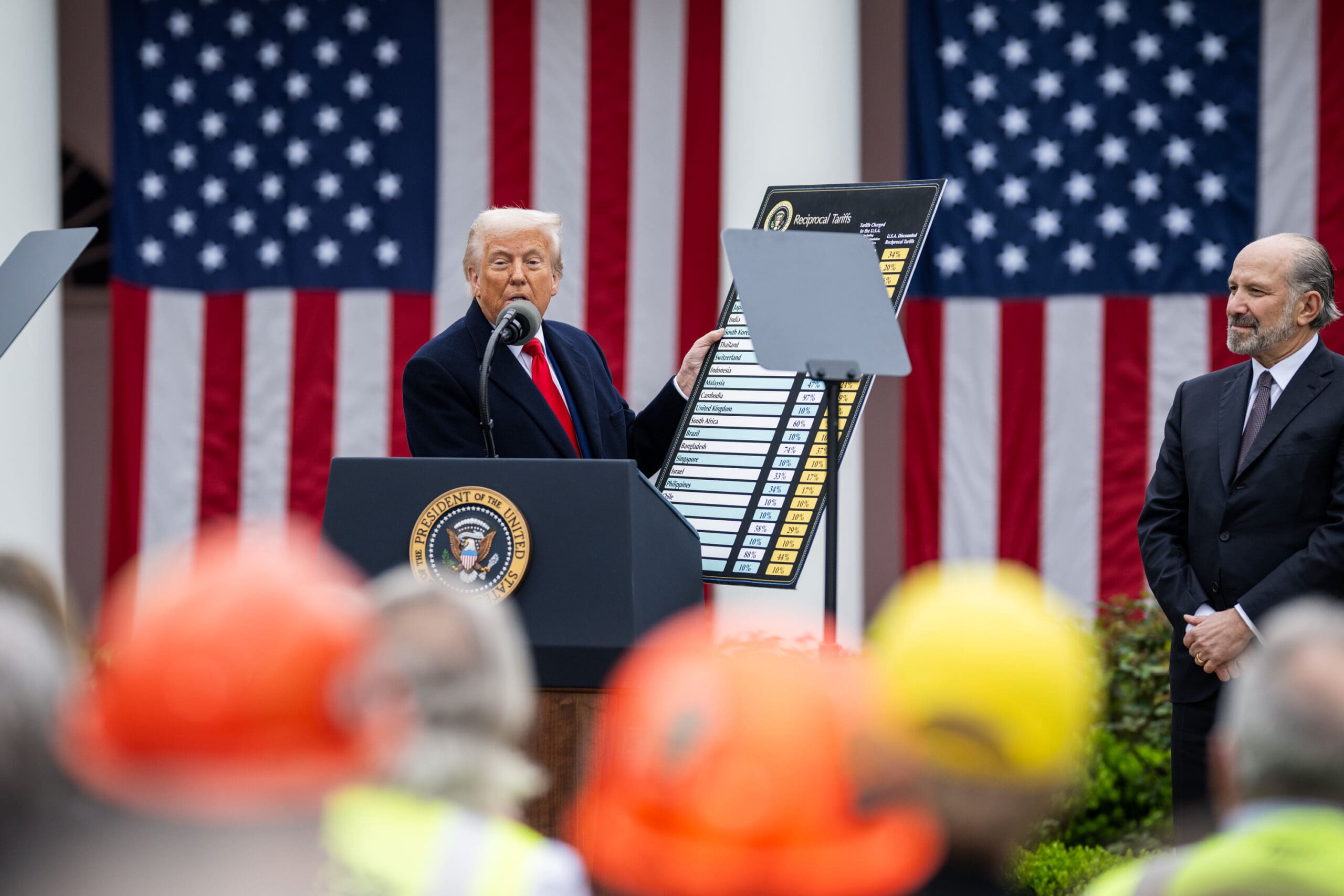
We’re navigating what many consider the most complex trade environment in decades. The convergence of tariff volatility, regulatory shifts, and supply chain disruptions isn’t just creating operational headaches — it’s fundamentally reshaping how we approach global business strategy.
Two important areas have become central to improving business operations: supply chain due diligence and environmental, social, and governance (ESG) integration. These aren’t separate initiatives competing for resources — they’re interconnected capabilities that, when properly aligned with intelligent technology, create competitive advantage in an uncertain world.
Jump to ↓
Due diligence evolution: From compliance to strategy
Supply chain due diligence has evolved from a compliance checkbox into a strategic differentiator. We’re seeing organizations transform how they view their trading networks—not merely as operational necessities, but as strategic assets that can make or break business success.
The current trade landscape is structurally different from previous cycles. With trade professionals increasingly viewing tariff volatility as a permanent fixture rather than a temporary disruption, businesses can no longer treat supply chain challenges as obstacles to be weathered. Instead, they’re building capabilities designed for sustained volatility.
This shift is evident in how companies are responding to current pressures. Many organizations are absorbing tariff-related costs rather than passing them to customers — a strategic decision that makes operational efficiency and supplier relationships even more critical. The reluctance to raise prices suggests that competitive dynamics are limiting pricing power, elevating the importance of smart sourcing strategies.
The operational reality is becoming more complex. Documentation requirements have grown in volume and sophistication, while customs authorities are conducting more frequent inspections.
REAL-WORLD INSIGHT:
“Project schedules are [being] impacted by the complexity and delays in regulatory compliance and customs clearance.”
— 2026 Global Trade Report survey respondent
At the foundation of effective due diligence lies accurate product classification — a process that has traditionally consumed significant resources while remaining error-prone and inefficient. Classification teams often rely on manual processes, making their work vulnerable to errors that cascade throughout supply chain operations. With thousands of codes, complex descriptions, and millions of annual modifications to global tariff databases, the complexity overwhelms traditional approaches.
Organizations with robust due diligence capabilities are demonstrating clear advantages. They respond more quickly to regulatory changes, maintain compliance across multiple jurisdictions, and identify alternative sourcing options before disruptions threaten operations. Most importantly, they’re turning compliance into a competitive moat.
ESG supply chain integration: Strategic priority, practical challenge
While immediate tariff concerns dominate daily priorities, ESG considerations remain essential for long-term resilience and stakeholder expectations. The question isn’t whether to integrate ESG into supply chain strategy — it’s how to do it effectively while managing competing pressures.
Why is ESG integration so important?
ESG integration addresses several critical business needs that extend far beyond sustainability reporting. Companies with strong ESG standards are better protected against reputational damage and regulatory penalties. They often achieve stronger relationships with customers and investors who value sustainability commitments. Perhaps most importantly, they’re building supply chains designed to withstand environmental and social disruptions that increasingly threaten global operations.
The challenge of ESG execution
We’re seeing companies simultaneously manage tariff mitigation, regulatory compliance, cost pressures, and ESG commitments — often with limited resources and competing priorities. Several factors make this particularly complex:
Data collection across supplier tiers requires significant technology infrastructure and relationship management
Competing priorities emerge when organizations face immediate operational pressures
Supplier relationship changes driven by tariff considerations can complicate established ESG programs
Regulatory divergence across jurisdictions creates compliance complexity
One respondent to the 2026 Global Trade Report survey highlighted a common tension: “Tariffs make it difficult to maintain product quality when using alternate suppliers.” This observation underscores how cost-driven supplier changes can create conflicts between financial pressures and ESG standards.
Despite these challenges, maintaining ESG focus remains crucial. Organizations that successfully balance immediate operational needs with long-term ESG commitments are positioning themselves for sustained success.
The key to resolving this tension lies in recognizing that many ESG integration challenges stem from the same foundational issue affecting due diligence: the complexity of managing vast amounts of supply chain data with traditional manual processes. When organizations struggle to track supplier performance across ESG metrics, or find it difficult to maintain sustainability standards while managing tariff-driven supplier changes, they’re often confronting data management and classification challenges that technology can address.
This is where AI-powered classification becomes transformational — not just for operational efficiency, but as the strategic foundation that makes integrated due diligence and ESG management practical and scalable.
The technology foundation for ESG supply chain management
The acceleration in AI technology adoption represents one of the most significant shifts in how organizations approach supply chain management. We’re seeing dramatic increases in companies exploring AI solutions to manage trade functions — not as experimental initiatives, but as operational necessities that directly enable both due diligence and ESG objectives.
For example, ONESOURCE Global Classification AI intelligently suggests HS codes based on an engine that continuously learns from user decisions, improving accuracy and relevance over time. Multiple intelligent classification suggestions come with confidence scores, enabling experts to make informed decisions quickly. The system provides automated compliance management with batch processing capabilities and generates audit-ready rationales for expert review.
Key capabilities transforming classification workflows include:
Advanced AI predictions based on previous classifications and similar products, incorporating feedback mechanisms to continually refine and improve the model
Custom rules that allow users to define specific parameters reflecting their unique naming conventions and product characteristics
Batch processing for classifying multiple entries simultaneously — crucial for organizations with extensive inventories or those updating classifications in response to code changes
Correlation tables that enable reconciliation of expired HS codes to new, replacement, or split codes
Enhanced research capabilities with instant access to global trade data from 220+ countries, optimized with contextual formatting and same-day updates
The impact on operational efficiency is substantial. By eliminating manual classification busywork, these types of tools enable expert professionals to focus on the most impactful decisions. Organizations can process classifications more quickly and with greater accuracy, achieving more consistent HS classifications in a single source of truth while maintaining more accurate product descriptions.
This technology directly supports ESG objectives by enabling better supplier visibility and compliance tracking. Accurate classification is essential for monitoring supply chain ESG performance, as it provides the foundation for tracking products through complex global networks and ensuring compliance with sustainability standards across multiple jurisdictions.
How AI-powered classification creates competitive ESG advantage
Perhaps the most significant development is how leading organizations are integrating AI-powered classification with broader due diligence and ESG strategies. We’re seeing trade professionals gain increased influence at the executive level, with enhanced involvement in procurement decisions and strategic planning.
This integration creates unprecedented opportunities to embed due diligence and ESG considerations into organizational strategy. Trade professionals are increasingly positioned to advocate for technology investments, establish cross-functional collaboration frameworks, and influence supplier selection criteria that balance cost, risk, compliance, and ESG factors.
The most successful organizations are building capabilities that:
Leverage intelligent classification as the foundation for comprehensive supply chain visibility and risk management
Enable real-time monitoring for regulatory changes, tariff updates, and ESG requirements across all markets and supplier relationships
Support scenario planning that accounts for both immediate disruptions and long-term sustainability goals
Create structured forums that bring together trade, finance, operations, compliance, and sustainability teams for regular coordination
Organizations implementing AI-powered classification report significant improvements in their ability to maintain ESG standards while managing operational pressures. The enhanced data accuracy and processing speed enable them to track supplier performance across multiple dimensions, identify potential risks before they become problems, and make informed decisions that support both immediate business needs and long-term sustainability commitments.
How to build integrated ESG resilience in your supply chain
Organizations that will thrive are those recognizing supply chain management as a strategic function requiring integrated approaches to due diligence, ESG, and intelligent technology.
Consider these strategic approaches:
Establish intelligent classification capabilities that provide real-time monitoring for regulatory changes, tariff updates, and ESG requirements across all markets and supplier relationships, using AI to eliminate manual processes while maintaining expert oversight.
Formalize cross-functional collaboration through structured trade risk councils that enable regular coordination between departments and align operational decisions with strategic objectives, leveraging enhanced data accuracy to support informed decision-making.
Build adaptive planning capabilities that account for sustained volatility rather than hoping for a return to stability, using AI-enhanced classification and scenario modeling to enable faster, more informed responses to market changes.
The path forward for supply chain professionals
The convergence of regulatory complexity, ESG requirements, and operational pressures demands a fundamentally different approach to global trade management. Organizations can no longer rely on manual processes or fragmented systems to navigate this landscape effectively. The path forward requires embracing AI-powered solutions that transform foundational processes like product classification from operational bottlenecks into strategic enablers.
Ready to transform your classification process?
The question isn’t whether AI will reshape global trade operations—it’s whether your organization will lead this transformation or struggle to catch up. ONESOURCE Global Classification AI offers the opportunity to turn one of trade’s most complex challenges into a strategic advantage, freeing your experts to focus on high-value decisions while ensuring the accuracy and consistency your business demands.
Discover how ONESOURCE Global Classification AI can transform your organization’s trade operations →