Key Takeaways:
The tax treatment of stock options depends on their type. Incentive Stock Options (ISOs) may qualify for long-term capital gains tax, while Non-Qualified Stock Options (NSOs) are taxed as ordinary income at exercise.
Timing matters for taxation. You generally owe taxes when you exercise NSOs or when you sell shares from ISOs, depending on whether holding requirements are met.
Proper documentation prevents double taxation. Report NSO income on your W-2 and adjust your cost basis on Form 8949 and Schedule D to avoid paying tax twice on the same income
ISOs can trigger Alternative Minimum Tax (AMT). The spread between the strike price and fair market value at exercise counts as an AMT adjustment, which can affect your total tax owed.
Multiple IRS forms are required. Form W-2, Form 3921, Form 1099-B, Form 8949, and Schedule D are key for reporting grants, exercises, and sales correctly.
Strategic planning reduces taxes. Timing exercises during lower-income years, managing AMT exposure, and holding shares long enough for long-term gains can help minimize your tax burden.
If your employer offers stock options as part of your compensation, you could have a powerful opportunity to build wealth, but also a complex tax situation to navigate. Whether you hold Incentive Stock Options (ISOs) or Non-Qualified Stock Options (NSOs), understanding how to report stock options on your tax return is crucial to avoid costly errors and IRS scrutiny. The tax treatment depends not only on the type of option you receive but also when and how you exercise and sell your shares.
This comprehensive guide explains how employer stock options are taxed, what forms you’ll need, how to correctly report your transactions, and strategies to minimize your overall tax burden.
Understanding Employer Stock Options
Stock options are a form of equity compensation designed to reward employees for contributing to a company’s long-term success. They give you the right, but not the obligation, to buy shares of company stock at a fixed “strike” or “exercise” price, typically set at the market price when the options are granted.
Understanding how stock options work, and the type you have, is the foundation for reporting them accurately on your tax return.
What Are Employee Stock Options?
Employee stock options (ESOs) give you the potential to benefit from your company’s growth. If your employer’s stock value increases over time, you can buy shares at the lower strike price and either hold or sell them for a profit.
For example, imagine you are granted 1,000 stock options at a strike price of $20 per share. If the stock price rises to $50, exercising your options allows you to purchase the shares at $20, realizing a paper gain of $30 per share. If you later sell at $50, you could earn $30,000 in profit before taxes.
Stock options are not actual shares until you exercise them, which means they usually don’t entitle you to dividends or voting rights until after exercise.
Types of Employee Stock Options
Not all stock options are treated equally in the eyes of the IRS. The two main types, Incentive Stock Options (ISOs) and Non-Qualified Stock Options (NSOs), differ significantly in terms of tax reporting and timing.
Incentive Stock Options (ISOs)
ISOs are typically offered only to employees and carry special tax advantages if certain conditions are met. When you exercise ISOs, you do not owe regular income tax right away. However, the spread between the fair market value (FMV) of the stock at the time of exercise and your strike price is considered an Alternative Minimum Tax (AMT) adjustment.
If you hold the shares for at least one year after exercise and two years after the grant date, your profit is treated as a long-term capital gain, which is taxed at a lower rate.
Failing to meet these holding requirements is known as a disqualifying disposition, which may convert some or all of the gain into ordinary income.
Non-Qualified Stock Options (NSOs or NQSOs)
NSOs, by contrast, do not qualify for special tax treatment. When you exercise NSOs, the spread between the strike price and FMV at exercise is treated as ordinary income and is subject to federal income tax, Social Security, and Medicare withholding. In other words, when you use NSOs, the profit you make right away is taxed like regular income, just like your paycheck.
Your employer will report this income on your Form W-2. When you later sell the shares, any additional gain or loss is subject to capital gains tax.
How Stock Options Work: The Life Cycle of a Grant
Each stock option grant typically follows a three-stage process:
Grant Date – The date your employer gives you the option to purchase stock at a set price.
Vesting Period – The period during which you earn the right to exercise your options.
Exercise and Sale – When you buy (exercise) the shares at the strike price and eventually sell them.
You can choose when to exercise your vested options, giving you some control over when taxable events occur. The challenge is balancing potential market gains with timing that minimizes tax impact.
Tax Implications of Employer Stock Options
Understanding when taxes apply is key to avoiding surprises. The IRS taxes stock options at different times depending on the type of option and the timing of exercise and sale.
Understanding the Alternative Minimum Tax
The Alternative Minimum Tax (AMT) is a separate tax system designed to ensure that people with higher incomes pay at least a minimum amount of tax, even if they have deductions or credits that reduce their regular tax. It works by recalculating your income and adding certain items back in (like the spread on incentive stock options (ISOs) when you exercise them) then comparing this amount to your regular tax.
You pay whichever is higher. This means that exercising ISOs can trigger AMT because the unrealized gain is added to your income for AMT purposes. This potentially creates a tax bill before you’ve even sold the shares or received any profits. Essentially, AMT ensures that you don’t get to defer taxes entirely just by holding onto profitable stock options.
Suppose you exercise ISOs and the spread between your strike price and the market value is $50,000. Even if you don’t sell the shares, that $50,000 counts as income for AMT purposes, which could trigger extra tax you have to pay that year. However, you may receive a credit for AMT paid in later years when your regular tax bill exceeds your AMT liability. This AMT credit can be carried forward indefinitely and is tracked on Form 8801. Keep in mind that the credit can only reduce your regular tax down to your AMT amount in any given year; it cannot reduce your total tax below the AMT floor.
When You Receive Stock Options
Receiving stock options alone typically doesn’t trigger a tax event. The grant itself is not considered taxable income because it’s merely the promise of potential future ownership.
For example, say you’re granted 1,000 NSOs with a strike price of $10 when the FMV is also $10. No tax is owed at grant. Taxes arise when you exercise or sell the shares.
Exercising Your Options
This is when tax implications start to take shape.
Exercising Incentive Stock Options (ISOs)
Exercising ISOs does not trigger ordinary income tax, but it can increase your Alternative Minimum Tax (AMT) liability. The AMT system was designed to ensure high-income earners pay a minimum level of tax, and the spread between the stock’s FMV at exercise and your strike price counts as an AMT adjustment.
For example, if you exercise 100 ISOs with a strike price of $20 when the stock’s FMV is $50, you have a $3,000 spread ($30 × 100 shares). That $3,000 could push you into AMT territory, even though you haven’t sold the stock yet.
If you later sell the stock after meeting holding requirements, your gain will qualify for long-term capital gains tax rates. If you sell before those requirements are met, part of the gain is taxed as ordinary income, a disqualifying disposition.
Exercising Non-Qualified Stock Options (NSOs)
When you exercise NSOs, the spread between the FMV at exercise and your strike price is taxed as ordinary income and reported on your W-2. You’ll also owe payroll taxes.
Continuing the example, let’s say your strike price is $20, the fair market value (FMV) at the time of exercise is $50, and you hold 100 shares. In this case, you would owe ordinary income tax on the difference between the FMV and the strike price, known as the spread. Here, the spread is $30 per share ($50 – $20), multiplied by 100 shares, resulting in $3,000 of taxable income. This amount is typically reported as compensation income on your W-2 and is subject to both income tax and payroll taxes, just like your regular wages.
Later, when you sell the shares, the difference between your sale price and FMV at exercise becomes a capital gain or loss.
Selling Your Stock
When you sell shares acquired from exercising stock options, you’ll need to determine whether your gains are short-term or long-term.
Short-term capital gains: Stock sold within one year of exercise is taxed at ordinary income rates.
Long-term capital gains: Stock sold after one year is taxed at favorable long-term capital gains rates (often 0%, 15%, or 20%, depending on your income).
Let’s look at an example. You exercise ISOs at $10 and sell after two years at $50. The $40 gain per share qualifies for long-term capital gains rates. If you sold after only six months, the $40 gain would be split between ordinary income and short-term capital gain.
Open Market vs. Cashless Exercises
Employers may allow you to sell shares immediately upon exercise (a cashless exercise) or hold them.
Cashless Exercise: You simultaneously exercise and sell shares. For NSOs, this creates immediate taxable income on the spread.
Sell-to-Cover: You sell enough shares to cover the exercise cost and taxes but keep the rest.
Hold and Sell Later: You buy the shares and keep them, which may delay capital gains taxes but can increase risk if the stock price falls.
Each approach affects your tax timing and reporting differently, so it’s essential to keep detailed records of FMVs, sale prices, and exercise dates.
Reporting Employer Stock Options on Your Tax Return
Reporting stock options correctly is critical for compliance. The IRS requires detailed reporting of income, gains, and cost basis to ensure you don’t overpay, or underreport, taxes.
Forms You’ll Need
You may need several IRS forms when reporting stock options:
Form W-2 – Reports income from NSO exercises and any withholding.
Form 3921 – Provided by your employer if you exercised ISOs, showing grant date, exercise date, strike price, and FMV.
Form 1099-B – Issued by your broker when you sell shares, showing proceeds and sale date.
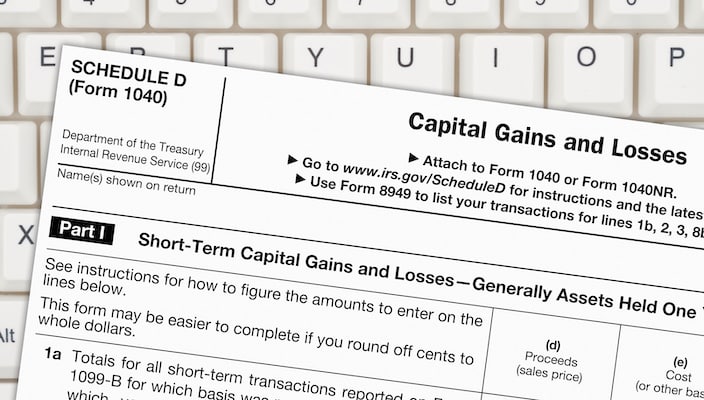
Form 8949 and Schedule D – Used to calculate and report capital gains and losses.
Form 6251 – Used if you need to calculate or pay Alternative Minimum Tax due to ISO exercise.
Keeping these forms organized is vital to avoid double taxation, particularly when adjusting cost basis for shares sold.
Step-by-Step Reporting Process
Check Your W-2: If you exercised NSOs, confirm that the spread between strike price and FMV is included as taxable income.
Adjust Cost Basis: When reporting the sale of NSO stock, adjust your cost basis to include the income already reported on your W-2. This prevents double taxation on the same income.
Report ISO Exercises: ISO exercises generally aren’t reported as regular income but may require an AMT adjustment using Form 6251.
Report Stock Sales on Form 8949: Use Form 8949 to report proceeds, sale dates, cost basis, and resulting gains or losses. Summarize totals on Schedule D.
Handle Disqualifying Dispositions: If you sell ISO shares before meeting holding requirements, report the income portion as ordinary income on your return.
For example, let’s say you exercised NSOs with a $5,000 spread reported on your W-2. You later sold those shares for a $7,000 total gain. Your capital gains are $2,000 ($7,000 – $5,000 previously reported as income).
Common Errors When Reporting Stock Options
Even experienced taxpayers make mistakes when reporting stock options. Common errors include:
Failing to report W-2 income from NSO exercises.
Using incorrect cost basis, leading to double taxation.
Neglecting AMT implications after ISO exercise.
Forgetting to report a disqualifying disposition of ISO shares.
Misreporting the sale date or FMV.
Because stock option reporting often involves multiple forms and dates, even small errors can result in IRS notices or unexpected tax bills.
Advanced Tax Planning Strategies for Stock Options
Stock options present opportunities to manage when and how you recognize income. With thoughtful planning, you can minimize taxes and maximize after-tax returns.
Timing Your Exercise
Consider exercising options in years when your taxable income is lower to reduce marginal tax rates. Alternatively, you can spread out exercises over several years to stay in a lower tax bracket and manage AMT exposure.
For ISOs, early exercise strategies can also help manage future gains, though they involve risk if the company’s stock declines.
Managing the Alternative Minimum Tax (AMT)
If you hold ISOs, evaluate whether exercising a large number of shares will trigger AMT liability. Tools like AMT calculators or professional tax projections can help you plan your exercise schedule strategically.
If you do pay AMT, remember that you may receive a credit for AMT paid in later years when your AMT liability is lower.
Diversification and Risk Management
Holding large amounts of company stock can increase your exposure to company-specific risk. Selling some shares after they qualify for long-term capital gains can help balance your portfolio while still benefiting from lower tax rates.
Working with a Professional
Stock options often intersect with complex areas of the tax code, capital gains, payroll taxes, AMT, and compensation reporting. A qualified CPA or tax advisor experienced in equity compensation can help you design a tax-efficient strategy and ensure accurate reporting.
Employer stock options can be a powerful financial benefit, but they require careful handling when it comes to taxes. Knowing how to report stock options on your tax return, and understanding how ISOs and NSOs differ, can help you avoid overpaying or underreporting.
Frequently Asked Questions: Reporting and Taxing Employee Stock Options
How to record employee stock options? Employee stock options should be recorded by tracking the grant date, vesting schedule, exercise price, and fair market value at exercise and sale. When you exercise or sell shares, report the details on Form W-2, Form 3921, and Form 1099-B, and list capital gains or losses on Schedule D and Form 8949 of your tax return.
Are employee stock options taxable? Yes, employee stock options are taxable, but when and how they’re taxed depends on the type. Non-qualified stock options (NSOs) are taxed as ordinary income at exercise, while incentive stock options (ISOs) may trigger alternative minimum tax (AMT) at exercise and capital gains tax when sold.
Are employee stock options taxed twice? Stock options aren’t taxed twice if properly reported. However, double taxation can occur if you fail to adjust your cost basis after exercising options, especially with NSOs. Ensuring your W-2 income and sale proceeds match correctly helps avoid paying taxes twice on the same income.
How to minimize tax on employee stock options? To minimize taxes, time your exercise and sale strategically, hold ISOs long enough to qualify for favorable long-term capital gains rates, and consider exercising options in lower-income years. Working with a tax professional can help you manage AMT exposure and plan ahead for large exercises.
Do you pay taxes on employee stock options? Yes, you generally pay taxes on employee stock options either when you exercise them (for NSOs) or when you sell the shares (for ISOs). The tax amount depends on the difference between the strike price and the market value at those points.
Can I cash out my employee stock options? You can cash out employee stock options once they’ve vested and been exercised, either by selling shares on the open market or, in some cases, selling them back to your employer. Cashing out triggers tax consequences based on your option type and how long you’ve held the shares.
Tax Help for Stockholders
The key is to stay organized: keep all grant, exercise, and sale records; note FMVs on each relevant date; and review your W-2 and 1099-B carefully before filing. By understanding the timing of taxation, leveraging AMT credits where appropriate, and strategically planning exercises and sales, you can turn your stock options into a well-managed, tax-efficient part of your financial plan. Optima Tax Relief is the nation’s leading tax resolution firm with over a decade of experience helping taxpayers.
If You Need Tax Help, Contact Us Today for a Free Consultation