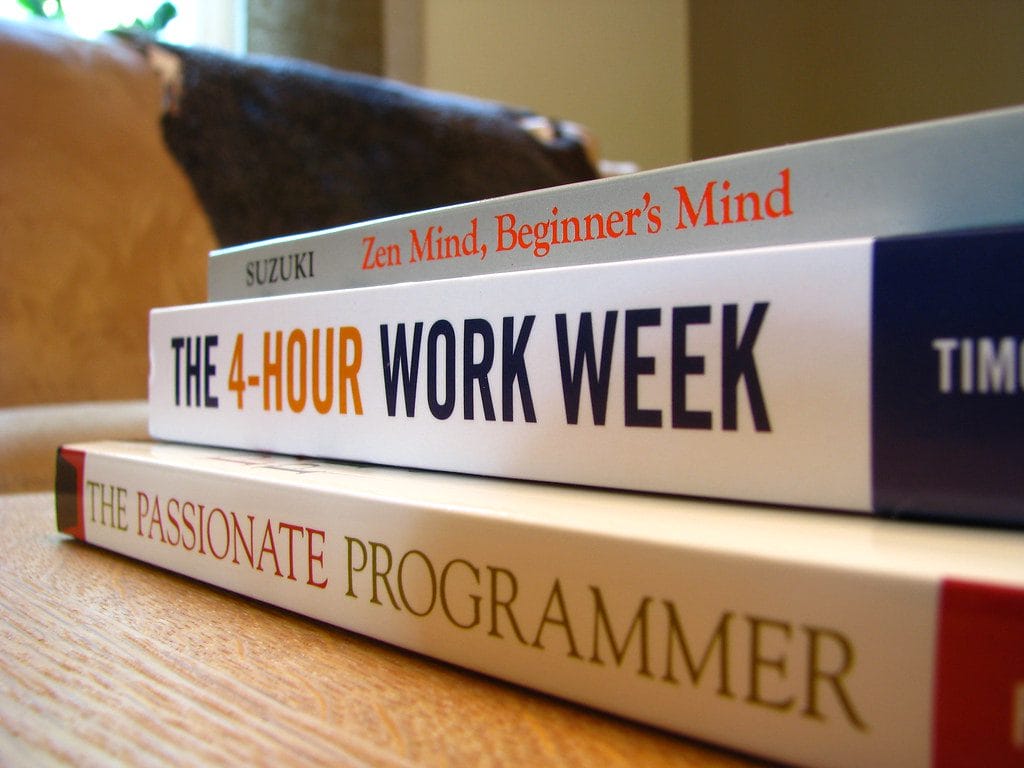
Tim Ferriss’s The 4-Hour Workweek promises a life where you escape the 9-to-5 grind, automate your income, and work just four hours a week while living your dream life.
I’ve read it and tested some of its strategies, and here’s my take: the book delivers genuinely useful advice on automation, cutting busywork, and designing a life you actually want. However, the “four hours” claim is misleading, and some suggestions set unrealistic expectations that could backfire.
The Strategies That Actually Changed How I Work
While the book oversells the “four-hour” idea, it offers several practical concepts that genuinely improved how I approach productivity, automation, and business design. Here are the key strategies that hold up and are aligned with how I teach people to build wealth and live a Rich Life.
The 80/20 rule will save you from drowning in busywork
Ferriss’s fixation on the Pareto Principle—the idea that 80% of your results come from 20% of your effort—is one of the most valuable takeaways from the book. Most of us waste enormous amounts of time responding to every email, attending meetings that don’t matter, and checking off tasks that feel productive but do nothing to move our goals forward.
The 80/20 rule forces you to confront a simple truth: only a small fraction of your efforts actually drive meaningful results. I teach the same approach, especially when it comes to building wealth. Identify the clients who generate most of your revenue, the offers that create real growth, and the tasks that genuinely shift outcomes. Everything else can often be eliminated or delegated, so your limited time and energy can go toward the work that truly counts.
Automation isn’t lazy, it’s how you buy back your time
Another key insight from Ferriss is the power of automation. People often think automation is about avoiding work, but it’s really about eliminating repetitive tasks. When you remove tasks that drain your attention, such as managing bills, filtering emails, and chasing reminders, you free up mental space for decisions that truly require your focus and energy.
This is how I approach my own financial and business systems. My savings, investments, and bill payments operate quietly in the background, growing on their own without repetitive, manual intervention. The same principle applies to business operations: if a task repeats often, it shouldn’t depend on your constant involvement. Through tools, templates, or outsourcing, automation lets you reclaim time and redirect energy toward higher-impact work.
The goal isn’t to escape responsibility, but rather, it’s to stop wasting your cognitive bandwidth on tasks that don’t build your income, skills, or quality of life.
Lifestyle design beats the deferred life plan every time
In this book, Ferriss challenges the default path: Work hard for decades, retire at 65, and only then start enjoying life. The problem with this “deferred life plan” is that it banks on having the health, freedom, and desire to live fully later—none of which are guaranteed.
Instead, he advocates for “mini-retirements”, which refers to taking intentional, extended breaks throughout your life while you’re young enough to experience and enjoy them fully. I completely agree with this approach. Your Rich Life isn’t something to postpone until retirement; it’s something you actively design now through deliberate choices about how you spend your time and money.
Remote work and negotiation give you freedom most people never ask for
Ferriss provides a step-by-step framework for negotiating remote work with your employer, an option most people assume will be denied. His method starts by proving your value, proposing a trial period, and removing any barriers so your employer can confidently say yes. Positioning remote work as a way to boost productivity often surprises people with how receptive employers can be.
The freedom that comes with remote work, whether it’s geographical, financial, or emotional, can dramatically shift how you manage your priorities. It offers you the space to take care of your personal life and still show up fully for your work, often performing even better than when tethered to a traditional office.
Where The Book Oversells
Even with all the solid advice in The 4-Hour Workweek, some concepts sound great in theory but fall short in practice. Ferriss writes with confidence, which makes the book engaging, but he often downplays the effort, experimentation, and persistence his strategies actually require. Here are the areas where the book overpromises and where I have my reservations.
The “four hours” is a fantasy for most people
Let’s be honest: working just four hours per week is unrealistic, especially in the early stages. Building an automated business takes months (or even years!) of effort: creating products, testing marketing channels, hiring and training virtual assistants, and refining systems until they function smoothly.
Ferriss’s own story involves massive upfront work that he downplays. I always advise expecting hard work at the start because setting realistic expectations helps prevent burnout and disappointment when the “easy money” doesn’t materialize after a few weeks.
Outsourcing everything sounds great until you try it
Ferriss emphasizes the benefits of utilizing virtual assistants and delegating mundane tasks, such as booking restaurants or researching products. In theory, this sounds efficient, but most people don’t have enough repetitive work to justify hiring someone, and managing assistants requires time and skill.
Without clear processes and strong communication, you may end up spending more time fixing mistakes than doing the tasks yourself. Outsourcing is most effective once your work is systematized and you have enough repeatable tasks that can be handed off reliably.
“Escape from work” thinking misses the point of meaningful work
The book frames work as something to escape, but for most people, that mindset misses the bigger picture. Yes, leaving a soul-crushing job is important, but the goal isn’t to avoid work entirely; it’s to do work that is meaningful and engaging.
Many successful people I’ve met love what they do and have no desire to work only four hours per week. Building something you care about, solving interesting problems, and contributing value can be deeply satisfying. The real question isn’t “How do I work less?” but “How do I do work I actually enjoy?”
Quick wins and hacks won’t replace sustainable systems
Ferriss emphasizes shortcuts, growth hacks, and clever tactics to achieve fast results, but lasting wealth comes from building reliable, long-term systems. He shares stories of launching products quickly and generating passive income, but glosses over the countless failed experiments and adjustments required to succeed.
I recommend focusing your energy on building one solid income stream–whether it’s a business, a high-value skill, or investments. This approach constantly outperforms chasing multiple “passive income” schemes that may sound exciting but rarely gain traction and can lead to burnout if you’re not genuinely passionate about them.
My Final Take: Does This Book Align With The Rich Life?
Honestly, I do admire Tim Ferriss. He is a Guinness World Record holder in tango, a national kickboxing champion, and built a successful supplement business before writing this book. I’m a fan of his core principle: design your life around freedom and flexibility, not just solely focusing on income.
That said, just like any other book I recommend, some parts don’t sit right with me, especially the overselling of how “easy” it is to automate everything and the escapist view that work is inherently bad. If you’re wondering whether The 4-Hour Workweek aligns with the Rich Life you’re building, most of its principles do, but don’t take the “four hours” literally.
Treat this book as a guide to efficiency, automation, and lifestyle design. Read it, take the ideas that resonate, ignore the hype, and apply what fits your situation. The real value lies in using these concepts to work smarter, live intentionally, and create a life that truly works for you, without expecting instant results.