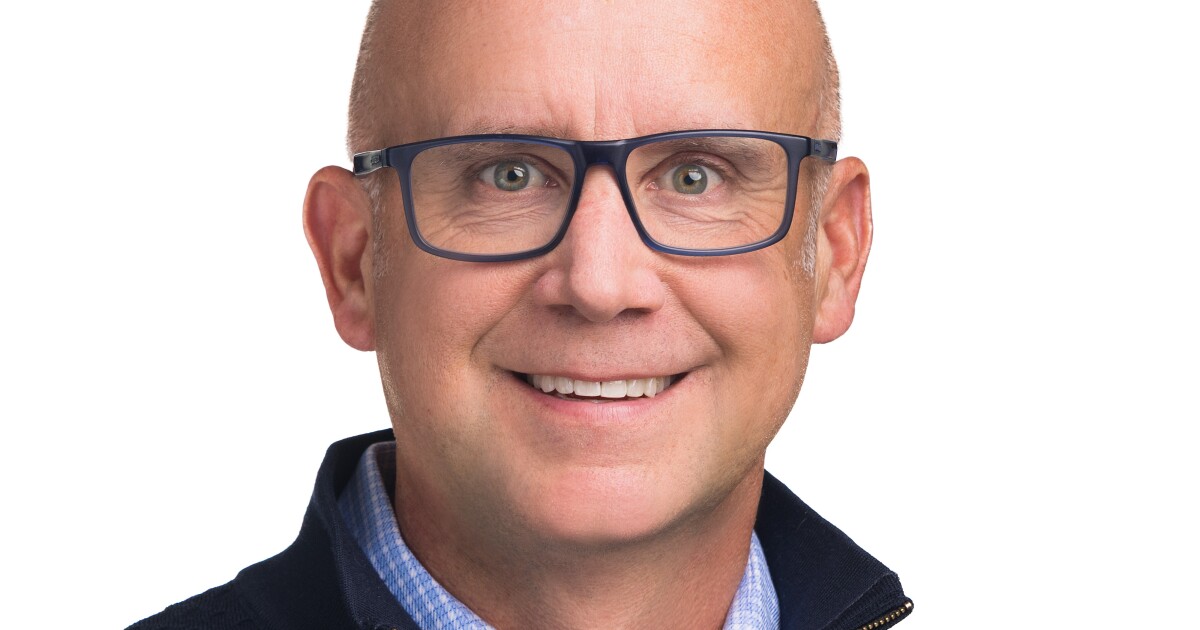
Eric Clarke stepped down as CEO of Orion Advisor Solutions at the end of 2023, but he’s hardly slowed down.
Processing Content
After nearly 25 years building one of the industry’s most influential tech platforms, Clarke has turned his sights on startups developing AI tools for wealth management. He backed Contio, an AI-powered meeting assistant launched in early 2025 by former Nitrogen CEO Aaron Klein, alongside industry heavyweights including Steve Lockshin, Scott Hanson and Ric Edelman. And last October, Clarke co-founded Hamachi.ai, a compliance-focused AI platform now in closed beta that scans and evaluates client communications. The startup was launched by a group of Orion alumni, including Brian McLaughlin, Mike Wilson and Mustapha Baassiri — all leaders from firms Orion had acquired.
Clarke’s post Orion moves are in line with the industry-shaking explosion of AI features increasingly embedded into tech stacks. For advisors, AI is evolving into a crucial but sometimes anxiety-inducing tool.
In a wide-ranging conversation with Financial Planning, Clarke discussed how Hamachi integrates into real-world workflows, why “a human in the loop” is nonnegotiable and how he sees the connection between AI and advisor credibility.
This interview has been lightly edited for clarity and length.
Financial Planning: What progress have you made in the past few months since you first announced Hamachi?
Eric Clarke: It’s been a journey. We have asset managers who have signed up for the beta, and they’re using the technology. We also had dozens of RIA firms that had signed up for the beta as well.
We wanted to make sure that RIAs were also receiving immediate value out of Hamachi and the technology that we are providing to them on the AI front. So we’ve started to integrate Hamachi with the advisors’ existing tech stack, so that in addition to tapping into the expert bots that the asset managers are providing, we’re also able to help them leverage AI and all the great things that AI can bring to their business, on top of their existing technologies that that they’re using and working with each and every day.
READ MORE: How much time AI saves advisors — and how they spend it
FP: As you introduce this AI into the compliance part of advisors’ tech stacks, how do you ensure that there is still a human in the loop so that everything isn’t completely automated?
EC: We’re building in not only the expertise from the asset manager bots or the thought leader agents, so to speak. We’re also incorporating household-aware intelligence. We’re bringing in context from the CRM, portfolio, accounting and planning systems.
Every response that we provide, whether that’s through the chat interface or through the email integration tool, are always reviewed by the advisor before using those in any type of presentation context or directly responding to an email. So the advisor is always in the loop and always reviewing the information that AI provides. The context is there to make sure that it’s relevant, appropriate, and, ultimately, the advisor is the one who shares that message with the client.
From our perspective, the human in the loop is an integral part of the workflow process. When our advisors are leveraging Hamachi, we don’t automate anything going out to a client without the advisor reviewing it first.
FP: Should compliance officers be concerned that their jobs will be automated away by this sort of technology?
EC: Beyond even the compliance officers, instead of the situation where we ask the expert, that’s being replaced with asking the system, ask the AI agent that is informed by the expert.
Our job as experts is going to shift from being the resource that’s being asked to being the resource that’s training the agent that is ultimately providing those quality answers. It’s freeing the experts to handle essentially, truly novel situations, or spending more time to make sure that the system itself is functioning properly, making sure that the agents are trained. As that happens, you have the opportunity for a firm to transform institutional knowledge from being a constraint into being a competitive advantage.
READ MORE: Advisors clamor for estate planning tools as attorneys wave red flags
We’re in the business of trust and relationships. That trust is going to be accelerated based on credibility. We believe that AI drives credibility, which ultimately drives trust. Being able to sit down with a client or a prospect today and explain to them that you’re using AI to inform and educate, that will drive credibility and trust.
We’re in an environment today where an advisor would look foolish if they weren’t incorporating AI into their decision-making process at their firm across all levels, including portfolio construction. So being able to sit down and explain to a client that the firm is leveraging technologies to drive efficiencies and to drive outcomes ultimately will drive trust and help the firm.
FP: What is the best piece of advice you’ve ever received?
EC: Your greatest strengths are your greatest weaknesses, so always make sure that you’re pointing you know your talents in the right direction. That’s something that I try to be aware of every day.