The same day a fintech company’s new AI-driven tax assistant hammered its rivals’ shares, a top Morgan Stanley executive said AI “super agents” will soon be building portfolios.
Processing Content
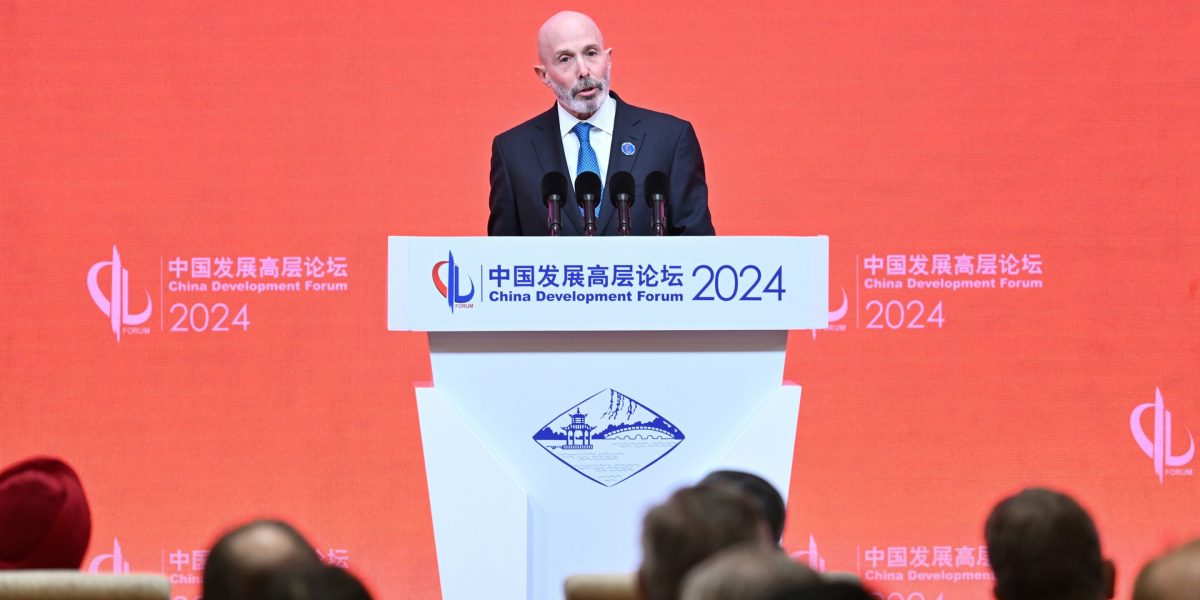
Speaking on Tuesday at the UBS Financial Services Conference in Key Biscayne, Florida, Morgan Stanley wealth head Jed Finn said Morgan Stanley is now building super agents composed of “hundreds, if not thousands” of smaller AI agents dedicated to carrying out tasks like answering client questions, opening accounts, moving money and, eventually, assemble portfolios.
Finn predicted advisors working with new clients will soon be able ask an AI agent “to go and build a portfolio using the investment options available at Morgan Stanley, subject to a number of constraints — asset allocation, historical performance, back-tested, expense ratio, Sharpe ratio, literally anything you would want to build a portfolio.”
On some not-distant day, Finn said, AI tools will be “as good as what anybody could do on their own.”
But like many of his counterparts in the industry, Finn remains convinced that humans will maintain their place in wealth management.
“Clients are still going to want advisors to leverage that technology,” he said. “We’ve got the benefit, though, of having the scale and the resources to be able to make sure that that technology is best in class and most effective and unlocks the most doors.”
Using AI for portfolio construction is viewed as a final frontier by many in wealth management, since it involves taking possible risks with client assets and raises various regulatory concerns. Finn said human advisors at Morgan Stanley will have the final say on any AI-generated recommendations.
“You get to approve it, and then it gets implemented without any more clicks,” he said.
“I think AI is going to enhance the quality of advice, and it’s going to help advisors scale and be able to serve more clients more effectively with the same set of resources,” Finn added. “I think it’s an efficiency play, and I think it’s an effectiveness play.”
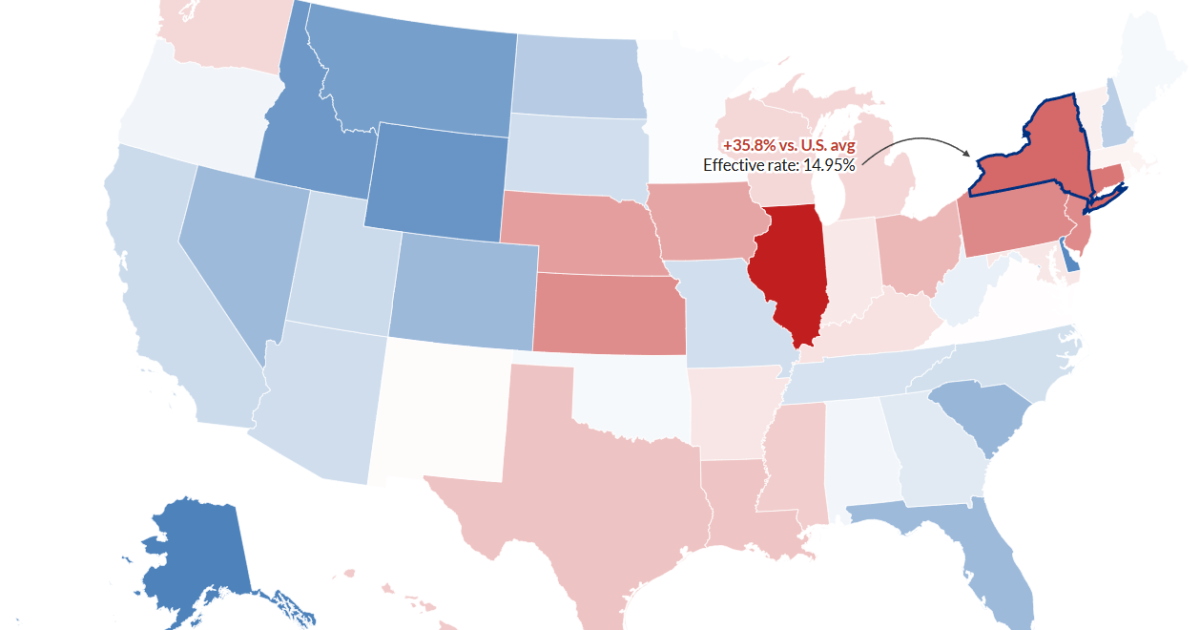
Finn’s remarks came the same day that the financial software firm Altruist released an AI system designed to help lower clients’ tax burden. Shares in Charles Schwab, Raymond James Financial, LPL Financial and Stifel Financial all fell in response to fears that the new technology would eat into their traditional wealth management businesses.
“The selloff appears tied to broader concerns about AI disrupting the financial advice and wealth management model,” said Neil Sipes, an analyst at Bloomberg Intelligence.
READ MORE: How agentic AI is showing up in advisor workflows
Morgan Stanley looks to J.A.R.V.I.S. from ‘Iron Man’ movies
The disruption comes amid wealth managers’ ongoing search for ways to move beyond the advanced chatbots now commonly associated with AI into the world of agentic AI. In contrast to large-language models capable of providing convincing responses to user inquiries, AI agents are systems designed to complete complex tasks with a minimum of human involvement.
Finn said the inspiration for the portfolio-building super agent is J.A.R.V.I.S., the fictional AI assistant to the Tony Stark character in the “Iron Man” movies.
“That is the reference point,” he said. “It’s designed to enable the advisors to direct the work, but not have to do the work”
Finn said some of the super agents Morgan Stanley is building will serve as virtual assistants to the client service associates who already work alongside advisors. These super agents, Finn said, will not just “retrieve information like a normal bot can today, but it can take action.”
“So move money, open accounts, change beneficiaries,” he said. “The goal is to automate a lot of the routinized tasks so [client service associates] can spend more time on the higher value-add tasks, i.e., interacting with clients.”
Morgan Stanley also plans to have super agents available to respond to client requests at any time of the day. First that would entail having them perform tasks like reporting account balances and sending tax documents.
Later, the agent will move on to tasks like sending money and paying bills.
“Obviously the fraud risk goes up with number two,” Finn said. “So we are sequencing it because it is important to discharge our guardianship responsibilities.”
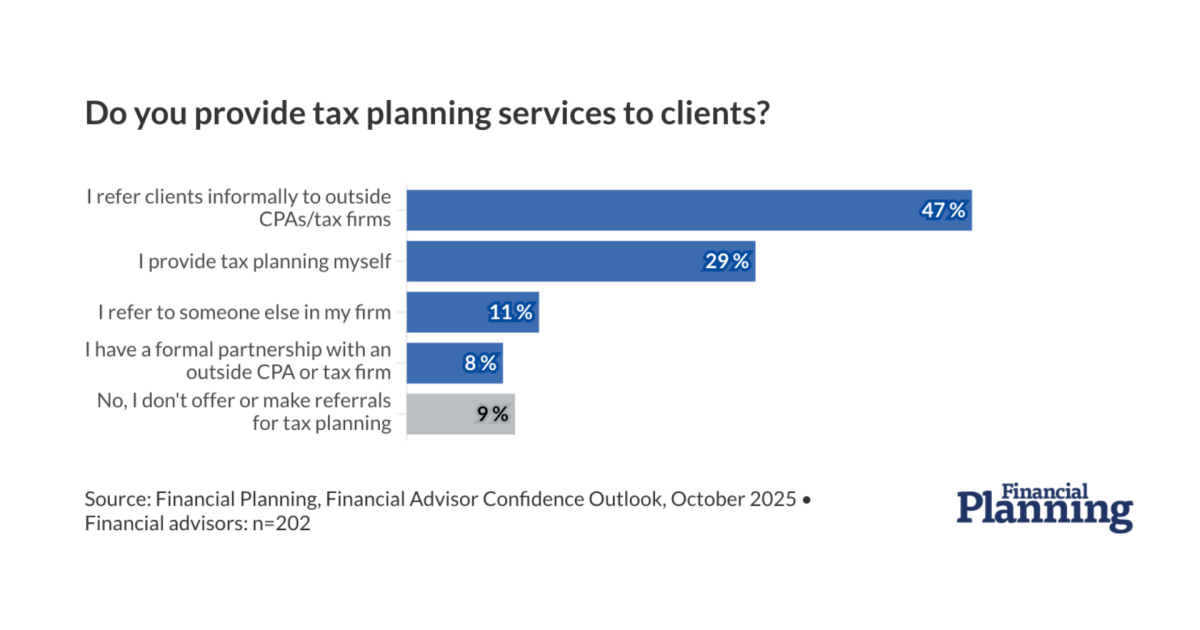
Finn said the super agents could be asked to whip up five tax-savings plans for a given client, produce an appendix of the performance of each strategy modeled over time and then “put it all on a simple page with the pros and cons” of each.
At a more basic level, advisors meeting clients could ask a super agent to “Give me a list of the top ideas I could bring to them to deepen their relationship with Morgan Stanley, based on what other advisors like me have done with other clients like them,” he said. “So you get this peer-collaboration element to it as well.”
READ MORE: Using agentic AI to spend better — not just more — time with clients
Wealth management’s future not tech only, not human only
Unlike Morgan Stanley early use of AI like large language models, its planned super agents will be able to ingest “the entirety of the historical context” of individual clients, largely by pulling information from emails and the firm’s customer relationship management system.
“So its inference ability is off-the-charts good,” Finn said. “And it can respond back to the client in the same tone that the team has used over the course of that relationship.”
Morgan Stanley has long been at the forefront of adopting new technologies to relieve its advisors of routine tasks and free up their time for working with clients. Indeed, Finn said as far back as 2016 — when the first wave of automated-portfolio builders known as robo advisors was entering the market — Morgan Stanley had already decided that “the future of wealth management” would not be solely about technology.
“And it was not going to be humans only, but it was going to be a best of breed integration of the two,” he added. “We have been intentional in pursuing that vision ever since.”
The firm in 2023 announced it had entered into a partnership with OpenAI, the technology giant that astounded the world in late 2022 with its release of the ChatGPT large language model capable of producing reams of convincing text in response to simple questions. Morgan Stanley has gone on to invest in a number of technologies grouped under the name AIMS, which is short for AI @ Morgan Stanley.
Its AIMS Debrief system, for instance, makes transcriptions of business conversations between advisors and clients and produces summaries that can be sent out in emails and added to the CRM system. Finn said Morgan Stanley now has more than 3,500 AI-driven “individual tools and capabilities, and a number of those have to do with tax planning.”
READ MORE: Morgan Stanley hits profits goal, marches toward $10T in assets
Morgan Stanley’s trade-off between profit margins, investing in AI
Finn said Morgan Stanley is constantly striking a balance between investing in technology and obtaining stronger profit margins. The firm last year reached a long-held goal of achieving a pretax profit margin of at least 30% in its wealth management business. Pretax margin is the proportion of revenue the wealth business has left over following the subtraction of nontax expenses.
Finn said Tuesday that the firm could easily send that margin even higher. But those gains would come at the expense of the sorts of reinvestments that Finn and his colleagues see as crucial to Morgan Stanley’s business prospects.
“Of course, we could float our margin up a couple 100 basis points right now if we stopped making the investment, but that would be trading off near-term, medium-term growth,” he said. “We think this is actually the exact wrong time to do that, because we believe we’re sitting at the precipice of the largest wealth management opportunity in history.”
Finn noted the expected “great wealth transfer,” when baby boomers will be handing down tens of trillions of dollars to their heirs. He also spoke of the vast opportunities present at a firm like Morgan Stanley, which can bring to bear expertise not only in wealth management, but also investment banking and managing compensation plans for employers.
Finn also said Morgan Stanley’s push to integrate its various divisions in recent years “is leading to real, outsized results in the wealth management business, from leads and relationships starting in institutional and coming this way and going the other way as well.”
READ MORE: Wells Fargo Advisors head: ‘No advisor can outgrow this firm’
Wells Fargo also bridging bank, wealth management businesses
Morgan Stanley is far from alone in seeking to knock down internal barriers separating various business lines. Speaking earlier in the day at the UBS conference, Wells Fargo Chief Financial Officer Mike Santomassimo discussed how his firm is looking for ways to provide loans, credit cards and similar offerings to wealth clients and asset management services to banking customers. He said Wells is one of the few firms “that really have that opportunity across such a scaled platform.”
Such cross-selling is often viewed as a way to not only secure new sources of revenue but also give clients fewer reasons to seek out financial services at other institutions. Santomassimo said some of Wells Fargo’s most promising business prospects lie with clients who already do business with the firm through its bank branches. Santomassimo said the bank has estimated it is already doing business with between 6 million and 8 million customers who are holding away between $6 trillion and $8 trillion at other institutions.
“So there’s a huge opportunity to better serve those customers,” he said. “And if we can do a good job on the wealth management side of that equation, the data would suggest they’ll bring 2X the banking and lending wallet, as well.”
Wells Fargo no longer reports a headcount for advisors. But Santomassimo said the firm has roughly 2,500 advisors in its branches working with customers who qualify for its Wells Fargo Premier offering, which provides financial services and products to investors and savers with $250,000 or more.
The Premier unit operates alongside the firm’s regular division for employee advisors. That traditional channel not only held advisor departures to a minimum last year but also enjoyed strong recruiting results.
“And they’re not little, small mom and pop teams,” Santomassimo said. “In a lot of cases, they’re really big scale teams that are growing and really want our platform, our balance sheet, to do interesting things on the lending side with their clients as well.”