WASHINGTON — The major challenges confronting college leaders show no signs of relenting over the next few years. They must tackle tightening student visa policies, the growing adoption of artificial intelligence and potential declines in traditional-aged college students.
College leaders shared how they’re addressing those issues and more during a panel Thursday at the American Council on Education’s annual conference in Washington, D.C. While their tactics vary, they’re all bracing for major change.
Christopher Hopey, president of Merrimack University, in Massachusetts, said officials are seeing the early signs of a coming “earthquake” in the higher education education sector.
“There’s gonna be an earthquake, and then you’re going to have aftershocks, and it’s going to be a restructuring of higher education,” Hopey said.
How will international enrollment change?
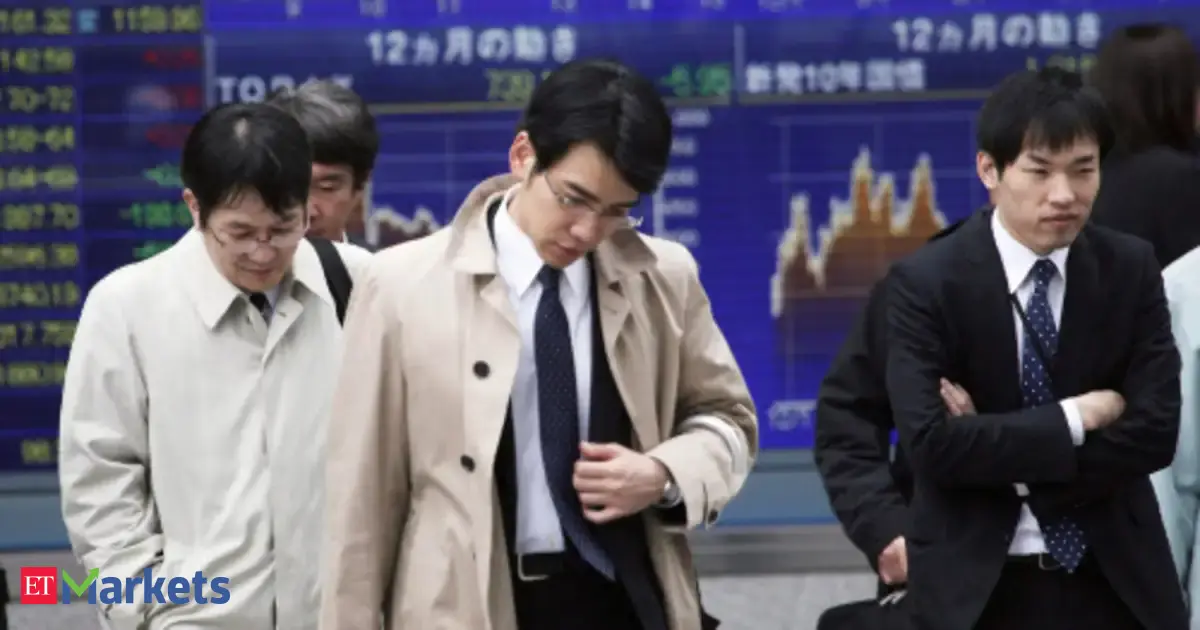
Although overall international enrollment has remained relatively stable this past year amid tighter visa policies, college leaders are readying themselves for dramatic declines. One major warning light? New international enrollment was down 17% this fall across 828 colleges that participated in an annual Open Doors survey this past fall.
“If you rely on immigration and international students as the primary driver of your enrollment strategy, you are vulnerable,” said Connie Book, president of Elon University, in North Carolina.
But even colleges that don’t rely on international students to fill their seats are at risk. When other institutions face international enrollment disruptions, they seek to fill the gaps by recruiting more domestic students.
“We’re losing domestic students because of the hole that other schools are filling,” Book said.
President Donald Trump’s policies likely won’t make these issues easier. The Trump administration is pursuing several policies that could make it harder to recruit international students, including new regulations that would limit their stay in the U.S. to four years.
Hopey said he expects the U.S. to experience “brain drain” due to the disruptions. But he predicted a future federal administration would loosen these policies to make it easier for international students to work in the country after they graduate.
“The government will wake up and realize, ‘Oh my gosh, we can’t find employees’” in fields like engineering and economics, Hopey said.
How will AI reshape college curriculum?
Artificial intelligence is already disrupting higher education, with concerns rising that students overly rely on chatbots to complete their assignments and that the emerging technology will make a college degree less relevant.
It may also be impacting which fields students are choosing. Carissa Little, associate dean for global and online education at Stanford University’s engineering school, said computer science enrollment is down 20% at the California institution this year after a decade of steady growth.
Job postings in software development roles have declined sharply since they peaked in 2022, and several high-profile tech companies have been laying off their workers as they embrace AI, especially for entry-level work, according to CNN. Meanwhile, many students are flocking to new AI-focused offerings at colleges, The New York Times reported.
However, Book said Elon isn’t building out a standalone AI major.
“You wouldn’t have a major on the internet, right?” Book said. “But I think every curriculum is going to embed generative AI and how that impacts whatever sector they’re in.”
Book also predicted that a liberal arts education could set students up to use AI in their work.
“This is going to breathe life into skill sets around philosophy, religion, problem-solving, history,” Book said. “The human side is going to get a new burst of energy because that’s where the skill sets of connecting the dots and critical thinking live.”
How will higher ed respond to nontraditional students?
Colleges are gearing up for a major drop-off in traditional students, with the number of high school graduates projected to begin declining this year, a trend that is expected to continue for more than a decade.
However, Hopey argued that there’s currently “more than enough” students to fill the seats across colleges, but many aren’t enrolling. The college-going rate sat at 62% in 2022, a 4 percentage point decline from a decade prior.
“We’re the only business I can think of that keeps people out,” Hopey said, before pointing to colleges that brag about their low acceptance rates. “Is that a public good anymore?”
It will be key for colleges to focus more on flexibility, Little said.
“There are really stellar individuals who take time off to have a child, who are taking care of aging parents, who can’t continue in the kind of rigid formats that we have currently,” Little said. “We are complicit in not trying to address those individuals in the way that we think about our institutions.”