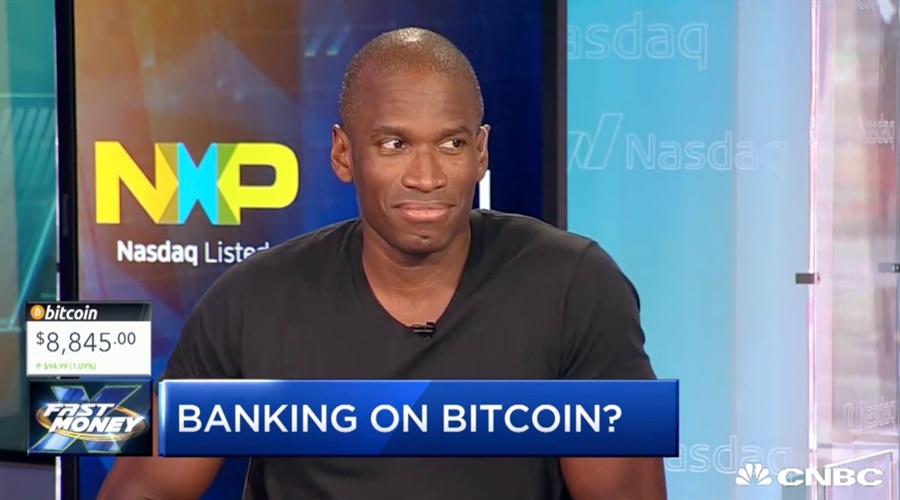
Eight months ago, BitMEX co-founder Arthur Hayes argued that traditional exchanges would have to “adapt or die” as perpetual swaps spread beyond crypto. Now BitMEX itself is closing, while the exchanges it once challenged are beginning to adopt its defining product.
On 23 September 2026, BitMEX will close the exchange that gave crypto its dominant trading instrument. The perpetual swap will outlive the venue that created its modern crypto form and may be only at the start of its global expansion.
BitMEX’s closure is not a failure of perpetual swaps. The opposite is true. The exchange is disappearing just as the perpetual is moving from offshore crypto markets into regulated US venues, decentralized exchanges and traditional assets.
Dear BitMEX Users,
Today, we share with a very heavy heart that BitMEX exchange will shut down its operations, effective 23 September 2026 at 04:00:00 UTC.
The owner and operator of BitMEX, HDR Global Trading Limited, has made the difficult decision to close operations… pic.twitter.com/oWuqlh547f
— BitMEX (@BitMEX) July 23, 2026
The Anatomy of a Perpetual Contract
When perps, BitMEX did not just remove the expiry date from a futures contract. Such a contract has no natural point of convergence with the underlying asset, so it needs an entire market architecture to remain functional.
The funding rate creates recurring payments between longs and shorts to pull the contract toward the spot price.
The mark price reduces the risk that a temporary or manipulated last trade triggers liquidations.
The liquidation engine closes positions before losses exceed posted collateral.
The insurance fund absorbs deficits when liquidations cannot be completed at or above the bankruptcy price.
If that fund is insufficient, auto-deleveraging, or ADL, forcibly reduces profitable positions on the opposite side to preserve the exchange’s solvency. That final step protects the venue, but can transfer the cost of failed liquidations to winning traders.
BitMEX did not invent every component individually. Its achievement was combining them with continuous trading, crypto collateral, a central limit order book and very high leverage in a product traders could use at scale.
Read more: BitMEX, Pioneer of Crypto Perps, Closes Down Just as the Market Heats Up
How the 2018 Bear Market Made BitMEX
XBTUSD, launched in May 2016, became the template copied across the industry.
In my experience, the product found its clearest product-market fit during the 2018 bear market.
Spot markets work naturally for investors who want to buy and hold an asset. A falling market created demand for something different: a simple way to take a short position, hedge existing crypto exposure or remain market-neutral without repeatedly borrowing scarce assets in fragmented margin markets.
Dated futures existed, including CME’s cash-settled Bitcoin futures launched in December 2017, but they required traders to manage expiry dates, rolls and changing basis across maturities. The perpetual offered one continuously traded instrument.
The second engine of growth came from its funding mechanism.
When demand for leveraged longs pushed the perpetual above spot, funding turned positive. Traders could buy Bitcoin spot, short the perpetual and collect funding while remaining broadly delta-neutral. Known as basis trades in crypto, their returns came primarily from funding rather than a directional view. Funding could reverse; unlike dated futures, there was no settlement date forcing convergence.
Read CySEC Chair’s view on crypto perps.
These trades mattered enormously for liquidity. Directional demand created an imbalance; professional traders were paid to take the other side. The perpetual did not only attract speculators. It converted speculative pressure into an incentive for arbitrageurs and market makers to commit capital.
Having operated both a crypto exchange and a market-making firm, I saw perpetuals become essential tools for inventory and client-flow hedging, cross-venue arbitrage, funding trades and relative-value strategies.
Retail traders liked the same product for a different reason: it offered straightforward leveraged exposure, long or short, in a market that never closed.
Together, professional hedging and arbitrage on one side and retail directional demand on the other created the liquidity flywheel that made perpetuals the dominant crypto-native derivative.
BitMEX proved that a single highly liquid perpetual could anchor an entire exchange. Its competitors then broadened the model across altcoins, stablecoin collateral and integrated spot and derivatives markets.
One important part of that expansion was the shift in collateral architecture. BitMEX’s original XBTUSD was an inverse contract margined in Bitcoin. It was elegant for a Bitcoin-native funding trade: a trader could own Bitcoin, post it as collateral and short the perpetual.
But the structure was less convenient for ordinary directional trading, multi-asset portfolios and dollar-based risk management. For a leveraged long, a falling Bitcoin price could hurt both the position and the dollar value of the collateral supporting it.
The Move to Dollar-Margined Contracts
Linear USDT- and USDC-margined perpetuals allowed competitors to serve a much broader market. Notional, collateral and profit and loss could all be measured in dollars, while a single stablecoin balance could support positions across hundreds of assets. Risk management, accounting and capital allocation became easier for both traders and market makers.
This was not simply a technical improvement. It helped transform perpetuals from a Bitcoin-native product into the standard derivative across the entire crypto market.
Bybit, Binance, OKX and other exchanges broadened perpetuals across altcoins far faster than BitMEX could move beyond its original Bitcoin-centred model. They paired derivatives with spot markets, stablecoin balances, broader retail distribution and aggressive market-maker programmes.
BitMEX later added spot, stablecoin-margined products and traditional-asset perpetuals, but by then the liquidity network had shifted.
This is the central lesson of BitMEX’s decline:
An exchange’s product is not its contract specification. Its product is liquidity.
Liquidity is reflexive. Traders prefer the venue with the best depth and execution.
Market makers allocate more capital where order flow is strongest. Their quotes improve execution, which attracts more traders and generates still more order flow.
Once that cycle reverses, spreads widen, slippage increases and market makers reduce capital because the opportunity no longer compensates for inventory and adverse-selection risk.
An exchange can copy features quickly. Rebuilding a lost liquidity network is much harder.
Once liquidity begins to migrate, technical reliability becomes even more important. Traders may tolerate occasional disruption on the market’s dominant venue; they are less forgiving once credible alternatives exist.
That became clear during the March 2020 market crash. A violent liquidation cascade collided with rapidly disappearing order-book liquidity. Its insurance fund survived, but the episode demonstrated how leverage, automated liquidations and platform disruption could reinforce one another during a market shock.
March 2020 did not cause BitMEX’s decline, but it weakened confidence at a time when traders already had increasingly liquid alternatives. Regulatory enforcement later that year dealt a much more serious blow.
US authorities brought charges in October 2020; BitMEX later agreed to a $100 million civil settlement, and the corporate entity received another $100 million criminal penalty in 2025 over AML failures.
The enforcement actions damaged management continuity, market access and institutional confidence at the same time competitors were taking liquidity.
But regulation alone did not kill BitMEX. It struck a venue whose defining invention had already become a commodity and whose competitors had built broader ecosystems around it.
The next phase is now visible.
Perpetuals Go Mainstream
In 2026, the CFTC approved Kalshi’s BTCPERP, the first regulated US bitcoin perpetual, and opened a route for other US exchanges to list true digital-commodity perpetual futures.
On-chain venues are pushing the format further. Between them, Hyperliquid, Lighter and Aster support perpetual markets on crypto, oil, gold, silver, equities, equity indices, foreign exchange and private-company exposures.
During geopolitical escalation in the Middle East, oil perpetuals traded through the weekend while conventional commodity markets were closed.
That does not make them risk-free or perfectly equivalent to the underlying market. When the main cash or futures venue is closed, market makers cannot hedge normally. Spreads can widen, liquidity can disappear and the perpetual may become an independent price signal.
The same architecture that offers continuous access can also transmit liquidations continuously. The October 2025 liquidation cascade showed one modern cost of ADL: a venue can preserve its solvency by breaking the profitable leg of an otherwise delta-neutral hedge.
Still, the direction is clear. Perpetuals are becoming a standardized format for 24/7 synthetic exposure.
They may increasingly challenge contracts for difference, or CFDs, which also offer non-expiring leveraged exposure but are typically distributed through brokers and fragmented across separate liquidity arrangements. A perpetual on a common order book can bring multiple market makers and traders into one liquidity pool, with visible prices and explicit funding.
Perpetuals will not replace dated futures. Maturity-specific hedging, forward curves and calendar spreads remain essential. But they may become crypto’s first financial invention to materially reshape the trading of traditional assets.
BitMEX will disappear as an exchange. Its architecture is spreading into regulated markets, decentralized venues and assets that have never traded continuously before.
Few companies have won so completely at the product level while losing so decisively at the platform level.
Eight months ago, BitMEX co-founder Arthur Hayes argued that traditional exchanges would have to “adapt or die” as perpetual swaps spread beyond crypto. Now BitMEX itself is closing, while the exchanges it once challenged are beginning to adopt its defining product.
On 23 September 2026, BitMEX will close the exchange that gave crypto its dominant trading instrument. The perpetual swap will outlive the venue that created its modern crypto form and may be only at the start of its global expansion.
BitMEX’s closure is not a failure of perpetual swaps. The opposite is true. The exchange is disappearing just as the perpetual is moving from offshore crypto markets into regulated US venues, decentralized exchanges and traditional assets.
Dear BitMEX Users,
Today, we share with a very heavy heart that BitMEX exchange will shut down its operations, effective 23 September 2026 at 04:00:00 UTC.
The owner and operator of BitMEX, HDR Global Trading Limited, has made the difficult decision to close operations… pic.twitter.com/oWuqlh547f
— BitMEX (@BitMEX) July 23, 2026
The Anatomy of a Perpetual Contract
When perps, BitMEX did not just remove the expiry date from a futures contract. Such a contract has no natural point of convergence with the underlying asset, so it needs an entire market architecture to remain functional.
The funding rate creates recurring payments between longs and shorts to pull the contract toward the spot price.
The mark price reduces the risk that a temporary or manipulated last trade triggers liquidations.
The liquidation engine closes positions before losses exceed posted collateral.
The insurance fund absorbs deficits when liquidations cannot be completed at or above the bankruptcy price.
If that fund is insufficient, auto-deleveraging, or ADL, forcibly reduces profitable positions on the opposite side to preserve the exchange’s solvency. That final step protects the venue, but can transfer the cost of failed liquidations to winning traders.
BitMEX did not invent every component individually. Its achievement was combining them with continuous trading, crypto collateral, a central limit order book and very high leverage in a product traders could use at scale.
Read more: BitMEX, Pioneer of Crypto Perps, Closes Down Just as the Market Heats Up
How the 2018 Bear Market Made BitMEX
XBTUSD, launched in May 2016, became the template copied across the industry.
In my experience, the product found its clearest product-market fit during the 2018 bear market.
Spot markets work naturally for investors who want to buy and hold an asset. A falling market created demand for something different: a simple way to take a short position, hedge existing crypto exposure or remain market-neutral without repeatedly borrowing scarce assets in fragmented margin markets.
Dated futures existed, including CME’s cash-settled Bitcoin futures launched in December 2017, but they required traders to manage expiry dates, rolls and changing basis across maturities. The perpetual offered one continuously traded instrument.
The second engine of growth came from its funding mechanism.
When demand for leveraged longs pushed the perpetual above spot, funding turned positive. Traders could buy Bitcoin spot, short the perpetual and collect funding while remaining broadly delta-neutral. Known as basis trades in crypto, their returns came primarily from funding rather than a directional view. Funding could reverse; unlike dated futures, there was no settlement date forcing convergence.
Read CySEC Chair’s view on crypto perps.
These trades mattered enormously for liquidity. Directional demand created an imbalance; professional traders were paid to take the other side. The perpetual did not only attract speculators. It converted speculative pressure into an incentive for arbitrageurs and market makers to commit capital.
Having operated both a crypto exchange and a market-making firm, I saw perpetuals become essential tools for inventory and client-flow hedging, cross-venue arbitrage, funding trades and relative-value strategies.
Retail traders liked the same product for a different reason: it offered straightforward leveraged exposure, long or short, in a market that never closed.
Together, professional hedging and arbitrage on one side and retail directional demand on the other created the liquidity flywheel that made perpetuals the dominant crypto-native derivative.
BitMEX proved that a single highly liquid perpetual could anchor an entire exchange. Its competitors then broadened the model across altcoins, stablecoin collateral and integrated spot and derivatives markets.
One important part of that expansion was the shift in collateral architecture. BitMEX’s original XBTUSD was an inverse contract margined in Bitcoin. It was elegant for a Bitcoin-native funding trade: a trader could own Bitcoin, post it as collateral and short the perpetual.
But the structure was less convenient for ordinary directional trading, multi-asset portfolios and dollar-based risk management. For a leveraged long, a falling Bitcoin price could hurt both the position and the dollar value of the collateral supporting it.
The Move to Dollar-Margined Contracts
Linear USDT- and USDC-margined perpetuals allowed competitors to serve a much broader market. Notional, collateral and profit and loss could all be measured in dollars, while a single stablecoin balance could support positions across hundreds of assets. Risk management, accounting and capital allocation became easier for both traders and market makers.
This was not simply a technical improvement. It helped transform perpetuals from a Bitcoin-native product into the standard derivative across the entire crypto market.
Bybit, Binance, OKX and other exchanges broadened perpetuals across altcoins far faster than BitMEX could move beyond its original Bitcoin-centred model. They paired derivatives with spot markets, stablecoin balances, broader retail distribution and aggressive market-maker programmes.
BitMEX later added spot, stablecoin-margined products and traditional-asset perpetuals, but by then the liquidity network had shifted.
This is the central lesson of BitMEX’s decline:
An exchange’s product is not its contract specification. Its product is liquidity.
Liquidity is reflexive. Traders prefer the venue with the best depth and execution.
Market makers allocate more capital where order flow is strongest. Their quotes improve execution, which attracts more traders and generates still more order flow.
Once that cycle reverses, spreads widen, slippage increases and market makers reduce capital because the opportunity no longer compensates for inventory and adverse-selection risk.
An exchange can copy features quickly. Rebuilding a lost liquidity network is much harder.
Once liquidity begins to migrate, technical reliability becomes even more important. Traders may tolerate occasional disruption on the market’s dominant venue; they are less forgiving once credible alternatives exist.
That became clear during the March 2020 market crash. A violent liquidation cascade collided with rapidly disappearing order-book liquidity. Its insurance fund survived, but the episode demonstrated how leverage, automated liquidations and platform disruption could reinforce one another during a market shock.
March 2020 did not cause BitMEX’s decline, but it weakened confidence at a time when traders already had increasingly liquid alternatives. Regulatory enforcement later that year dealt a much more serious blow.
US authorities brought charges in October 2020; BitMEX later agreed to a $100 million civil settlement, and the corporate entity received another $100 million criminal penalty in 2025 over AML failures.
The enforcement actions damaged management continuity, market access and institutional confidence at the same time competitors were taking liquidity.
But regulation alone did not kill BitMEX. It struck a venue whose defining invention had already become a commodity and whose competitors had built broader ecosystems around it.
The next phase is now visible.
Perpetuals Go Mainstream
In 2026, the CFTC approved Kalshi’s BTCPERP, the first regulated US bitcoin perpetual, and opened a route for other US exchanges to list true digital-commodity perpetual futures.
On-chain venues are pushing the format further. Between them, Hyperliquid, Lighter and Aster support perpetual markets on crypto, oil, gold, silver, equities, equity indices, foreign exchange and private-company exposures.
During geopolitical escalation in the Middle East, oil perpetuals traded through the weekend while conventional commodity markets were closed.
That does not make them risk-free or perfectly equivalent to the underlying market. When the main cash or futures venue is closed, market makers cannot hedge normally. Spreads can widen, liquidity can disappear and the perpetual may become an independent price signal.
The same architecture that offers continuous access can also transmit liquidations continuously. The October 2025 liquidation cascade showed one modern cost of ADL: a venue can preserve its solvency by breaking the profitable leg of an otherwise delta-neutral hedge.
Still, the direction is clear. Perpetuals are becoming a standardized format for 24/7 synthetic exposure.
They may increasingly challenge contracts for difference, or CFDs, which also offer non-expiring leveraged exposure but are typically distributed through brokers and fragmented across separate liquidity arrangements. A perpetual on a common order book can bring multiple market makers and traders into one liquidity pool, with visible prices and explicit funding.
Perpetuals will not replace dated futures. Maturity-specific hedging, forward curves and calendar spreads remain essential. But they may become crypto’s first financial invention to materially reshape the trading of traditional assets.
BitMEX will disappear as an exchange. Its architecture is spreading into regulated markets, decentralized venues and assets that have never traded continuously before.
Few companies have won so completely at the product level while losing so decisively at the platform level.