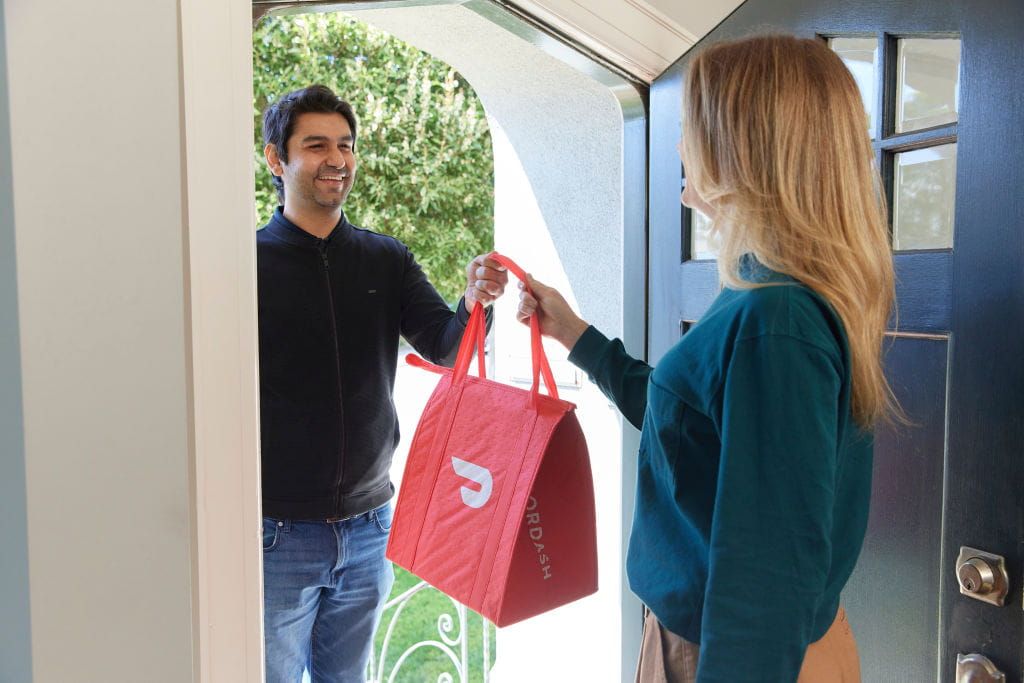
Never underestimate the government’s ability to tax. New ideas pop up all the time, and most Americans just take them in stride. However, consumers should be aware that if something is popular or trending, it is ripe for legislators to tack on a tax, and that is precisely what’s happening as people continue to order more items for delivery to their homes or workplaces.
Need something from the grocery store? InstaCart has got you covered. Got the munchies while watching all those burger ads during the ball game? Pick up your smartphone and open the DoorDash app – the industry leader, commanding 65% of the delivery marketplace. But don’t stop now. There’s also Uber Eats and Grubhub for dinner or that late-night snack.
Delivery Economy Looks Yummy to Legislators
Currently, Colorado and Minnesota have a delivery service tax. Still, other states, such as Rhode Island and Nebraska, are mulling it over, and New York has been toying with the idea for years. Maryland, Nebraska, and Washington are also intrigued by the new tax. A website known as No Doorstep Tax informed its readers that Colorado residents are coughing up an extra 27% on “every e-commerce purchase delivered directly to their homes.” In Minnesota, a 50-cent fee is applied to certain deliveries.
The implication is that a delivery service fee affects only the well-off, but that’s not necessarily true. Older adults often rely on getting their prescriptions delivered. Those with disabilities who cannot drive use these doorstep services. Injured people or those with chronic diseases are also more likely to use delivery services. It also represents double taxation because most states already have a sales tax, proving once again that if it’s not nailed down, government officials will find a way to tax it.
But let’s move beyond one-step thinking for a moment and follow this down the economic chain. Higher taxes on delivery services could mean fewer orders, leading to fewer workers making deliveries. These so-called gig workers, formerly known as independent contractors, rely on these jobs to supplement their income much as some Uber drivers do. Some may even depend on it for their entire income.
While taxing delivery services appears to be a popular idea to feed the hungry beast of government, places like No Doorstep Tax point out:
“Americans are already suffering from record inflation, supply chain shortages, and sky-high prices. The last thing working families need is new, burdensome taxes that would exacerbate these problems by levying higher costs on consumers while hurting workers.”
So just what is the economic impact of the Colorado tax thus far? A report by NDP Analytics reveals “Negative Economic Impacts,” and the results are startling. Here are a few:
“The financial burden of retail delivery fees is 6.5 times higher for households with annual incomes under $25,000 compared to those with annual incomes of $200,000 or more.”“The reduction of sales, jobs, and wages in restaurants creates additional negative spillover effects along the supply chain and surrounding communities. Incorporating these indirect and induced effects, the imposition of retail delivery fees on freshly prepared meals costs the Colorado economy $26.9 million in annual sales, 367 jobs, and $17.1 million in wages a year.”
The country is currently roiled by controversy over socialism. As everyone who can think knows, socialism is not free – someone must pay up so government can pay out. The delivery service tax is a classic way of generating these funds, but in reality, it is nothing more than a boondoggle to fleece American consumers.