On Monday, the Department of Defense told senators it needed an additional $80 billion to cover the cost of the U.S. war against Iran, just weeks after warning that the military could potentially run out of money should Congress not pass a new spending bill, Fortune’s Jacqueline Munis reports. But what is the total bill so far?
Experts differ. On May 12, Acting Pentagon Comptroller Jules Hurst III told the House Armed Services Committee that the war had cost $29 billion. Despite the six weeks that have passed, the Pentagon referred Fortune back to Hurst’s testimony when asked for an updated estimate this week.
That’s probably an underestimation. According to Moody’s Analytics, the war has cost U.S. taxpayers and consumers at least $132 billion so far.
Given that the early days of the conflict cost $1 billion per day, Linda Bilmes, a Harvard Kennedy School senior public policy lecturer and a federal budget expert, said spending is more likely to total the $200 billion in additional funds the Pentagon requested back in March.
Pimco says Trump’s threats to leave NATO are a “paper tiger”
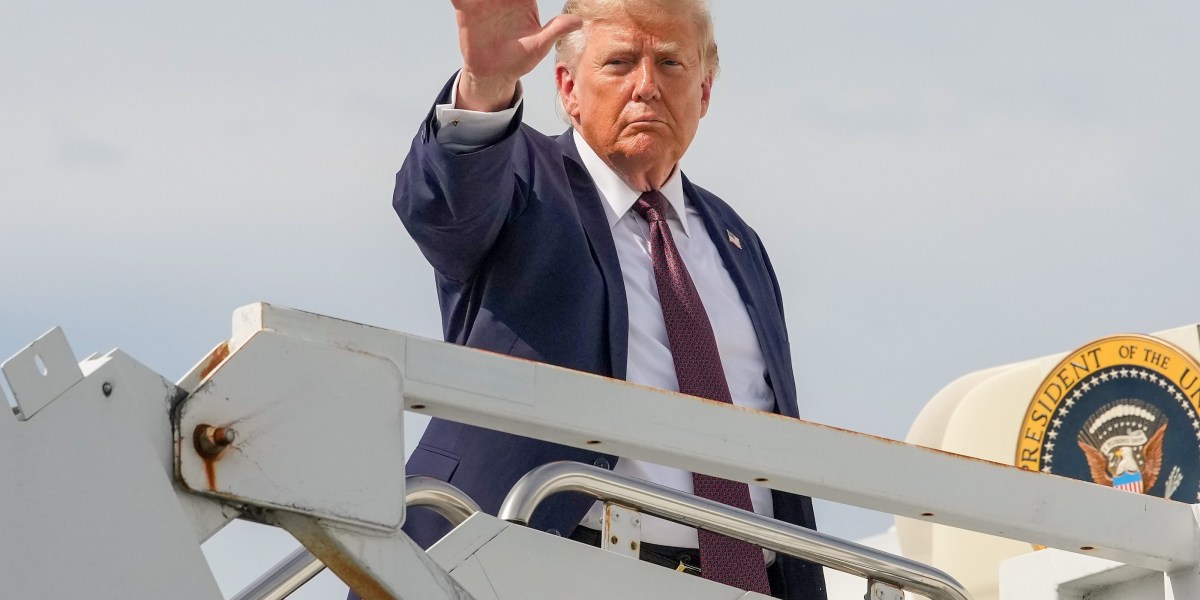
NATO Secretary-General Mark Rutte will be in Washington this week, risking the wrath of President Trump, who hates the transatlantic military alliance because it “wasn’t there when we needed them” for Iran. Trump has more than once floated the idea of bailing on NATO. Don’t expect it to happen, Pimco Head of Public Policy Libby Cantrill told clients recently.
What most people forget is that in 2024 Congress passed a law banning the president from unilaterally quitting NATO without a 60-vote Senate majority or a change in the law. (The person least likely to say this out loud is Secretary of State Marco Rubio, who led the effort in the Senate at the time.) NATO remains popular in Congress. Cantrill said in an email: “While President Trump likes to refer to NATO as a ‘paper tiger,’ arguably, the paper tiger is the threat that the U.S. will withdraw from NATO.”
THE MARKETS
Mixed signals: U.S. futures inch up after yesterday’s selloff
S&P 500 futures were up 0.14% this morning. The index lost 1.44% yesterday.
In Europe, the Stoxx 600 was flat in early trading, as was the U.K.’s FTSE 100.
Asia: South Korea’s KOSPI was up 3.26%. Japan’s Nikkei 225 was down 0.88%. India’s Nifty 50 was up 0.99%. China’s CSI 300 was up 0.48%.
Brent crude fell to $75 per barrel this morning, from $77 the day before.
Bitcoin was at $62K.
The curse of Elon hits competing rocket companies
SpaceX seems to be hurting the stocks of other companies in the space market, according to Bespoke Investment Group. As of Tuesday, the asset manager calculated that before the SpaceX IPO, the shares of 28 rocket and satellite companies were up 99%, on average, year-to-date. But as soon as Elon Musk’s company went public, their stocks declined in the following days by an average of 17%. On the same day, SpaceX was still up 16% from its launch. Here’s the data:
AI is killing Bitcoin in 2026, Deutsche Bank warns
Bitcoin was priced at $62.6K this morning, less than half its recent all-time high. Deutsche Bank’s Marion Laboure has an interesting theory about why the OG crypto token can’t regain its traction. The coin faces a number of problems, she said in a note to clients, among them Michael Saylor’s Bitcoin treasury company Strategy selling some of its holdings after Saylor promised he’d never sell, souring the environment. (Strategy stock is down 32% year-to-date.) On top of that, Bitcoin ETFs have net sold about $6 billion over the last six weeks. Bitcoin adoption in the U.S. remains at only 10% of the populace and hasn’t moved upward for years.
But the AI data center buildout is directly hurting demand as “risk capital” moves away from crypto and into AI, Laboure says. “Bitcoin’s energy and site infrastructure maps directly onto AI data centre requirements, making conversion materially cheaper than greenfield construction. Former miner Bitdeer has sold its entire Bitcoin treasury to fund a pivot to AI infrastructure, converting sites across Norway, Ohio, and Washington State toward 200+ MW of AI compute capacity by end-2026. The shift is structural rather than cyclical: miners with energy assets are becoming AI infrastructure landlords, monetising the same power portfolios at higher and more stable margins than volatile block rewards.”

MORE FROM FORTUNE
Now she’s worth $200 million. But Sarah Jessica Parker says being ‘one of eight kids that struggled financially’ growing up created her work ethic – Orianna Rosa Royle
Tesla cofounder JB Straubel’s first pitch to Elon Musk failed. Then he turned his ‘hobby’ into a $1.3 trillion success – Rachel Ventresca
Quantum computing stocks surge after Trump signed executive orders backing the sector – Marco Quiroz-Gutierrez
MSCI delays Indonesia’s market status review until November – Bloomberg
The climate policy triangle: why leaders can no longer choose between growth, security and sustainability – Sebastian Buckup
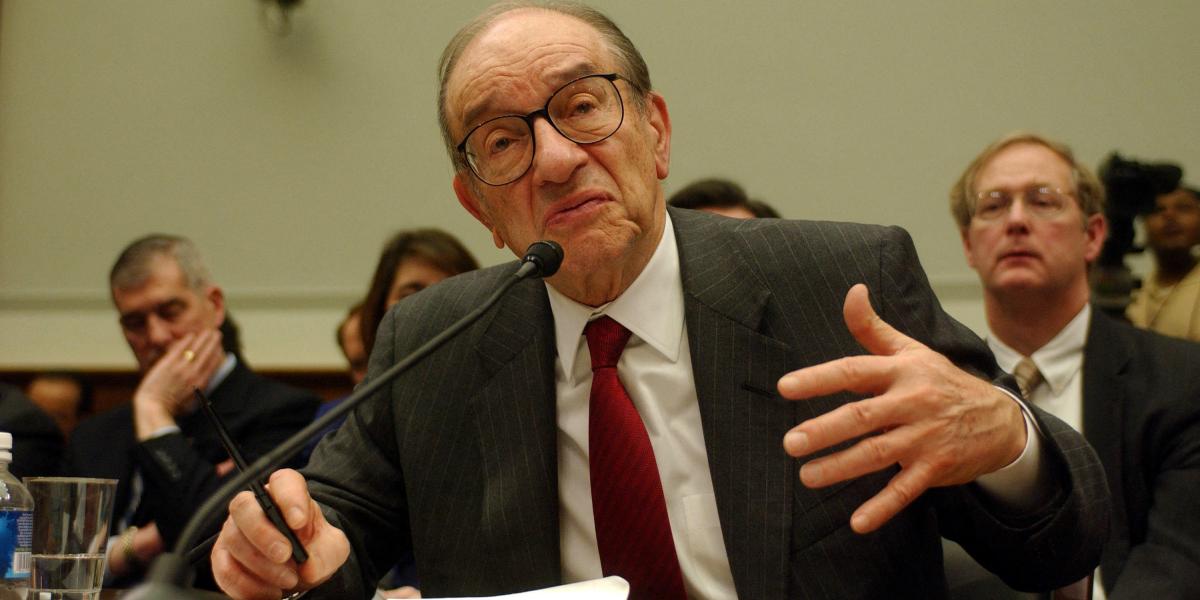
The man who invented the Fed’s magic trick just died. His successor is about to try it again – Eva Roytburg
CHART OF THE DAY
Wall Street’s spookiest chart just got spookier: It’s 1978 all over again

When the war with Iran started and oil went over $100 per barrel, Deutsche Bank published an “eerie” chart showing that the U.S. today appears to be following almost exactly the rates in the 1970s, which ended with runaway inflation at 15% and the grueling recession of the early 1980s that followed.
Apollo Global Management’s Torsten Slok has updated the chart. The news isn’t good. We’re right on track as if it were 1978! (Crucially, this chart only works if you ignore/manipulate the vertical axes!)
NUMBER OF THE DAY
$26 billion
The amount of tariffs illegally collected by the Trump Administration that have now been given back to the U.S. companies that paid them, as estimated by Ohsung Kwon and his colleagues at Wells Fargo. The total collected was $166 billion, or half a percentage point of U.S. GDP. At this pace, refunds should continue through 2027.
THE FRONT PAGES TODAY
Is this teenage girl North Korea’s next dictator? – FT
Ukraine is raising the cost of war for Russia — and testing Putin’s resolve – CNBC
U.S. loosens Iran’s travel restrictions for next World Cup match – Axios
Will Anyone Buy This Cheap EV Truck With Hand-Crank Windows and No Radio? – WSJ
China Makes New US Warship Target for Missile Tests, Images Show – Bloomberg
Woman who emptied Knicks trashcan on street— then stole it — fired from J.P. Morgan Chase, was DEI exec – NY Post
ONE MORE THING
Goldman, J.P. Morgan staff allowed to WFH on World Cup days
Goldman Sachs and J.P. Morgan Chase are temporarily allowing employees to work from home on World Cup game days, Fortune’s Orianna Rosa Royle says. They’re not being given a break from the office to watch the matches, however. Rather, in New York and New Jersey, there will be significant changes to transit services and severe street closures to accommodate the massive crowds. World Cup ticket holders will be prioritized—so workers who commute on impacted routes without a match ticket won’t be able to catch their train into the office or home.






-1024x683.jpg "Judge Who Helped Violent Illegal Alien Evade ICE Faces New Test")

-1024x683.jpg "Montana Puts Democrats in a Bind as Senate Hopes Fade")