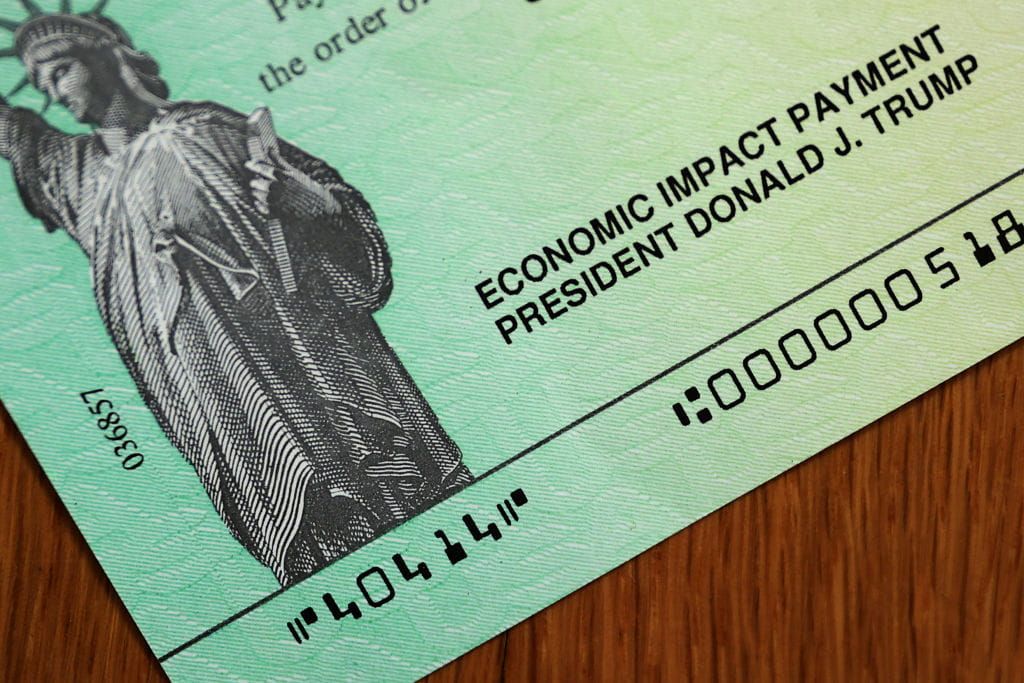
US companies could be receiving their tariff refunds soon. Since the Supreme Court struck down President Donald Trump’s levies imposed under the 1977 International Emergency Economic Powers Act (IEEPA), businesses and importers have been waiting for when they will get their money back. They might not have to wait much longer. But when will the economy witness gains from the administration’s expansive trade agenda?
Coming Soon: Tariff Refunds
The Oval Office could be making a list and checking it twice.
Last month, Trump told CNBC’s Squawk Box that he will remember those who file for tariff refunds and those who do not. “Actually, if they don’t do that, they’ve got to know me very well,” he said. “If they don’t do that, I’ll remember them.”
Data from the US Customs and Border Protection (CBP) suggest more than 26,000 companies have signed up for tariff refunds. The federal agency announced that it began issuing them electronically on May 12, based on an updated timeline message to shippers.
This comes as CBP established the Consolidated Administration and Processing of Entries (CAPE) tool in mid-April, which is available within the Automated Commercial Environment portal. Given that it already appears to be a complicated process, some lawmakers are pushing for direct payments to affected Americans. Rep. Henry Cuellar (D-TX), for example, introduced the American Consumer Tariff Rebate Act of 2026, which would provide rebates of up to $2,040 per household.
Still, an estimated $160 billion could be returned to Americans, but unlikely in the form of stimulus payments that the White House proposed several times last year. While this is not a cheery assumption for Uncle Sam, the money could be a lifeline for some struggling corporations.
Apparel giant Under Armour said in its latest earnings report that revenue declined 1% year over year to $1.2 billion, and full-year revenue tumbled 4% to $5 billion. Higher import duties were a notable factor for its abysmal numbers, and now the company is betting on tariff refunds to bolster the books. The brand that once took the world by storm expects its rosy profit outlook to be realized in 2027, with roughly $70 million in refunds.
The $160 billion question, however, is whether businesses will pass on these tariff refunds to their customers (if they raised their prices in the first place).
US Economy – Tarrific or Tarrifying?
A major reason for the current administration’s tariffs has been to reshore manufacturing, rebalance international trade, and raise federal revenues to reduce the deficit. The three Rs, if you will: reshore, rebalance, and revenue. About a year later, has the US economy seen gains? Well, the country has registered growth, but it has been almost entirely steered by artificial intelligence (AI).
Various surveys, including those from S&P Global and the Institute for Supply Management (ISM), indicate that manufacturing and factory activity have strengthened to their highest levels in four years, driven by capital expenditures, business spending, and overall AI investments. Suffice it to say, the economy is being powered by the buildout of data centers.
Unfortunately, manufacturing jobs have been slipping. This could signal that the industry is embracing automation or that higher input costs are weighing on firms’ bottom lines.
At the same time, US exports have rocketed to an all-time high. But while shipments have been creeping higher since the second half of last year, the recent boost has been fueled by energy. Exports, which totaled $320.9 billion in March, increased because of foreign demand for crude oil, petroleum products, and fuel oil. A modest uptick in soybeans and food was also seen. Consumer goods exports declined.
Will the United States ever see the $10 to $20 trillion in investment commitments from American and foreign corporations? Skepticism is warranted as companies could be just biding their time and waiting for President Trump to complete his second term and welcome the likes of Gov. Gavin Newsom (D) or Rep. Alexandria Ocasio-Cortez (D-NY) to move into 1600 Pennsylvania Ave.
Tale of the Tariffs
The president averted a tarifflation disaster last year as economists had widely projected skyrocketing inflation across the board. Instead, it has been the oil shock from the 11-week-old war in Iran that has been the source of price pressures. Who would have imagined last year that this would be the case? The economic literature states that tariffs lead to one-time price adjustments, whereas oil shocks can adversely affect every sector for a prolonged period. Quite the pickle!




-1024x699.jpg "Trump’s China Summit: More Isolation and Economic Erosion Ahead for Iran")
-1024x683.jpg "Bill Cassidy’s Primary Defeat: Tangle With Trump at Your Own Peril")