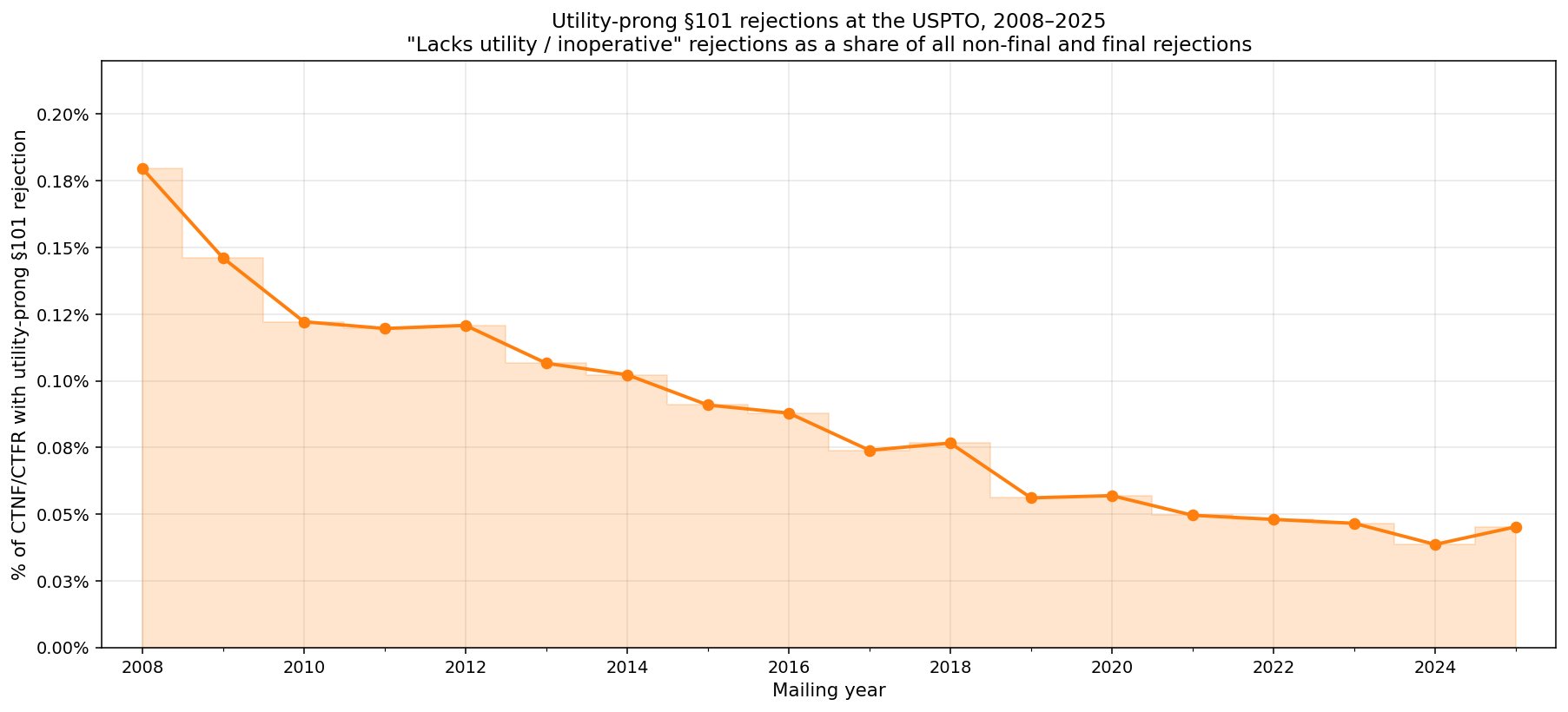
Utility rejections under 35 U.S.C. § 101 have become something of a relic at the USPTO. The Office mailed mailed over 650,000 office action rejections in 2025 – only 294 raised a utility ground. And, as you’ll see below, utility rejections are typically an indication that the underlying disclosure is genuinely strange.
I pulled a small random sample of utility-bearing office actions mailed in early 2026 and want to walk through each:
A pro se application for “curing leukemia and easy births” through time travel and “inspiration zones”;
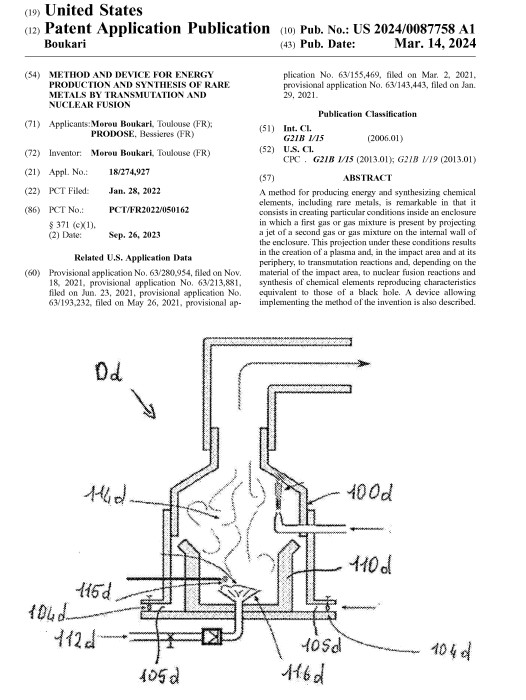
Energy production by recreating black hole conditions in a heated steel enclosure;
A cold-fusion-adjacent device, driven by “cycled electromagnetic radiation”;
A biochemistry case, now in its thirteenth year of prosecution, about whether melanin can synthesize glucose from carbon dioxide; and
A room-temperature-superconductor application out of one of the most distinguished condensed-matter labs in the country.
This is a useful sample because each draws on a different strand of the utility doctrine, all tracing back through Brenner v. Manson, 383 U.S. 519 (1966), and the Federal Circuit’s “implausible scientific principles” standard from In re Brana, 51 F.3d 1560 (Fed. Cir. 1995), that authorizes examiners to refuse claims premised on physics the applicant has not made credible.