No Result
View All Result
SUBMIT YOUR ARTICLES
  • Login
Saturday, April 25, 2026
TheAdviserMagazine.com
  • Home
  • Financial Planning
    • Financial Planning
    • Personal Finance
  • Market Research
    • Business
    • Investing
    • Money
    • Economy
    • Markets
    • Stocks
    • Trading
  • 401k Plans
  • College
  • IRS & Taxes
  • Estate Plans
  • Social Security
  • Medicare
  • Legal
  • Home
  • Financial Planning
    • Financial Planning
    • Personal Finance
  • Market Research
    • Business
    • Investing
    • Money
    • Economy
    • Markets
    • Stocks
    • Trading
  • 401k Plans
  • College
  • IRS & Taxes
  • Estate Plans
  • Social Security
  • Medicare
  • Legal
No Result
View All Result
TheAdviserMagazine.com
No Result
View All Result
Home Market Research Startups

The people who immediately tidy a room when they enter someone else’s house aren’t being helpful. They learned somewhere along the way that earning their place was the price of being allowed to stay in it

by TheAdviserMagazine
2 hours ago
in Startups
Reading Time: 7 mins read
A A
The people who immediately tidy a room when they enter someone else’s house aren’t being helpful. They learned somewhere along the way that earning their place was the price of being allowed to stay in it
Share on FacebookShare on TwitterShare on LInkedIn


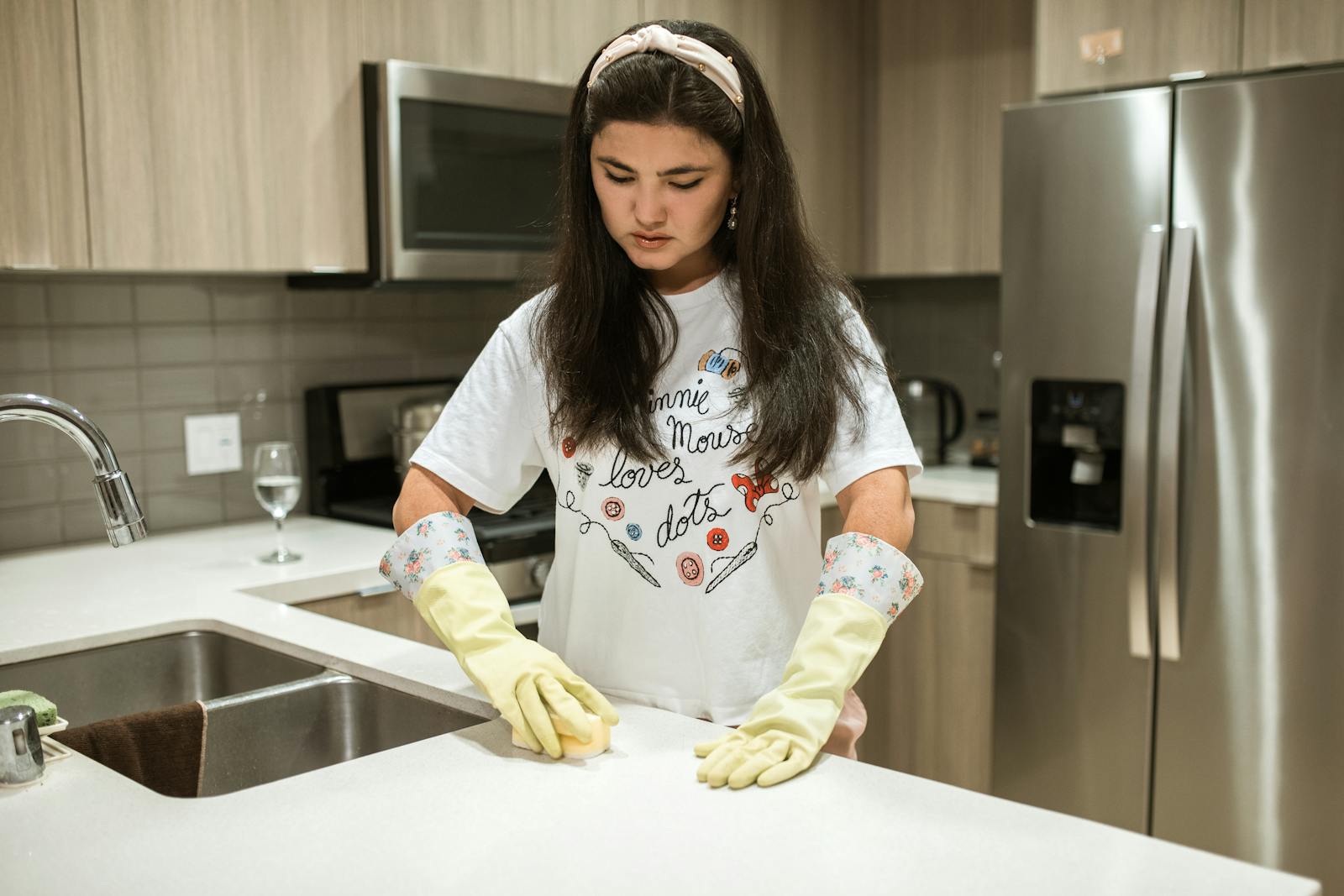
You can spot it within ninety seconds of someone walking through your front door. They put their bag down, then they’re already moving — picking up the magazine that slid off the coffee table, straightening the cushion you didn’t notice was askew, taking the empty mug from the side table to the kitchen without asking. They haven’t even taken their coat off. They’re not staying. They’re auditioning.

Most people read this as helpfulness. A guest with good manners. Someone raised right.

It is almost never that.

The conventional read is wrong

The cultural script says these people are conscientious, considerate, the kind of friend you want around. And on the surface they are exactly that. But conscientiousness chosen freely looks different from conscientiousness performed reflexively, and the difference shows up in the body.

Watch closely. The free version pauses. Sits down. Accepts the tea. Maybe helps clear up later, when asked, or doesn’t. The reflexive version cannot sit until something has been adjusted, fluffed, carried, or wiped. There’s a small flicker of relief when they find the dish to put away. They’ve located their function.

What looks like helpfulness is often a calculation that ran so many times in childhood it stopped feeling like a calculation. The math went something like: my presence is conditional, so I’d better make it useful.

Where this gets installed

The mechanism here isn’t mysterious. It’s well-documented in attachment research, particularly in what psychologists call anxious or preoccupied attachment. When a child grows up with a caregiver whose love feels conditional — available when the child is performing well, withdrawn when the child is inconvenient — the child learns that belonging is something you earn, not something you’re given.

Lisa Firestone, writing for Psychology Today, describes how anxiously attached children often feel they have to cling, fuss, or perform to be seen by an inconsistently available parent. The parent might be loving on Tuesday and preoccupied on Wednesday, and the child can’t predict which version will appear. So the child develops a strategy. They become useful. They become easy. They tidy.

That strategy doesn’t switch off in adulthood. It just finds new rooms to operate in.

The kitchen as a transcript of childhood

I think about this a lot when I watch people enter spaces that aren’t theirs. The compulsion to do something is often a transcript of an early environment in which doing nothing was dangerous. Sitting still meant being noticed for the wrong reasons. Stillness was where the criticism landed.

So they move. They wipe down a counter that doesn’t need wiping. They load the dishwasher in someone else’s house, even when the host is mid-sentence telling them not to. They cannot receive hospitality cleanly. They have to convert it back into labour, because labour is the currency they understand.

A related pattern shows up in the people who keep their own homes impossibly clean — different behaviour, same root system. Physical space becomes the variable they can control when nothing else cooperates. The tidying impulse in someone else’s house is the same instinct on tour.

Why it gets misread as virtue

Here’s the trap. Society rewards this behaviour loudly. The compulsive tidier gets called wonderful. Low-maintenance. A pleasure to have around. Their hosts genuinely appreciate them. Their friend groups orbit gratefully around their effort.

And so the original wound gets reinforced every time it’s enacted. The child who learned that earning their place was the price of staying grows into an adult whose social currency depends on continuing to pay it. The bill never closes.

This is the cruelty of well-adapted childhood survival strategies. They work. They keep working. They make you popular, employable, marriageable. They just slowly hollow you out, because the version of you that gets loved is the version that’s working.

The Purdue finding

Susan South, a clinical psychology professor at Purdue, has been studying how attachment styles play out in real marriages. Her lab surveyed 100 newly married Indiana couples and found that people with insecure attachment to their parents were more likely to have insecure attachment to their current partner.

What South noticed running through the anxious style was a particular kind of mistrust — not of the partner specifically, but of the relationship itself being safe to inhabit. This reflects a core tension in anxious attachment: the desire for partnership coupled with difficulty trusting in the stability of relationships. This manifests as uncertainty about one’s worthiness of partnership and ongoing doubt about a partner’s reliability even within established relationships.

Now apply that same lens to a guest in someone else’s living room. They want to be welcomed. But they don’t trust that the welcome will hold if they stop earning it.

The emotional hunger underneath

Firestone describes a specific dynamic that creates this pattern: parents who are emotionally hungry rather than nurturing. The parent looks to the child to meet the parent’s needs — for reassurance, for admiration, for proof of being a good parent — rather than tuning in to what the child actually needs.

The example she gives is striking. A mother throws elaborate, lavishly decorated birthday parties for her daughter, dressing up to be photographed as the perfect mom. The daughter leaves these parties drained, having performed as the perfect little girl on display. The party wasn’t for her. It was through her.

Children who grow up like this learn something specific. They learn that being present in a space requires producing something for the people running it. Their job is to make the adults look good. To smooth things. To not be a problem.

Decades later, in an adult friend’s kitchen, that same nervous system kicks in the moment the door closes behind them. It’s not a thought. It’s a reflex.

The class layer nobody mentions

There’s another dimension to this that gets ignored, and it has to do with class. I grew up working-class outside Manchester, the first in my family to go to university, and I can tell you the tidying-on-arrival behaviour is not evenly distributed across social backgrounds.

People taught from early childhood that they’re entitled to space tend not to do it. They walk in, sit down, and let the host host. People taught that their welcome is provisional — because their family was the poor one, the immigrant one, the one that didn’t quite fit the neighbourhood — often arrive ready to demonstrate they’re not a burden.

The compulsive tidier is almost always from the group taught to accommodate the world, regardless of how much money they currently have.

You can take someone out of the conditions that taught them to earn their place. You cannot necessarily take the lesson out of them.

What helpfulness performs versus what helpfulness does

Genuine prosocial behaviour — actual helping — is something children develop through observation, modelling, and praise, as outlined in the research on prosocial behaviour in early childhood. It’s voluntary. It’s responsive to context. It can be turned off when not needed.

The compulsive version is different. It is not responsive to context. It activates whether or not help is needed. It cannot be turned off without anxiety. The person doing it isn’t reading the room and choosing to assist; they’re managing an internal state that gets unbearable when they’re not producing value.

This distinction matters because the two look identical from the outside and feel completely different from the inside. One is choice. The other is compulsion dressed as choice.

The codependency overlap

There’s a useful frame from Margaret Paul, writing on the difference between caring and codependency. Caring people give from fullness. Codependent people give to manage their own anxiety about being abandoned, rejected, or judged. The gift looks the same. The motive doesn’t.

The tidier-on-arrival is often somewhere on this spectrum. They’re not consciously thinking about abandonment. They’re just deeply uncomfortable existing in a space without contributing to it. The contribution is the price of admission.

I wrote recently about people who never ask for help, and the patterns rhyme. Both groups have learned that being a recipient — of care, of hospitality, of generosity — is dangerous. Both have built their adult lives around being on the giving side of every transaction. It feels safer there.

The cost

The cost of this is rarely obvious to the person paying it, because they’ve been paying it so long they’ve stopped noticing. But it shows up in specific places.

It shows up in their inability to be a guest. To genuinely receive. To sit on someone’s sofa and let themselves be looked after.

It shows up in their friendships, where they are reliably the helper and rarely the helped, and where the imbalance is invisible to everyone including them.

It shows up in their romantic relationships, where partners report feeling loved but somehow not let in. The tidier is always doing for them. Rarely just being with them.

And it shows up in a particular kind of fatigue that has nothing to do with how much they’ve physically done. It’s the fatigue of having to keep paying the entry fee for every room.

What changes it

South’s research offers a quietly hopeful note. Attachment styles are durable but not fixed. People can develop what researchers call earned secure attachment, often through a long, consistent relationship — therapeutic, romantic, or close friendship — with someone who repeatedly demonstrates that the welcome doesn’t have to be earned.

This is harder than it sounds. The first time someone tells the compulsive tidier to please, please sit down, they don’t need help, the tidier’s nervous system reads it as rejection. The offer to receive feels like the door closing. They have to sit through that discomfort enough times to learn it isn’t true.

Therapy helps. So does noticing. The first step is usually catching yourself mid-tidy in someone else’s kitchen and asking the question that hasn’t occurred to you in thirty years: what would happen if I just sat down?

For most people who do this, the answer turns out to be: nothing. Nothing happens. The host is delighted. The friendship is fine. The room does not eject them.

The bill they thought they owed was never sent.

Feature image by RDNE Stock project on Pexels



Source link

Tags: allowedarentEarningElsesEnterHelpfulHouseImmediatelyLearnedpeopleplacePriceRoomStaytidy
ShareTweetShare
Previous Post

Sebi to expedite rule simplification, boost tech-led oversight: Chairman Tuhin Kanta Pandey on 38th anniversary

Next Post

Middle East conflict impacts ECB rate expectations, Bitcoin price remains stable

Related Posts

edit post
I’m 34 and I just noticed that I’ve been describing my own life to friends in the same tone I’d use to describe someone else’s, and that distance turned out to be the actual problem, not the events I was describing

I’m 34 and I just noticed that I’ve been describing my own life to friends in the same tone I’d use to describe someone else’s, and that distance turned out to be the actual problem, not the events I was describing

by TheAdviserMagazine
April 24, 2026
0

Halfway through the sentence I heard it. The tone. Measured, tidy, a little wry, the voice you’d use for a...

edit post
Research suggests the habit of deferring happiness — ‘I’ll enjoy life when the kids leave, when I retire, when things calm down’ — isn’t patience, it’s a pattern that simply moves the horizon forward no matter how much you achieve

Research suggests the habit of deferring happiness — ‘I’ll enjoy life when the kids leave, when I retire, when things calm down’ — isn’t patience, it’s a pattern that simply moves the horizon forward no matter how much you achieve

by TheAdviserMagazine
April 24, 2026
0

What if I told you this pattern has a name? Researchers have been studying this phenomenon—the tendency to postpone happiness...

edit post
Nobody tells you that the most attractive version of yourself might not arrive until your late 40s — after you’ve stopped dressing for approval and started dressing like someone who already knows who they are

Nobody tells you that the most attractive version of yourself might not arrive until your late 40s — after you’ve stopped dressing for approval and started dressing like someone who already knows who they are

by TheAdviserMagazine
April 24, 2026
0

Self-presentation operates on a developmental curve that most commentary ignores entirely; the assumption being that attractiveness is a property of...

edit post
I’m 66 and my adult son sent me a text last Sunday that just said “thinking of you, hope your weekend is nice” — and I read it four times trying to understand why it had landed so hard — and I finally realized it was because he wasn’t asking me for anything, he was just reaching, and I’d apparently reached a point in my life where being reached for without purpose felt like receiving a gift in a language I’d forgotten I spoke

I’m 66 and my adult son sent me a text last Sunday that just said “thinking of you, hope your weekend is nice” — and I read it four times trying to understand why it had landed so hard — and I finally realized it was because he wasn’t asking me for anything, he was just reaching, and I’d apparently reached a point in my life where being reached for without purpose felt like receiving a gift in a language I’d forgotten I spoke

by TheAdviserMagazine
April 24, 2026
0

I was sitting at the kitchen table Sunday afternoon, second cup of coffee going cold, when my phone buzzed. A...

edit post
I’m 66 and I sold the business I built over two decades for more money than I ever thought I’d see — and I spent the first week staring at my bank account trying to figure out why I didn’t feel anything, and I finally understood that the money was never the point, the building was the point, and once it was gone I had to meet the version of myself who wasn’t building something anymore

I’m 66 and I sold the business I built over two decades for more money than I ever thought I’d see — and I spent the first week staring at my bank account trying to figure out why I didn’t feel anything, and I finally understood that the money was never the point, the building was the point, and once it was gone I had to meet the version of myself who wasn’t building something anymore

by TheAdviserMagazine
April 23, 2026
0

The morning after the sale went through, I woke up at 5:30 like I had for forty years. Except this...

edit post
Qualitate Raises M to Deliver Expert Intelligence in Days Instead of Weeks at One-Third the Cost – AlleyWatch

Qualitate Raises $7M to Deliver Expert Intelligence in Days Instead of Weeks at One-Third the Cost – AlleyWatch

by TheAdviserMagazine
April 23, 2026
0

The primary research function that underpins investment decisions and corporate strategy runs on a pre-AI playbook: a handful of expert...

Next Post
edit post
Middle East conflict impacts ECB rate expectations, Bitcoin price remains stable

Middle East conflict impacts ECB rate expectations, Bitcoin price remains stable

edit post
Corning (GLW): Bullischer Befreiungsschlag über der 175-Dollar-Marke!

Corning (GLW): Bullischer Befreiungsschlag über der 175-Dollar-Marke!

  • Trending
  • Comments
  • Latest
edit post
Illinois’ Paid Leave for All Workers Act Takes Effect — Every Employee Now Gets Guaranteed Time Off

Illinois’ Paid Leave for All Workers Act Takes Effect — Every Employee Now Gets Guaranteed Time Off

March 27, 2026
edit post
Virginia Permits ADULT MIGRANT MEN To Attend High School

Virginia Permits ADULT MIGRANT MEN To Attend High School

March 30, 2026
edit post
A 58-year-old left NYC for Miami to save on taxes — then retired early thanks to hidden savings. Here’s the math

A 58-year-old left NYC for Miami to save on taxes — then retired early thanks to hidden savings. Here’s the math

March 30, 2026
edit post
Tax Flight Accelerates In Massachusetts

Tax Flight Accelerates In Massachusetts

April 6, 2026
edit post
Property Tax Relief & Income Tax Relief

Property Tax Relief & Income Tax Relief

April 1, 2026
edit post
Hospitals in This State Routinely Sue Patients Over Unpaid Bills

Hospitals in This State Routinely Sue Patients Over Unpaid Bills

March 27, 2026
edit post
The New United States Postal Service Change-of-Address Scam Going Viral on Reddit — And How to Avoid It

The New United States Postal Service Change-of-Address Scam Going Viral on Reddit — And How to Avoid It

0
edit post
Corning (GLW): Bullischer Befreiungsschlag über der 175-Dollar-Marke!

Corning (GLW): Bullischer Befreiungsschlag über der 175-Dollar-Marke!

0
edit post
Children’s Electric Toothbrush Boxes Recalled Over Battery Hazard

Children’s Electric Toothbrush Boxes Recalled Over Battery Hazard

0
edit post
Utility giant Duke Energy plans to spend industry record 3 billion on growth as data centers boom

Utility giant Duke Energy plans to spend industry record $103 billion on growth as data centers boom

0
edit post
Leninism, Democracy, and Immigration | Mises Institute

Leninism, Democracy, and Immigration | Mises Institute

0
edit post
Monthly Dividend Stock In Focus: CT Real Estate Investment Trust

Monthly Dividend Stock In Focus: CT Real Estate Investment Trust

0
edit post
Corning (GLW): Bullischer Befreiungsschlag über der 175-Dollar-Marke!

Corning (GLW): Bullischer Befreiungsschlag über der 175-Dollar-Marke!

April 25, 2026
edit post
Middle East conflict impacts ECB rate expectations, Bitcoin price remains stable

Middle East conflict impacts ECB rate expectations, Bitcoin price remains stable

April 25, 2026
edit post
The people who immediately tidy a room when they enter someone else’s house aren’t being helpful. They learned somewhere along the way that earning their place was the price of being allowed to stay in it

The people who immediately tidy a room when they enter someone else’s house aren’t being helpful. They learned somewhere along the way that earning their place was the price of being allowed to stay in it

April 25, 2026
edit post
Sebi to expedite rule simplification, boost tech-led oversight: Chairman Tuhin Kanta Pandey on 38th anniversary

Sebi to expedite rule simplification, boost tech-led oversight: Chairman Tuhin Kanta Pandey on 38th anniversary

April 25, 2026
edit post
Utility giant Duke Energy plans to spend industry record 3 billion on growth as data centers boom

Utility giant Duke Energy plans to spend industry record $103 billion on growth as data centers boom

April 25, 2026
edit post
To Solve Homelessness, Fix the Economy

To Solve Homelessness, Fix the Economy

April 25, 2026
The Adviser Magazine

The first and only national digital and print magazine that connects individuals, families, and businesses to Fee-Only financial advisers, accountants, attorneys and college guidance counselors.

CATEGORIES

  • 401k Plans
  • Business
  • College
  • Cryptocurrency
  • Economy
  • Estate Plans
  • Financial Planning
  • Investing
  • IRS & Taxes
  • Legal
  • Market Analysis
  • Markets
  • Medicare
  • Money
  • Personal Finance
  • Social Security
  • Startups
  • Stock Market
  • Trading

LATEST UPDATES

  • Corning (GLW): Bullischer Befreiungsschlag über der 175-Dollar-Marke!
  • Middle East conflict impacts ECB rate expectations, Bitcoin price remains stable
  • The people who immediately tidy a room when they enter someone else’s house aren’t being helpful. They learned somewhere along the way that earning their place was the price of being allowed to stay in it
  • Our Great Privacy Policy
  • Terms of Use, Legal Notices & Disclosures
  • Contact us
  • About Us

© Copyright 2024 All Rights Reserved
See articles for original source and related links to external sites.

Welcome Back!

Login to your account below

Forgotten Password?

Retrieve your password

Please enter your username or email address to reset your password.

Log In
No Result
View All Result
  • Home
  • Financial Planning
    • Financial Planning
    • Personal Finance
  • Market Research
    • Business
    • Investing
    • Money
    • Economy
    • Markets
    • Stocks
    • Trading
  • 401k Plans
  • College
  • IRS & Taxes
  • Estate Plans
  • Social Security
  • Medicare
  • Legal

© Copyright 2024 All Rights Reserved
See articles for original source and related links to external sites.