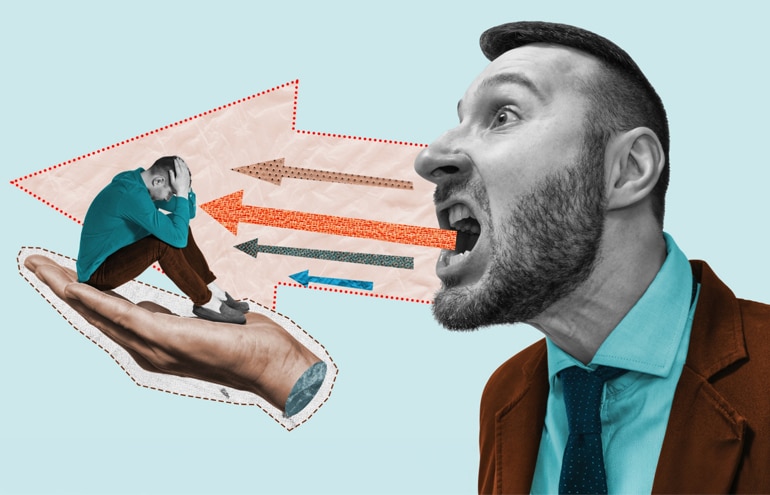
Ending workplace bullying in the legal profession doesn’t require perfection, says “Surviving Bully Culture” author Andy Regal; it requires accountability. Here are three quick actions your law firm can take this quarter.
Not all difficult behavior is bullying. Deadlines matter. Precision matters. Accountability matters. But when conduct becomes patterned, personal and corrosive, it is no longer about performance. And too often in the legal profession, that distinction is ignored.
Defining the Bully Problem
Attorneys are trained to identify patterns, evaluate evidence, and act. Yet in workplaces, practitioners fail to do exactly that.
Workplace bullying is repeated and targeted conduct that provides no benefit to the employees or the firm. That definition matters, especially in legal environments where intensity, acrimony, urgency and high standards are often used to justify behavior that crosses the line.
What I Saw Inside the Legal World
I spent a decade as an executive producer at Court TV, covering some of the most high-profile trials, including the Jeffrey Dahmer case, the William Kennedy Smith trial, the Menendez brothers case, and the OJ Simpson criminal and civil trials. I witnessed extraordinary lawyering: discipline, preparation, intellectual rigor, and advocacy at the highest level.
I also witnessed something else entirely:
Judges operating with autonomy, often without meaningful accountability for how they treat attorneys and staff in their courtrooms.
Senior partners publicly castigating junior attorneys.
Junior attorneys, in turn, dismissing and disrespecting paralegals and support staff.
In other words, a hierarchy where (mis)behavior flowed downhill.
This dynamic is not unique to the law. It’s ubiquitous and pernicious. I experienced workplace bullying throughout my career in television production, which is why I say, “Where there are people at work, there are bullies at work.”
Bullying employees harms them and damages the bottom line. The result: Burnout, absenteeism, increased healthcare costs and attrition. In legal environments, where hierarchy, precedent, and power are deeply embedded, these patterns can become particularly entrenched.
Why Workplace Bullying in the Legal Profession Matters More Than We Admit
One of my coaching clients, a Stanford Law School graduate, entered the profession with discipline, intelligence and promise. Within a short time, she was subjected to relentless criticism, exclusion, gaslighting and humiliation by a senior partner.
She became suicidal.
This is the part of workplace bullying that is still widely misunderstood. It is not simply uncomfortable. It is not a rite of passage. It can be psychologically and physically damaging. And in many cases, it drives talented people out of the profession entirely.
A survey by the International Bar Association found that 57% of bullying cases go unreported, mainly due to fear of retaliation and the belief that this behavior is common. Over 60% of respondents who experienced bullying reported leaving workplaces that lacked support.
Bullying: The Legal System’s Blind Spot
I spoke with Suffolk University Law Professor David Yamada, Director of the New Workplace Institute, who has devoted much of his career to studying and addressing workplace bullying. He shared a critical reality.
Even when behavior is clearly abusive, most legal claims fail.
Courts have repeatedly dismissed cases involving severe workplace mistreatment before they reach trial, often determining that the conduct does not meet the threshold for intentional infliction of emotional distress.
The Healthy Workplace Bill Campaign
Professor Yamada’s response was to draft the Healthy Workplace Bill, which defines an abusive workplace as conduct that a reasonable person would find hostile, offensive and unrelated to legitimate business interests. To date, more than 30 states have considered versions of this legislation.
According to the Workplace Bullying Institute’s 2024 national survey, 87% of respondents support new legal protections for bullied workers. Yet the United States remains the only Western industrialized nation without comprehensive legal protections addressing workplace bullying beyond status-based harassment.
Recognizing Workplace Bullying in Legal Settings
Workplace bullying is one of the most pervasive and least addressed challenges in the profession. Recognizing it and knowing how to respond, especially when it comes from someone in power, is essential to protecting everyone who works in the law, as well as the integrity of the profession.
In legal environments, bullying rarely presents as a single, explosive moment. It presents as patterns:
Public humiliation framed as feedback
Constant interruption or dismissal in meetings or court
Withholding opportunities or critical information
Excessive criticism not tied to performance improvement
Tone, sarcasm or exclusion that destabilizes confidence
Individually, you might rationalize these behaviors. Collectively, they erode people and corrode your law firm’s culture.
What To Do When You Witness Bullying, Especially From a Superior
This is where the legal profession faces one of its most difficult challenges: Power.
When the behavior comes from a senior partner, judge or supervising attorney, the instinct is often to remain silent. But silence is not neutral. It reinforces the behavior and, by extension, the culture of bullying in the legal profession.
If you were the one being bullied, how would you want your peers and those in power to respond?
What Law Firms Can Do This Quarter: Establish Accountability
You do not need a multi-year transformation plan to begin addressing bullying in your law firm. You can take three immediate actions:
Draft and circulate a clear code of conduct. (See FAQs below for resources.)
Require acknowledgment from every level of the firm, including leadership.
Tie behavior to performance reviews, compensation and advancement.
These standards must apply to everyone, including the highest-billing partners. Remember, you are not looking for perfection; you are establishing accountability.
To reinforce standards, train lawyers and staff about the firm’s policy and equip them with the tools to respond to bullying behavior, whether they are being bullied themselves or are witnesses.
We have already done this successfully in areas like sexual harassment. We identified the behavior. We named it. We created standards. And we enforced them. Workplace bullying requires the same approach.
Martin Luther King Jr. said, “Morality cannot be legislated, but behavior can be regulated.”
We may not be able to change every difficult personality in the legal profession, but we can define acceptable behavior in our organizations and identify bullying in the legal profession. We can enforce standards, and we can create environments where excellence does not come at the cost of human dignity.
The legal profession is built on standards and accountability. Workplace behavior should be no exception.
Are You Being Bullied? Coping and Healing
For individuals working inside these environments, I recommend these “Six Tenets of Coping and Healing,” which are immediately applicable:
Reestablish psychological and physical safety.Identify where you can think clearly and work without fear, even temporarily.
Restore self-esteem with evidence.Write down what you are doing well. Do not rely solely on distorted feedback.
Find small, repeatable moments of relief.Short breaks or stepping away can help reset your system.
Reconnect to purpose beyond the current environment.Your life is larger than your current work situation.
Practice intentional self-talk.Replace negative thoughts with objective, positive truth.
No self-blame. Forgive yourself and, later, even your bully boss.Nobody in the history of work ever asked to be mistreated.
FAQs About Bullying in the Workplace
Demanding leadership is tied to performance and results. Workplace bullying is repeated, targeted behavior that provides no benefit to the employee or the organization.
Document patterns, seek support where possible and use internal systems strategically. When appropriate, address behavior through professional observation rather than direct accusation.
Most employment laws focus on discrimination tied to protected classes. Many forms of bullying fall outside those definitions, which is why legislative efforts like the Healthy Workplace Bill continue to gain traction.
Beyond model rules of professional conduct, many state bars (such as the New York State Bar or California State Bar) provide practice management advisory materials or sample harassment policies that encompass bullying under the umbrella of “hostile work environment” protections. In 2024, the Illinois Supreme Court Commission on Professionalism published “Bullying in the Legal Profession: A Study of Illinois Lawyers’ Experiences and Recommendations for Change,” based on a study of more than 6,000 Illinois lawyers. The study has inspired bullying prevention summits in partnership with multiple bar associations, along with judicial training and CLEs and released several resources on bullying prevention. (Read: Six Actions to Stop Bullying in the Legal Profession by Erika Harold.)
In August 2025, the American Bar Association adopted Resolution 523, encouraging legal organizations to address bullying and develop studies similar to the commission’s report.
On the international stage, the International Bar Association has published two reports designed to aid global efforts to address bullying, sexual harassment and discrimination: Beyond Us Too? Regulatory Responses to Bullying and Sexual Harassment in the Legal Profession. The Law Society of Scotland has two model policies: A Preventing Workplace Bullying and Harassment Policy and a Dignity at Work Policy, and the Law Society of British Columbia recently established a task force on bullying in the profession.
Image © iStockPhoto.com.









-1024x683.jpg "Judge Who Helped Violent Illegal Alien Evade ICE Faces New Test")


-1024x683.jpg "Montana Puts Democrats in a Bind as Senate Hopes Fade")