
Add Silicon Canals to your Google News feed. 
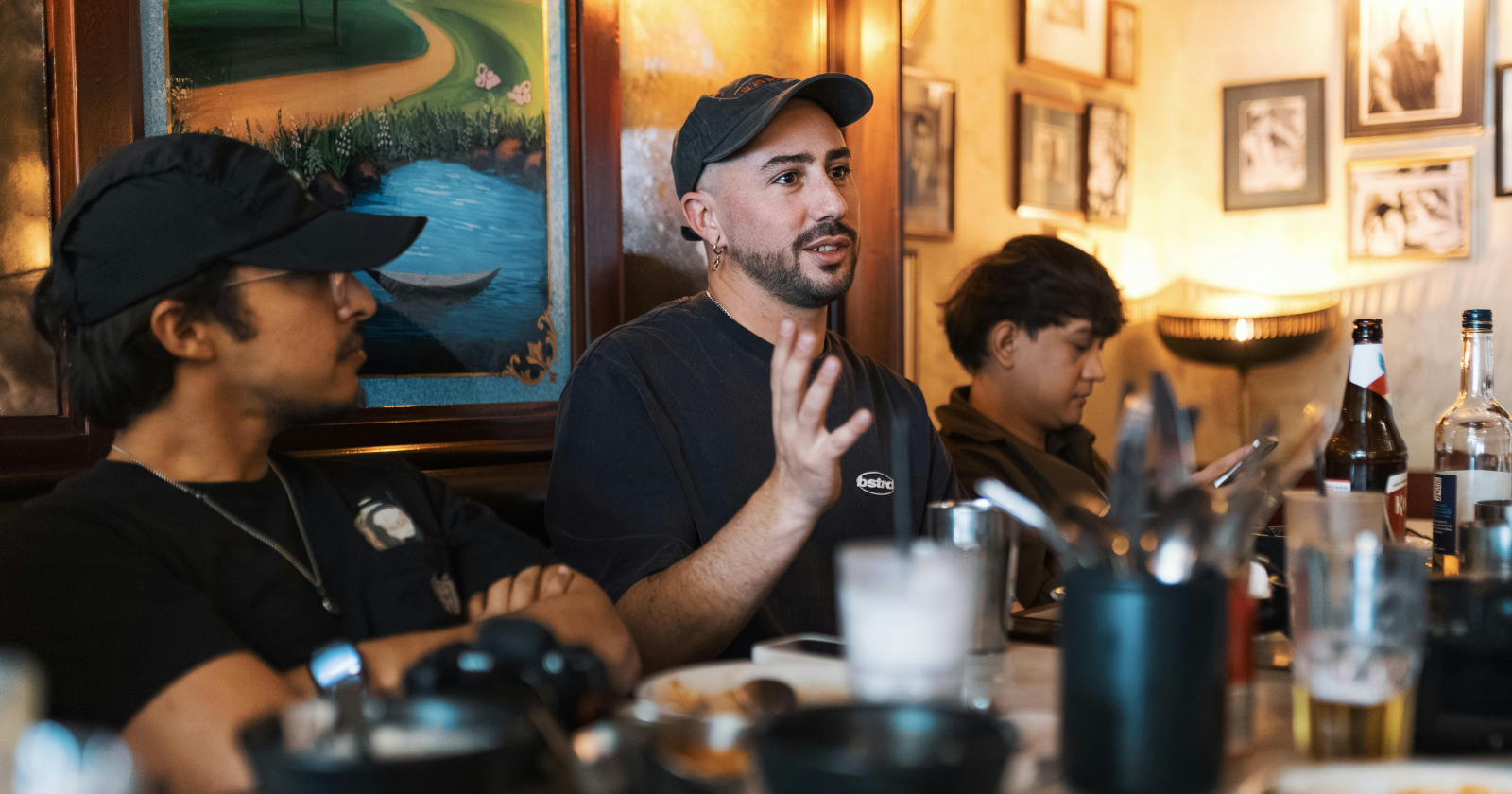
Picture this: You walk into a buzzing restaurant, the kind where conversations blend into a wall of noise, silverware clinks against plates, and the overhead music fights for attention.
The hostess leads you to a table squeezed between two loud groups, fluorescent lights glare overhead, and suddenly your chest tightens.
While your friends settle in comfortably, you’re already planning your escape route, wondering if you can fake an emergency phone call.
If this scenario makes you break out in a cold sweat, you’re not alone.
What you might dismiss as being antisocial or difficult could actually be something much more nuanced: sensory processing differences that affect how your nervous system handles everyday stimulation.
Recent psychological research suggests that people who feel overwhelmed in crowded, noisy environments often share specific sensory processing traits.
These are simply variations in how our brains filter and respond to the constant stream of information around us.
Understanding these quirks can be life-changing, especially if you’ve spent years wondering why certain situations that others find enjoyable leave you completely drained.
1) You notice sounds that others completely tune out
Ever been the only person in a room who can hear the fluorescent light humming? Or find yourself distracted by someone’s breathing three tables away? This heightened auditory awareness means your brain doesn’t automatically filter out background noise the way others’ do.
I discovered this about myself during a work meeting when I kept losing focus because of a ticking clock nobody else seemed to notice.
When I finally mentioned it, my colleagues looked at me like I had three heads.
They genuinely couldn’t hear it until I pointed it out.
This sensitivity isn’t just about volume either.
It’s about your brain processing every layer of sound simultaneously rather than prioritizing the important ones.
In that crowded restaurant, you’re not just hearing your dinner companion; you’re processing every conversation, every chair scrape, every dish clatter as if they’re all equally important signals.
2) Your personal space bubble is bigger than average
Do you instinctively step back when someone moves closer during conversation? Feel physically uncomfortable when strangers sit next to you on public transport even though they’re not actually touching you?
Researchers call this proprioceptive sensitivity, which relates to your awareness of your body in space and its relationship to other objects and people.
Those with this trait often need more physical distance to feel comfortable, and crowded restaurants can feel like an assault on their invisible boundaries.
You might find yourself choosing seats with your back to the wall or gravitating toward corner tables.
It’s not paranoia; it’s your nervous system trying to reduce the number of directions from which sensory input can arrive.
3) Strong smells can completely derail your focus
Walking past someone wearing heavy cologne can ruin your concentration for the next hour.
In restaurants, the mixture of food aromas, cleaning products, and various perfumes creates what feels like an olfactory obstacle course.
What’s particularly challenging is that smell directly connects to the limbic system, the part of your brain that processes emotions and memories.
So not only are you dealing with sensory overload, but each smell might trigger emotional or memory responses that add another layer of mental processing.
I’ve left restaurants before even ordering because the combination of smells was so overwhelming I couldn’t imagine trying to eat.
Friends thought I was being dramatic, but for those with olfactory sensitivity, these experiences are genuinely distressing.
4) You pick up on everyone’s emotional energy
Have you ever walked into a room and immediately sensed tension, even though everyone appeared normal? Or felt exhausted after being around stressed people, even if you weren’t directly involved in their problems?
This emotional contagion effect is amplified in people with sensory processing sensitivities.
In crowded restaurants, you’re not just dealing with physical stimuli; you’re unconsciously absorbing the emotional states of dozens of strangers.
That couple arguing quietly in the corner? You feel it.
The server having a bad day? You pick up on that too.
Psychologists studying this phenomenon have found that highly sensitive individuals often have more active mirror neuron systems, making them naturally more empathetic but also more vulnerable to emotional overwhelm in group settings.
5) Texture combinations can make you lose your appetite
Does the thought of certain food textures make you uncomfortable? Or do specific combinations of textures in your environment create an almost physical response? This extends beyond just food to include the feeling of restaurant chairs, the texture of napkins, or even the sensation of air conditioning on your skin.
In crowded restaurants, you’re managing multiple texture inputs simultaneously.
The sticky residue on a menu, the rough wooden table, the smooth but slightly damp water glass—each texture demands processing power from your already overwhelmed sensory system.
6) Visual chaos makes thinking feel impossible
Some people can work in visually busy environments without issue.
But if you have visual processing sensitivity, a restaurant with patterned wallpaper, flickering candles, moving servers, and constantly shifting crowds can make simple tasks like reading a menu feel monumentally difficult.
Your brain is trying to process every visual element rather than filtering out the irrelevant ones.
It’s like trying to read while someone constantly waves their hands in front of your face—technically possible, but exhausting and frustrating.
I’ve found myself closing my eyes in overwhelming visual environments just to give my brain a break.
It’s not dramatic; it’s a legitimate coping strategy for visual overload.
7) You need significant recovery time after social situations
Perhaps the most telling sign is what happens after you leave.
While others might feel energized after a dinner out, you need hours or even days to fully recover.
This isn’t introversion, though the two often overlap.
It’s sensory fatigue from your nervous system working overtime to process all that input.
You might find yourself sitting in silence afterward, avoiding screens, or needing to be alone in a controlled environment.
This recovery time is your nervous system’s way of resetting after being flooded with more information than it could comfortably process.
Final thoughts
Understanding these sensory processing quirks isn’t about limiting yourself or avoiding social situations entirely.
It’s about recognizing your needs and planning accordingly.
Maybe you choose restaurants during off-peak hours, request quieter seating areas, or simply give yourself permission to leave when overwhelmed without guilt.
These traits often come with advantages too—the same sensitivity that makes crowded restaurants challenging might make you incredibly perceptive, creative, or empathetic in other contexts.
The key is working with your nervous system rather than against it, creating strategies that honor your sensory needs while still engaging with the world in meaningful ways.









-1024x683.jpg "Judge Who Helped Violent Illegal Alien Evade ICE Faces New Test")
-1024x683.jpg "Montana Puts Democrats in a Bind as Senate Hopes Fade")


-1024x683.jpg "The Key Battles for Senate Control Are Set")









