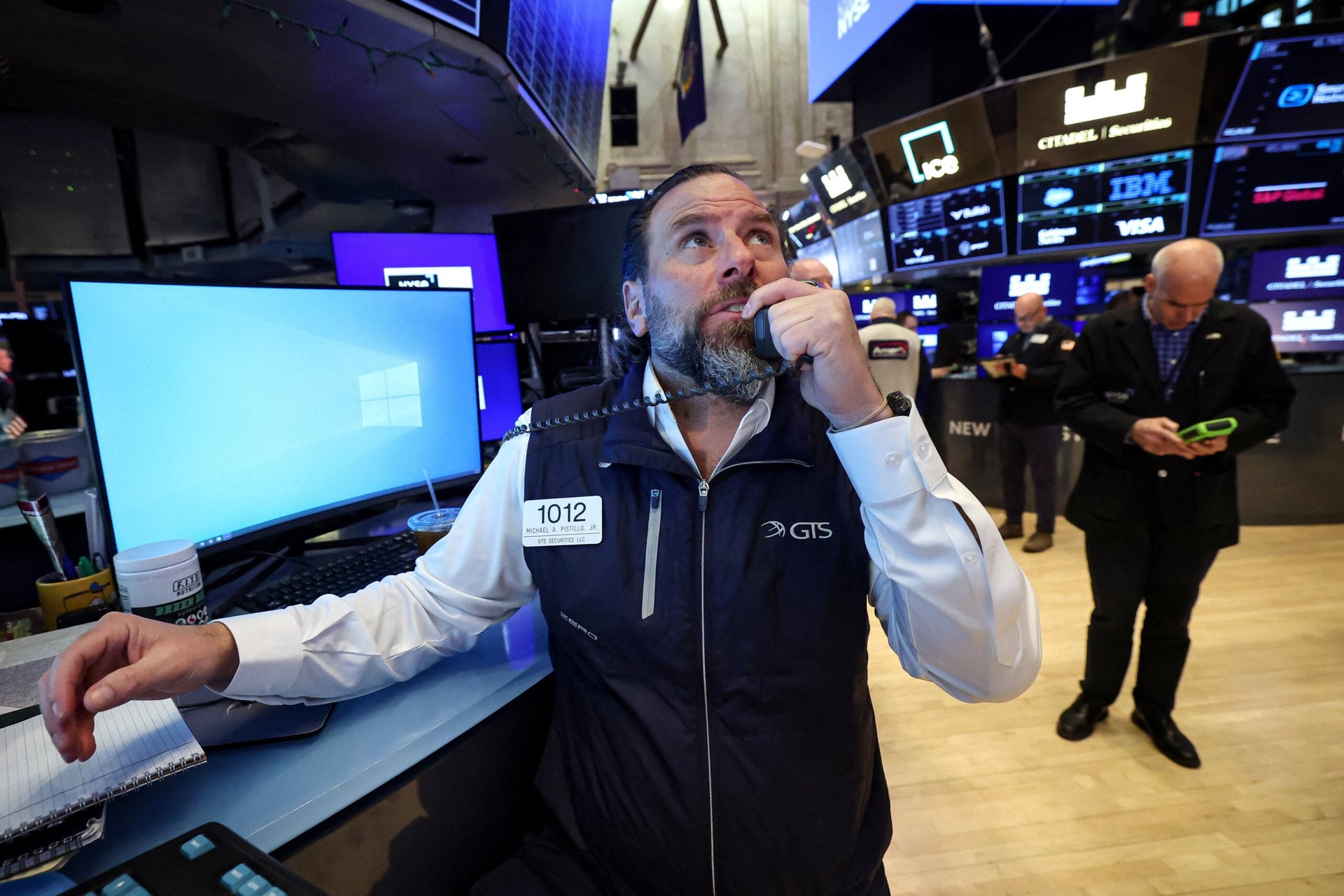
Wall Street indexes fell sharply on Thursday, with the technology-heavy Nasdaq slumping 2%, as investors intensified their selloff of tech shares and fled transport stocks amid worries about artificial intelligence disruption.
The S&P 500 and the Dow sank more than 1% as investors also digested the latest jobs data and awaited the January inflation report, due on Friday.
After starting the day higher, indexes started selling off in morning trading as investors fled from riskier sectors and placed more defensive bets such as utilities, consumer staples and real estate.
At a time when investors have been stressed about the impact AI would have on competition, a less-than-impressive quarterly update from Cisco Systems helped to sour the market on technology stocks broadly. Transportation companies also got caught up in worries about AI disruption.
“The broader narrative within the market is what sectors and industries can increase productivity from AI investments, and on the flip side, what industries are going to be disrupted by AI,” said Jack Herr, primary investment analyst at GuideStone Funds.
“We see this as a ‘prove it’ year for AI. We need to start seeing some return on investments.”
The Dow Jones Industrial Average fell 669.42 points, or 1.34%, to 49,451.98, the S&P 500 gave up 108.71 points, or 1.57%, to 6,832.76 and the Nasdaq Composite lost 469.32 points, or 2.03%, to 22,597.15.
Investors await inflation report, parse jobless data
Wednesday’s stronger-than-expected jobs report fueled worries the Federal Reserve could now be less likely to cut rates. These concerns were on investors’ minds as they braced for the January Consumer Price Index report, due before the next session’s open.
Thursday’s data showed the number of Americans filing new applications for unemployment benefits decreased by less than expected last week, likely as disruptions from winter storms lingered.
“We’re in that in-between zone between two key economic macro reports,” said Marc Dizard, chief investment officer at Huntington Wealth Management.
Cisco shares closed down 12.3% for their biggest one-day selloff since May 2022 after the networking equipment provider posted quarterly adjusted gross margin below estimates.
Cisco was the fifth-biggest drag on the S&P 500, and Dizard said its selloff likely encouraged investors to exit highly liquid megacaps such as Apple, Nvidia, Broadcom and Amazon.com.
Earnings season has revived investor worries about ambitious capital spending this year, with Amazon, Google, Meta and Microsoft collectively expected to spend around $650 billion in the race for AI dominance.
The S&P 500 software index fell 1.7% for its second straight loss, erasing most of the index’s bounce-back from last week’s drubbing. Its biggest percentage decliner during the session was AppLovin, which tumbled 19.7% after it reported fourth-quarter results. Shares in the marketing platform have come under pressure this year due to intense competition.
The economically sensitive Dow Jones Transport Average sank 4% with Landstar off 15.6%, while CH Robinson lost 14.5% and Expeditors International shed 13.2%.
CNBC reported earlier that a new tool announced by AI company Algorhythm Holdings made trucking companies the latest target of investor worries about AI disruption. Algorhythm shares ended the session up nearly 30%.
“There was weakness in the jobs report on transportation hiring,” said Scott Helfstein, head of investment strategy at Global X, referring to Wednesday’s jobs report. “Layer that on top of potential disruption from automation as well as risks of weaker demand.”
While the Philadelphia SE Semiconductor index has fared better than software stocks recently, it finished down 2.5% on Thursday.
Equinix shares rallied 10.4% after the largest data-center operator forecast annual revenue above estimates on Wednesday, betting on strong AI-linked demand. It was the biggest gainer in the S&P 500 real estate index.
Personal-computer makers fell after China’s Lenovo warned of shipment pressure due to a memory-chip shortage, weakening shares of HP, down 4.5% and Dell Technologies, which tumbled 9%.
Declining issues outnumbered advancers by a 2.17-to-1 ratio on the NYSE, where there were 748 new highs and 229 new lows.
On the Nasdaq, 1,305 stocks rose and 3,581 fell as declining issues outnumbered advancers by a 2.74-to-1 ratio. The S&P 500 posted 99 new 52-week highs and 32 new lows.
On U.S. exchanges, 22.45 billion shares changed hands compared with the 20.78 billion average from the last 20 sessions.
(Reporting by Sinéad Carew, Twesha Dikshit and Purvi Agarwal in Bengaluru; Editing by Shilpi Majumdar, Pooja Desai, Rod Nickel)