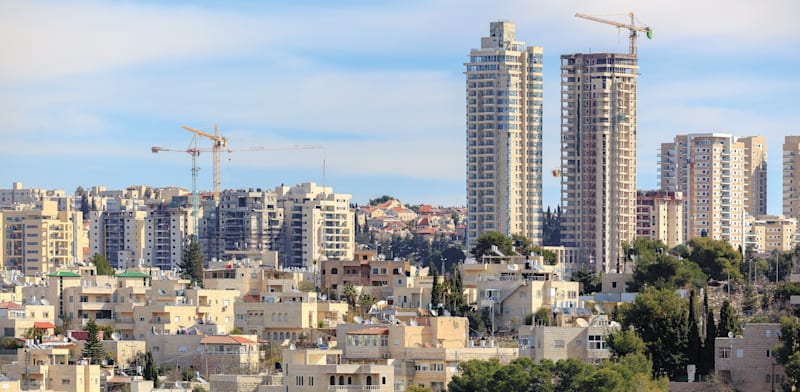
The paradox of real estate in Israel: The two most sought-after cities are also the two cities that are unable to cope with their large supply of apartments. The Central Bureau of Statistics survey summarizing housing deals in Israel in 2025 shows that Jerusalem and Tel Aviv led the number of deals carried out in the country last year, and the two cities also have about 25% of the total supply of homes in Israel. In December Jerusalem also overtook Tel Aviv for the number of new unsold apartments there – and all this while the market is in a severe slump.
In 2025, according to the Central Bureau of Statistics, about 91,000 real estate deals were carried out in Israel. This is about 5,000 more than the Ministry of Finance Chief Economist reported yesterday; the difference stems, among other things, from different methods of counting transactions. This is a decrease of about 12% in the number of transactions carried out in 2024 and an increase of about 27% from 2023, when the war broke out.
Like the Chief Economist, the Central Bureau of Statistics also stresses that there was a market disparity between new and second-hand homes and the number of new homes purchased last year was 26% lower than in 2024. The decline in the purchase of second-hand apartments was a negligible 1%.
Overall 2025 resembled 2017-2018, which also saw a major slump in deals. This was largely due to delays in the government subsidized housing program, which put tens of thousands of young couples on hold in the hope of winning a cheaper apartment. The slump in 2025 is explained by the high interest rate and the economic situation.
The leading cities
The cities that led in the number of deals were Jerusalem, where 5,638 homes were sold (a third of them were new apartments); and Tel Aviv, where 5,159 homes were sold (46% new). The percentage decrease in the number of transactions made in the two largest cities was higher than the overall decrease recorded in the market. Haifa (4,726 deals) and Beersheva (3,572) were third and fourth.
The biggest cities that recorded the largest decline in the number of deals were Ashkelon and Beit Shemesh, each of which saw a decline of more than 20% in the number of deals in 2025, compared with 2024; they were followed by Ashdod (19%) and Petah Tikva (18%).
The decrease in the number of transactions in new apartments greatly increased the inventory of unsold apartments in 2025 to a record 86,000 with Jerusalem and Tel Aviv the leading cities. In Jerusalem, there was a jump in supply, which crossed the 10,000 threshold for the first time in the last three years (10,234), and in Tel Aviv, the supply reached 9,709 new unsold apartments, followed by Bat Yam (5,145), and Netanya (3,599).
Published by Globes, Israel business news – en.globes.co.il – on February 12, 2026.
© Copyright of Globes Publisher Itonut (1983) Ltd., 2026.