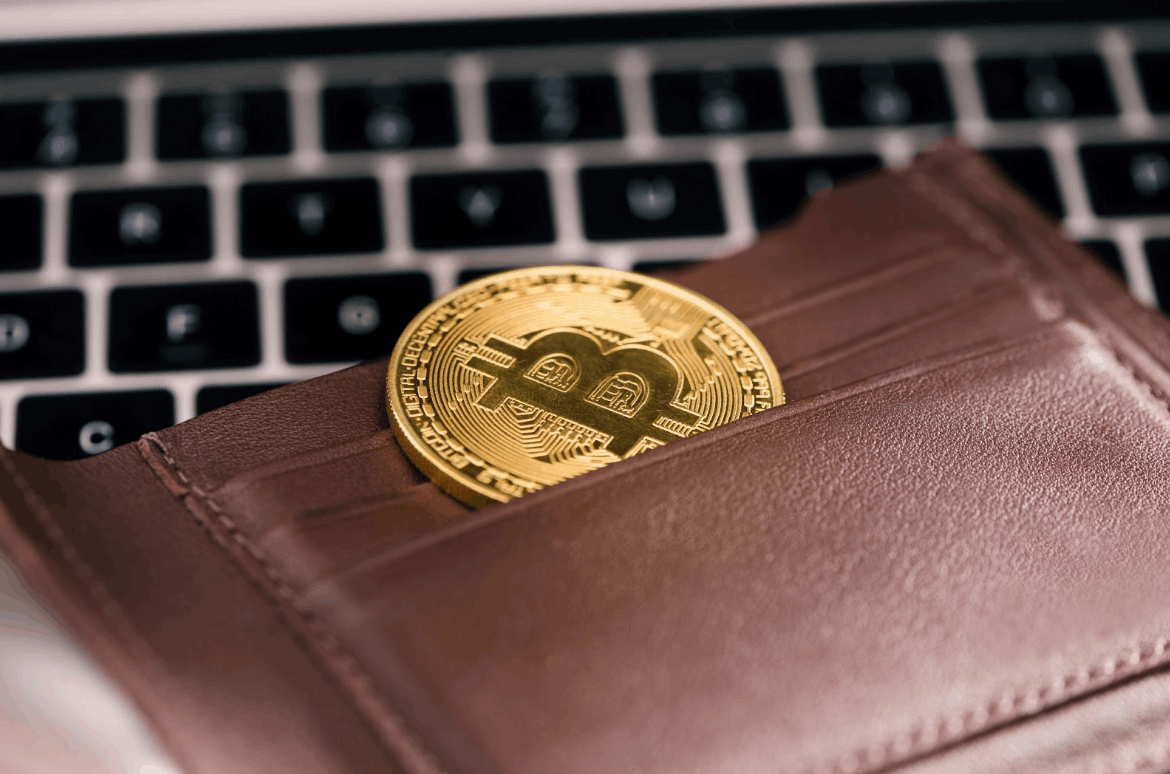
For the Web3/crypto industry, wallets have been with us for a long time. If you want to establish a crypto currency, you’re going to need a place to store it. While physical money can be stored in a wallet, a vault, a safety deposit box, a cash register, or buried in the back yard, digital currency is stored at virtual addresses. Because it makes a nice visual, we’ve decided to call what are essentially digital containers: “wallets”.
Wallets have made the crypto world evolve in ways we truly haven’t anticipated. We’ve seen countless iterations: hot storage, cold storage, heavy security, not-so-heavy security (which led to any number of thefts); we’ve seen the best of passwords using seed phrases, and we’ve seen fortunes lost because an early crypto adopter made a fortune, then forgot their password on a system that has literally no way to recover it.
The biggest trend might be that regardless of whether or not they are unique, wallets are everywhere. It seems that every single Web3 platform has created their own wallet, and many platforms are nothing more than a wallet. This begs the question: what are the biggest things we’ve learned from the crypto wallet evolution, and where are we headed next? Let’s dive in.
What Wallets Do
An easy way to track some of the big changes in wallet design is to look at the catastrophic failures along the way, and how wallet designs changed to prevent these problems. You have some of the big wallet names like MetaMask, Crypto’s Trust Wallet, and Coinbase, who have proven themselves secure enough and easy enough for the average crypto user. These and others like them will use their momentum to continue taking market share, especially because they do the most basic things pretty well. They store crypto securely, they allow their clients to access it easily, and they allow them to conduct transactions over a range of ecosystems.
But what wallets have done well does not guarantee these features are the only ones that matter, but are instead the bare minimum expectations. Looking at trends from 2025, we see that yes, a wallet needs to be accessible and secure, but it needs a great deal more. Users want more control over what they can do with their wallet, they want better integration not just with DeFi but even Web2 ecosystems, and they want to interact with Web3 as a cohesive network, not a collection of chains with different access and rules. Moreover, we have moving trends that are caused heavily by three drivers: the knowledge that threats to wallets will increase heavily as crypto adoption increases; an increase in a more mass audience (and therefore much less tech savvy); and a group that wants to use their Web3 wallet to fit their lifestyle, not find ways they can use their lifestyle to match up with wallet features.
Security Is More Than One Feature
While encryption is absolutely necessary, wallet providers are exploring a wide range of measures that try to hit the sweet spot between completely secure but unusable (think a cold wallet in a buried vault with no door), and a highly usable but unsecured wallet (think an account with no password). The winning element to these trends is that they are heavyweight secure but can be adapted as mostly transparent to users. Multi-Party-Computation (MPC), Zero-Knowledge Proofs (ZKP), time-locks, multi-signature, and other methods can maximize security and if developed well, can do so with little overhead for the user. Mixin has created a number of security features that show how MPC, multi-sig, time locks, and other elements can be applied as needed to handle wallets that need baseline (but powerful) security, all the way up to institutions that are natural targets due to their holdings and prominence.
Mass Audience = Less Tech Savvy
If you want to attract the “average consumer”, you need to accommodate a user experience that is both incredibly simple and borrows from the experiences users already have. One way wallets have done this is by moving past the seed phrase as the only way to access an account. People have many different passwords and it is now nearly as easy to recover a password as it is to remember one. This relies on social logins, and many wallets are adopting this as well. Yes, it is not as secure as an unrecoverable seed phrase. But it still relies on the hacker getting into several of your accounts to gain access, and society seems to have made this an acceptable risk for the convenience it provides. With more biometrics being used for access, Web3 stands to benefit automatically from these types of improvements on social and other accounts. One other note–even wallet addresses are slowly changing into customizable names, with Uniswap Wallet one of the first to offer custom naming and making the transaction process simpler as a result.
Using A Wallet To Get Things Done
Finally, we see that as more people adopt wallets, there are more ways to actually use those wallets to support our everyday life. We’ve seen significant evolution in how we send and receive money with social-style transaction apps. You can tie your bank account or hold a balance into an app like Venmo, and send money not to other bank accounts but to the contacts in your phone. Moreso, you can send descriptions of what the money is for. This has become a very useful tool in our daily lives, and Web3 wallets are nearly purpose-built for this. The key, however, is adding in that social component, and then giving the social piece the same level of protection as the financial side itself.
Here, Mixin is again a key leader with its built-in Messenger, combining rich social features with its P2P payments, all while wrapping them in its significant security and privacy layer, including anonymous, mnemonic-based account creation with no phone number or email required, Signal-protocol end-to-end encrypted messaging, zero-fee transfers between users, an open-source and self-custodial design, and a practical security model using decentralized 2FA and MPC.
In practice, this experience is centered around Mixin’s default Privacy Wallet, which feels less like a traditional crypto dashboard and more like a secure inbox for assets, enabling users to send funds directly inside a conversation, while an optional Common Wallet supports standard Web3 wallets imported from tools like MetaMask or Phantom. As people quickly evolve toward this in their daily lives, this trend will become widespread if the top players can protect both the transactions and the conversations.
In its latest 3.9.x release, Mixin integrates Coinbase’s Onramp API, enabling eligible U.S. iOS users to buy crypto directly inside the app using Apple Pay. Unlike traditional widget or hosted onramps, the API is fully headless and native, requires no Coinbase account, and removes common KYC and flow interruptions. By leveraging Coinbase’s infrastructure while keeping the experience fully embedded, Mixin significantly reduces friction, improves conversion, and gets users onchain faster.
Final Thoughts
Web3 wallets have come a long way, and through the rough patches and the big trends, they have evolved alongside to give us the features and security we need. We aren’t done, however, and who knows what new evolutions we will see in these wallets as mass adoption ramps up, digital currencies become even more the norm, and the global economy becomes even more closely connected.