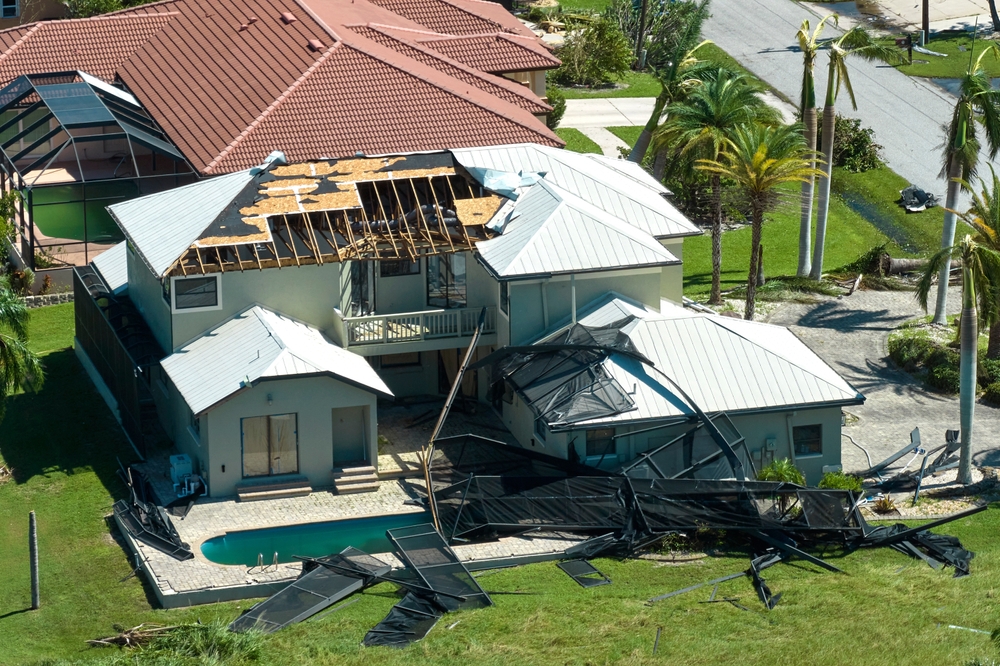
For decades, the “social contract” of home insurance was simple: you paid your premiums, and if a hailstorm destroyed your roof, the insurance company paid to replace it. In 2026, that contract has been rewritten in the fine print. Facing billions in weather-related losses, major carriers have quietly introduced restrictive clauses that hollow out coverage for the most vulnerable part of your home—the roof.
Homeowners who haven’t read their renewal packets in the last 12 months are waking up to a harsh reality: they might be paying for “Full Replacement Cost” coverage on paper, but in practice, they are self-insuring their roof. From “cosmetic” denials to AI-driven cancellations, here are the five specific clauses and tactics insurers are using to void roof claims this year.
1. The “Cosmetic Damage” Exclusion
The most aggressive shift in 2026 is the widespread adoption of the “Cosmetic Damage Exclusion.” This clause states that the insurer is not liable for damage that affects the appearance of the home but not its function.
The Trap: A severe hailstorm hits your neighborhood, leaving your metal roof or aluminum siding looking like a golf ball. In the past, this was a total loss payout. Today, the adjuster will cite this exclusion, claiming that while the roof is ugly, it doesn’t leak, and therefore the “damage” is not covered. You are left with a home that has plummeted in resale value but zero insurance money to fix it.
The Fix: You must specifically ask your agent if your policy includes a “Cosmetic Waiver.” If you have a metal roof, this coverage is often an extra rider that costs more but is essential to protect your investment.
2. The “Actual Cash Value” Switch (The 10-Year Cliff)
Many homeowners believe they have Replacement Cost Value (RCV) coverage, which pays for a brand-new roof minus the deductible. However, insurers are increasingly inserting a “Roof Payment Schedule” that automatically downgrades your coverage to Actual Cash Value (ACV) once the roof hits a certain age—often as young as 10 years old.
The Trap: Your 12-year-old roof is destroyed by wind. A new roof costs $20,000. Because your policy silently switched to ACV, the insurer depreciates the roof’s value by 60% based on its age. They cut you a check for $8,000 (minus your deductible), leaving you to pay the remaining $12,000 out of pocket.
The Fix: Check your “Declarations Page” for a “Roof Surfacing Payment Schedule.” If you see a table showing percentage payouts based on roof age, you do not have full coverage. You need to shop for a carrier that offers RCV for older roofs, though the premium will be significantly higher.
3. The “Anti-Concurrent Causation” Clause
This legalistic tongue-twister is a financial death trap for homeowners in storm-prone areas. The Anti-Concurrent Causation (ACC) clause states that if two events happen at the same time—one covered (like wind) and one excluded (like flood)—the insurer pays for neither.
The Trap: A hurricane blows the shingles off your roof (Covered Wind), allowing rain to soak your drywall. Minutes later, a storm surge floods your living room (Excluded Flood). Because the two events happened concurrently during the same storm, the insurer can deny the entire claim, arguing that they cannot separate the wind damage from the flood damage.
The Fix: This is hard to fight after the fact. The only true defense is to carry a separate Flood Insurance policy (NFIP), which closes the gap the ACC clause exploits.
4. The “Managed Repair” Mandate
In an effort to control costs, some insurers have removed the homeowner’s right to choose their own contractor. This is known as the “Right to Repair” or “Managed Repair Program” clause.
The Trap: Your roof is damaged, and you get a quote from a trusted local roofer for $15,000. The insurance company rejects the quote and invokes their “Right to Repair,” forcing you to use their “Preferred Vendor” who agrees to do the job for $10,000. If the vendor does a poor job or uses cheap materials, you have little recourse because the contract is effectively between the insurer and the vendor.
The Fix: Look for policies that explicitly state you have the “Right to Choose Your Contractor.” If your policy mandates a managed repair program, you are essentially buying a coupon for a discount repair, not true insurance.
5. The “Aerial Audit” Non-Renewal
Finally, the most dystopian trend of 2026 is the “Aerial Aggregation” denial. Insurers are no longer waiting for you to file a claim to inspect your roof; they are buying high-resolution drone and satellite imagery to audit your home proactively.
The Trap: You receive a non-renewal notice in the mail stating your roof has “excessive granular loss” or “moss growth,” accompanied by a grainy satellite photo taken from space. The insurer cancels your policy before a storm hits, citing “unacceptable risk.”
The Fix: If you receive an aerial audit notice, do not accept it as fact. These AI-driven reports often mistake shadows for moss or glare for damage. Hire a local roofer to inspect the roof and provide a “Condition Letter” with ground-level photos to refute the satellite data and reinstate your policy.
Read the “Exclusions” Page First
The most important page of your insurance policy in 2026 is not the one showing what is covered; it is the one showing what is excluded. The “All Perils” policy is a myth. Before you renew this year, sit down with your agent and ask three specific questions: “Is my roof covered at Replacement Cost regardless of age?”, “Do I have a cosmetic damage exclusion?”, and “Can I choose my own contractor?” If the answer to any of these is “No,” you are likely underinsured.
Has your insurance company forced you to use their “preferred” contractor for a repair? Leave a comment below—share your experience with the quality of the work!
You May Also Like…
Benefits of Regular Roof Inspections
Insurance Companies in Tampa Are Updating Roof Requirements for Older Homes
Home Insurance Repricing Is Forcing Tough Choices in Coastal States
Home Insurance Companies Are Re‑Categorizing Common Damages
Home Insurance Providers Are Classifying More Winter Damage as “Negligence”