2025 was highly successful for defense startups in Israel, which won orders worth NIS 1.08 billion, about 25% of which came from foreign customers. In addition 31 startups received international exposure at leading exhibitions around the world, according to the year-end report of the Ministry of Defense Directorate of Defense R&D (DDR&D) (MAFAT).
The volume of orders last year was exceptional, considering that since its it was founded MAFAT has entered into overall deals with startups worth NIS 4.6 billion. However, this is not an unprecedented annual amount, as in 2024 the value of orders was even higher, at NIS 1.22 billion. Today, MAFAT works directly with 221 companies, out of some 302 companies in the industry.
50% of the deals were with early stage companies
The type of orders highlights the role of small companies and startups as an engine of innovation. About 35% of the orders were directed towards R&D, and about 41% towards equipment. The deals were made with 152 companies, almost half of which are in very early stages – pre-seed and seed, – stages in which the company is still developing the initial technology and sometimes has not yet begun sales. This is part of a historical trend that MAFAT has adhered to over the years. More than half of MAFAT’s contracts have been with companies in early stages, while mature companies (Series C and beyond) represent only 0.6% of deals over the years, and zero last year.
Total funding raised by companies that received a direct order from MAFAT in 2025 was $1.2 billion. When examining the ratio between the volume of orders from MAFAT and total fund raising, it becomes clear that MAFAT’s influence is particularly high initially. In pre-seed and seed companies, orders from MAFAT constitute 34% of the total funding volume, compared with only 17% in Series A and 15% in Series B companies and beyond.
One of the key actions taken by the IDF in recent years is the establishment of the “green track”, which reduces bureaucratic barriers and allows for easier terms for startups, with an emphasis on prioritizing and expediting the supplier registration process, acceptance of processes, exemption from guarantees and even shortening payment days in some cases. During 2025, 77 new suppliers registered for the track, and the number of companies registered is currently 295.
Drones, AI and responding to the challenges of military medicine
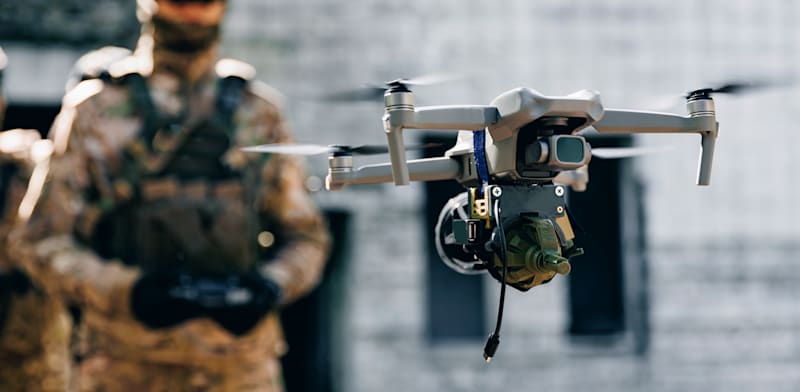
In terms of activity to which most of the money flowed, autonomous platforms (drones, for example) are top with 32.5% of orders, followed by AI and digital (19.9%), cyber (17.7%) and sensors and detectors (9.3%). In 2024, autonomous platforms were in first place with 26.4%, followed by cyber (24.8%) and sensors and detectors (19.5%). The AI and digital sector received only about 11% of orders that year. Compared with the technological diversity, the geographical distribution is more limited: almost two-thirds (63.7%) of the companies are in the center of Israel.
RELATED ARTICLES
Israeli defense-tech startups attract $1b in investment
Record US interest in Israeli defense-tech innovations
Israeli defense-tech co Kela teams with Starling on drones
Israels top 3 defense firms rise in global rankings
In the first half of 2025, MAFAT published 19 calls for proposals – open calls for companies to propose technological solutions. These yielded 661 proposals, of which 220 were submitted to “Innopens,” MAFAT’s startup accelerator. The accelerator completed five cycles in which 72 companies participated, and 24 of them received follow-up orders from MAFAT worth a cumulative total of more than NIS 55 million.
The calls for proposals for the “Innotel” accelerator, which was launched at the end of 2024 in cooperation with the IDF Technology and Logistics Division and led by MAFAT, also aroused great interest, and focuses on challenges in the fields of logistics and military medicine, food, and sustainability. Ten companies are participating in the first cycle, and two of them have already received follow-up orders from MAFAT worth a total of NIS 4.5 million.
As part of Innotel’s calls for proposals, dozens of proposals were submitted in areas such as sensors for the injured, maintenance management systems, suicide prevention simulators, initial mental triage, interpretation of medical tests such as ECG and POCUS, solutions for protective materials, automation and robotics.
Active in the international arena
Another notable jump was recorded in contracts with foreign customers. 17 Israeli startups that are in contract with MAFAT received orders from abroad in 2025 totaling NIS 297 million ($89.8 million), compared with NIS 457 million cumulatively over the years up to 2024.
At the same time, MAFAT worked to strengthen the local defense community through three webinars and six meetups, which were attended by 2,500 participants. Among the intriguing participants who attended the events were Palantir CTO Shyam Sankar and Sequoia Capital partner Shaun Maguire.
Early stage companies also attracted interest in conferences and exhibitions held last year, with Defense Industry and Trade Organization (DIST) providing a platform for 31 companies at exhibitions, including DSEI Japan, the Bangalore Tech Summit in India, and the Defense Week conference in Tel Aviv.
DIST head of the Planning, Economics, and Systems Analysis Division Col. Yishai Cohen tells “Globes” that one of the long-term solutions that may provide a response to the decrease in the intensity of fighting and the upcoming defense budget is startup fund raising, which has crossed the $1 billion mark since the beginning of 2025, as of the beginning of December.
“In 2024, it was the war budget that generated more money (for the startups), and as it seems in 2026 there will be an even smaller defense budget than in 2025. In the shadow of the downward trend in our budgets, MAFAT chief Dr. Danny Gold, is leading activity that, despite the decline in defense budgets, will ensure the preservation and strengthening of startups.”
The issue of exports in general and G2G (government-to-government) sales in particular is an issue that the Defense Ministry aims to continue promoting in 2026. “We are pushing startups into the G2G discourse, because global demand is at a very significant level. Germany, for example, is looking for a lot of defense tech,” explains Col. Cohen. “In accordance with the policy of the Director General of the Ministry of Defense, Maj. Gen. (Res.) Amir Baram, as long as we encourage the export of Israeli products, they will contribute to global security, bring in revenue and be useful when there are more difficult years in terms of budgets in the country.”
Published by Globes, Israel business news – en.globes.co.il – on January 21, 2026.
© Copyright of Globes Publisher Itonut (1983) Ltd., 2026.