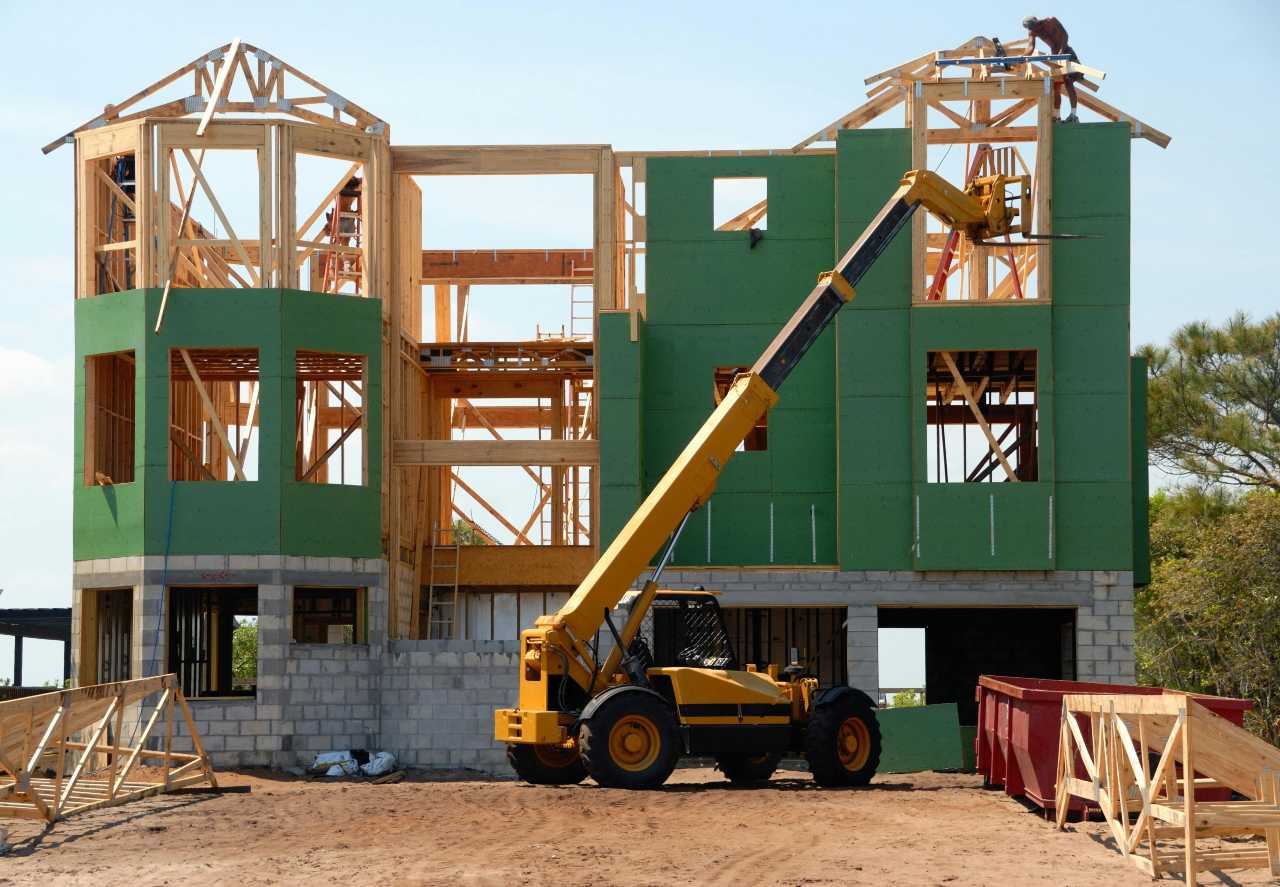
Real estate investors regularly pursue new ventures that require substantial upfront investments before generating any revenue. A successful investor might purchase land for a luxury resort, spend hundreds of thousands on architectural plans and permits, and begin construction on facilities designed to serve paying customers. These early expenditures represent legitimate business development costs, incurred with the genuine expectation of future profits.
But what happens to these costs when construction defects or other problems prevent these ventures from ever opening their doors? Can expenses incurred in planning and developing be deducted as trade or business losses? The answer depends on whether the taxpayer was actually “engaged in carrying on any trade or business” when the losses occurred.
The recent Root v. Commissioner, T.C. Memo. 2025-51, case addresses when ambitious real estate projects fail before operations begin.
Facts & Procedural History
The taxpayers selling their family business in 2008. Prior to this, during the 1990s, while still running their business, the taxpayers began planning their next venture: a recreational ranch and guest lodge in Oregon.
The planned lodge would combine fishing with equestrian activities and hospitality. Beginning in 1995, the taxpayers purchased four parcels of land totaling over 90 acres, including waterways, pasture, and farmland. They invested in property improvements, including waterway restoration to enhance fishing opportunities.
In September 2000, the taxpayers contracted with an architect to design a lodge, guest wing, council house, and barn. Construction began in 2003. The scope of work included the main house, council house, and garage, with the total project representing a substantial investment in what was intended to become a commercial hospitality operation.
Problems emerged almost immediately after the lodge received its certificate of completion in May 2006. Snow and rain caused flooding, revealing serious defects in windows, roofing, and weatherproofing. By 2007, the taxpayers discovered hundreds of bats living in the walls along with rats and mice, creating foul odors throughout the structure. A forensic architect later determined that the foundation was defective and the main fireplace was structurally unsound.
County officials condemned the lodge as unsuitable for occupancy in 2010 after receiving reports of the structural defects. The lodge was eventually demolished. The taxpayers sued their contractor and architect to recover their losses. They ultimately recovered approximately $3 million through arbitration and litigation but paid approximately $4 million in legal fees.
Throughout this entire period, the lodge never hosted overnight guests. The taxpayers never obtained an innkeeper’s license, hired hospitality employees, or developed booking systems. While they did host occasional events on the property between 2002 and 2009–including television filming, fundraisers, and dog trials–none involved stays at the lodge.
The taxpayers initially filed their 2014 tax return listing the husband’s principal business as a consulting business reporting more than $300,000 in gross receipts. However, in May 2018, they filed an amended return claiming a $5 million dollar loss related to the lodge project. They carried portions of this claimed net operating loss to their 2017 and 2018 returns, claiming carryovers of $3 million each year. The IRS examined the tax returns and issued a IRS Notice of Deficiency disallowing the net operating loss carryovers in full and imposing accuracy-related penalties for both years.
Trade or Business Requirements Under Section 165
Section 165(c)(1) allows individual taxpayers to deduct losses “incurred in a trade or business.” This requires the taxpayer actually be engaged in a trade or business when the loss occurs. This is different than the rules under subsection (2), which does not have a trade or business requirement.
The distinction between business losses under Section 165(c)(1) and investment losses under Section 165(c)(2) has significant implications for tax treatment and carryover rules. Business losses (under subsection (1)) can generate net operating losses that may be carried back or forward to offset income in other years, while investment losses (under subsection (2)) are generally limited to offsetting capital gains and may be subject to different timing restrictions. Additionally, business losses (under subsection (1)) aren’t subject to the investment interest limitations that can restrict the deductibility of losses from investment activities. Understanding these distinctions becomes particularly important for real estate activities and rental properties that may qualify for special tax benefits like the Section 199A deduction.
Despite these consequences, neither the tax code nor regulations define the phrase “trade or business.” One has to turn to the court cases for the definition. In Commissioner v. Groetzinger, 480 U.S. 23 (1987), the Supreme Court said that determining trade or business status requires examining all facts and circumstances in each case. Courts apply consistent standards across different code sections, including Section 162(a) for business expense deductions and Section 165(c)(1) for business loss deductions.
These court cases start with the concept of trade or business as something that extends beyond simple profit-seeking activities. Many taxpayers engage in profit-motivated transactions that don’t rise to trade or business level.
The courts have developed a three-factor test for establishing trade or business status. First, the taxpayer must undertake the activity with genuine profit intent rather than personal or investment motives. Second, the taxpayer must be regularly and actively engaged in the activity, demonstrating continuity and regularity rather than sporadic involvement. Third, the taxpayer’s business activities must have actually commenced, meaning the business has begun functioning as a going concern.
This third factor often proves most challenging in cases involving failed or abandoned ventures. For this factor, the courts distinguish between planning and preparation activities–which don’t constitute trade or business operations–and actual business activities that do qualify for trade or business treatment.
When Do Business Activities Actually Begin?
The leading court case for establishing when business operations commence is Richmond Television Corp. v. United States, 345 F.2d 901 (4th Cir. 1965).
In Richmond, the Fourth Circuit held that “even though a taxpayer has made a firm decision to enter into business and over a considerable period of time spent money in preparation for entering that business, he still has not ‘engaged in carrying on any trade or business’ until such time as the business has begun to function as a going concern and performed those activities for which it was organized.”
This standard requires more than research, investigation, or extensive preparation. The business must actually engage in the activities for which it was designed, even if those activities don’t immediately generate revenue or profits. A business can qualify as operational while losing money, provided it’s performing its intended functions and holding itself out to serve customers.
The distinction between pre-opening expenses and business operations becomes particularly important for hospitality ventures like hotels, restaurants, and lodges. These businesses typically require substantial investments in facilities, equipment, and infrastructure before serving their first customer.
Courts analyze whether the business has crossed the threshold from preparation into operations by examining specific operational indicators. Does the business have systems for accepting customers? Has it obtained necessary licenses and permits? Does it have employees or infrastructure capable of delivering services? Has it begun marketing to potential customers or holding itself out as available for business?
The Lodge Project Was Not a Trade or Business
In the present case, the U.S. Tax Court found that the taxpayers’ lodge venture never crossed the line from preparation into actual business operations. Despite substantial investments exceeding $5 million and genuine business intentions, the lodge failed to meet the Richmond Television standard requiring that the business “function as a going concern and perform those activities for which it was organized.”
The lodge never performed its core hospitality function of housing paying guests. The taxpayers themselves acknowledged that the lodge was never in a condition to provide lodging for paying customers. Beyond the construction defects that ultimately led to condemnation, the venture lacked basic operational infrastructure. There was no booking system for accepting reservations, no website for marketing services, no revenue processing capabilities, and no customer service procedures. The taxpayers never obtained the required innkeeper’s license or hired hospitality staff.
The court systematically rejected each of the taxpayers’ proposed business commencement dates. The 1995 land purchase couldn’t establish a hospitality business when no lodging facilities existed. Construction beginning in 2003 represented preparation rather than operations since a lodge cannot house guests while under construction. Even after construction was completed in 2006, the lodge never opened to paying customers. A single open house event in 2006 was insufficient because promotional activities don’t constitute carrying on a trade or business when the facility remains incapable of generating revenue.
The conditional use permit obtained in 2009 also failed to demonstrate business commencement. While permits may be necessary for business operations, obtaining permits alone doesn’t prove that operations have begun. The permit contemplated additional construction that never occurred, and the existing lodge remained unsuitable for occupancy.
The court’s analysis was strengthened by comparing this case to Todd v. Commissioner, 77 T.C. 246 (1981), where a similar IRS audit revealed that abandoned real estate development plans don’t constitute trade or business activities. In Todd, a taxpayer’s “plans to enter the business of renting apartments were never realized,” making the resulting losses from abandoned plans non-deductible as business expenses. The policy underlying net operating loss provisions – allowing businesses to “set off their lean years against their lush years” – doesn’t apply when there were no operational years at all.
The taxpayers also failed the regular and active engagement test. The occasional events hosted on the property were too sporadic and disconnected from hospitality operations to establish ongoing business activity. During the construction period, the taxpayers were simultaneously operating their primary fruit processing business, and after selling that business, one spouse continued leading another company. By the time they might have focused on the lodge, construction defects had made the facility uninhabitable, shifting their attention litation and remediation rather than business development.
The Takeaway
The decision helps explain when activities become trade or business operations for tax purposes. The case shows that substantial investments, genuine business intentions, and professional development don’t create trade or business status when ventures never become operational. Construction defects, permit delays, and market conditions that prevent business opening don’t transform preparation costs into business expenses, regardless of amounts involved or underlying business legitimacy. Taxpayers contemplating similar ventures should focus on establishing operational capabilities as early as possible in development processes. While construction problems may prevent full operations, having booking systems, customer infrastructure, and revenue collection mechanisms might strengthen arguments that trade or business activity has commenced.
Watch Our Free On-Demand Webinar
In 40 minutes, we’ll teach you how to survive an IRS audit.
We’ll explain how the IRS conducts audits and how to manage and close the audit.