No Result
View All Result
SUBMIT YOUR ARTICLES
  • Login
Monday, December 29, 2025
TheAdviserMagazine.com
  • Home
  • Financial Planning
    • Financial Planning
    • Personal Finance
  • Market Research
    • Business
    • Investing
    • Money
    • Economy
    • Markets
    • Stocks
    • Trading
  • 401k Plans
  • College
  • IRS & Taxes
  • Estate Plans
  • Social Security
  • Medicare
  • Legal
  • Home
  • Financial Planning
    • Financial Planning
    • Personal Finance
  • Market Research
    • Business
    • Investing
    • Money
    • Economy
    • Markets
    • Stocks
    • Trading
  • 401k Plans
  • College
  • IRS & Taxes
  • Estate Plans
  • Social Security
  • Medicare
  • Legal
No Result
View All Result
TheAdviserMagazine.com
No Result
View All Result
Home Market Research Economy

St. John Chrysostom’s Moral Critique of Socialism

by TheAdviserMagazine
5 days ago
in Economy
Reading Time: 4 mins read
A A
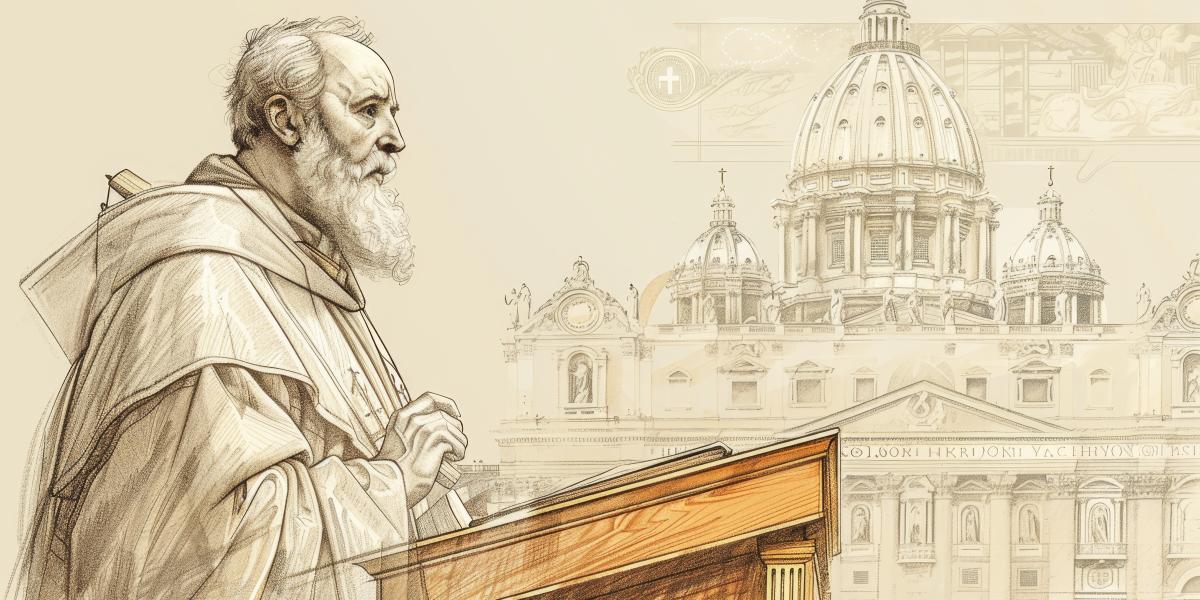
St. John Chrysostom’s Moral Critique of Socialism
Share on FacebookShare on TwitterShare on LInkedIn


Imagine a fourth-century Church Father time traveling to a modern-day rally for “Christian socialism.” St. John Chrysostom—the “golden-mouthed” Archbishop of Constantinople—would probably shock the crowd more than a little. Yes, this passionate preacher denounced the callous rich in terms that would make a Mamdani fan cheer. He once likened wealthy hoarders to “robbers lying in wait on the roads, stealing from passers-by.”

But, before the democratic socialists in the room start high-fiving, Chrysostom would hasten to add that seizing the rich man’s gold by force is not the path to justice. In fact, Chrysostom’s moral reasoning cuts directly against socialism’s core method, namely, state-enforced redistribution, by making a virtue-ethical case for voluntary charity over coerced equality. His centuries-old sermons carry a sharp message for today: imposed “equality” is not only ineffective, it inflicts moral harm on society.

Chrysostom addressed the perennial gap between rich and poor with fiery compassion. No one could accuse him of indifference to poverty. Yet he drew a bright moral line at the idea of forcible redistribution. In one key sermon, preserved in On Living Simply, he asks rhetorically whether we should call in kings and princes to fix inequality. Should rulers seize the rich person’s gold and distribute it among his destitute neighbors? Should the emperor impose taxes so severe that the rich are reduced to the level of the poor, only to redistribute the proceeds to everyone? Chrysostom’s answer is unequivocal. “Equality imposed by force,” he insists, “would achieve nothing, and do much harm.”

Far from uplifting society, coerced wealth transfer would leave the rich resentful and the poor ungrateful, while corroding the moral fabric of both. When wealth is extracted at sword-point by soldiers, no one learns charity or gratitude. As Chrysostom puts it, “no generosity would have prompted the gift.” Such transfers do not cultivate virtue. They replace love with compulsion. Rather than binding society together in compassion, forced redistribution “actually do[es] moral harm,” generating bitterness and eroding the goodwill that voluntary giving alone can create.

“Material justice cannot be accomplished by compulsion,” Chrysostom argues, because no lasting moral change “will follow” from mere external rearrangement. Justice, in his view, is a matter of rightly-ordered hearts. “The only way to achieve true justice is to change people’s hearts first, and then they will joyfully share their wealth,” he counsels. In other words, a just society flows from virtuous individuals acting out of love, not from technocratic schemes imposing artificial equality. This is a profoundly virtue-ethical critique of socialism avant la lettre. You cannot bludgeon people into becoming good. Charity by coercion is not charity at all. It is an injustice to both giver and receiver.

At first glance, it might seem a stretch to link a Church father with the Austrian School of economics. Yet, when it comes to coercion versus freedom, Chrysostom and the Austrians are strikingly aligned. Chrysostom’s critique of enforced equality echoes what Ludwig von Mises would argue fifteen centuries later. Social cooperation and moral responsibility flourish under liberty, and they wither under statism. Mises famously contended that society faces a stark choice: either the voluntary cooperation of the market or the disintegration brought by socialist coercion. “A society that chooses between capitalism and socialism does not choose between two economic systems,” Mises wrote. “It chooses between social cooperation and the disintegration of society.”

Mises also exposed a fatal flaw in the moral logic of statism. If human beings are too morally weak to be trusted with economic freedom, how can they be trusted with concentrated political power? As he dryly observed, “If one rejects laissez faire on account of man’s fallibility and moral weakness, one must for the same reason also reject every kind of government action.” Chrysostom—with his Christian understanding of universal sinfulness—would readily agree. Handing more power to flawed humans—whether emperors or socialist planners—is no recipe for virtue. Moral growth requires freedom, including the freedom to fail. The state cannot play savior here.

Contemporary economic thinkers have increasingly revisited the role of virtue in free societies, reinforcing Chrysostom’s insight that morality is the lifeblood of a healthy economy. Economists Virgil Storr and Ginny Choi, for example, challenge the claim that markets corrupt moral character. They show instead that markets often reward cooperation, trustworthiness, and reciprocity. Market societies, they argue, tend to be healthier, happier, and more socially connected, outcomes that are morally significant in themselves. Markets are a “moral space,” one that both depends on virtuous behavior and reinforces it. Without honesty, promise-keeping, and respect for property, markets collapse. That dependence means markets quietly cultivate the very virtues critics claim they erode.

Economic historian Deirdre McCloskey has made a complementary case. Bourgeois capitalism, she argues, did not flourish despite virtues like prudence, justice, temperance, courage, faith, hope, and charity. It flourished because of them. Those classical virtues are “crucial for the capitalist economy,” both supporting it and being strengthened by it in return.

Chrysostom would not have known terms like “market order” or “invisible hand,” but he understood a deeper truth. Goodness cannot be manufactured by decree. He placed his faith in the slow, patient work of moral formation. What free-market advocates defend today is not moral indifference, but moral realism. Order emerges from free human action, not from the threat of force. Chrysostom saw this clearly. Attempts to engineer virtue through coercion do not yield justice. They yield resentment, dependency, and moral decay.



Source link

Tags: ChrysostomsCritiqueJohnmoralSocialism
ShareTweetShare
Previous Post

Today’s learners have changed – can universities keep up? 

Next Post

Can you hedge against a market crash with ETFs?

Related Posts

edit post
Why Is Keynesian Economics Collapsing?

Why Is Keynesian Economics Collapsing?

by TheAdviserMagazine
December 29, 2025
0

In his 1936 book, ‘The General Theory of Employment, Interest and Money,’ John Maynard Keynes argued that aggregate demand was...

edit post
Links 12/28/2025 | naked capitalism

Links 12/28/2025 | naked capitalism

by TheAdviserMagazine
December 28, 2025
0

Acoustic Guitar String Oscillations The frame rate of the camera allows us to see the wavelength of each note pic.twitter.com/VOoxecFT7F...

edit post
The Sunday Morning Movie Presents: Sholay (1975) Run Time: 3H 10M Bonus Cinema Documentary

The Sunday Morning Movie Presents: Sholay (1975) Run Time: 3H 10M Bonus Cinema Documentary

by TheAdviserMagazine
December 28, 2025
0

Greetings gentle readers and welcome to another installment of the Sunday Morning Movie. Today it’s a Bollywood classic, Sholay. and...

edit post
Did Israel’s Rivalry With Turkiye Play A Major Role In Its Recognition Of Somaliland?

Did Israel’s Rivalry With Turkiye Play A Major Role In Its Recognition Of Somaliland?

by TheAdviserMagazine
December 28, 2025
0

Conor here: While Korybko argues Israel’s move is about the Turkish presence in Somalia, let’s not forget about others present...

edit post
Socialism Contradicts Freedom Of Religion – Why Amish Do Not Pay Social Security Taxes

Socialism Contradicts Freedom Of Religion – Why Amish Do Not Pay Social Security Taxes

by TheAdviserMagazine
December 28, 2025
0

In 1935, Roosevelt introduced “The Social Security Act,” which passed in Congress. However, the act was described as “Old Age,...

edit post
Links 12/27/2025 | naked capitalism

Links 12/27/2025 | naked capitalism

by TheAdviserMagazine
December 27, 2025
0

When Will My Pornographic Shrek Christmas Ornament Arrive? 404 Media Wild hogs wreak economic havoc for Mississippi agriculture Associated Press...

Next Post
edit post
Can you hedge against a market crash with ETFs?

Can you hedge against a market crash with ETFs?

edit post
stories that shaped the sector

stories that shaped the sector

  • Trending
  • Comments
  • Latest
edit post
How Long is a Last Will and Testament Valid in North Carolina?

How Long is a Last Will and Testament Valid in North Carolina?

December 8, 2025
edit post
In an Ohio Suburb, Sprawl Is Being Transformed Into Walkable Neighborhoods

In an Ohio Suburb, Sprawl Is Being Transformed Into Walkable Neighborhoods

December 14, 2025
edit post
Democrats Insist On Taxing Tips        

Democrats Insist On Taxing Tips        

December 15, 2025
edit post
Detroit Seniors Are Facing Earlier Shutoff Notices This Season

Detroit Seniors Are Facing Earlier Shutoff Notices This Season

December 20, 2025
edit post
Warren Buffett retires on December 31 and leaves behind a manual for a life in investing

Warren Buffett retires on December 31 and leaves behind a manual for a life in investing

December 27, 2025
edit post
Elon Musk adds to his 9 billion fortune after Delaware court awards him  billion pay package

Elon Musk adds to his $679 billion fortune after Delaware court awards him $55 billion pay package

December 20, 2025
edit post
Real Value of 0 by Metro, 2023

Real Value of $100 by Metro, 2023

0
edit post
Hacken’s 2025 Security Report Shows Nearly B in Web3 Losses

Hacken’s 2025 Security Report Shows Nearly $4B in Web3 Losses

0
edit post
Explore Every Facet of Krikya in Bangladesh – A Comprehensive Review

Explore Every Facet of Krikya in Bangladesh – A Comprehensive Review

0
edit post
North Korea’s Kim tests long-range cruise missiles over West Sea

North Korea’s Kim tests long-range cruise missiles over West Sea

0
edit post
Silver tops  for first time, then stages dramatic reversal overnight

Silver tops $80 for first time, then stages dramatic reversal overnight

0
edit post
Treasury compromises on electric car tax hike

Treasury compromises on electric car tax hike

0
edit post
Hacken’s 2025 Security Report Shows Nearly B in Web3 Losses

Hacken’s 2025 Security Report Shows Nearly $4B in Web3 Losses

December 29, 2025
edit post
Treasury compromises on electric car tax hike

Treasury compromises on electric car tax hike

December 29, 2025
edit post
The Rise of the Sophisticated Client: 5 Reasons 57% of Americans Want Professional Financial Guidance

The Rise of the Sophisticated Client: 5 Reasons 57% of Americans Want Professional Financial Guidance

December 29, 2025
edit post
Explore Every Facet of Krikya in Bangladesh – A Comprehensive Review

Explore Every Facet of Krikya in Bangladesh – A Comprehensive Review

December 29, 2025
edit post
Silver tops  for first time, then stages dramatic reversal overnight

Silver tops $80 for first time, then stages dramatic reversal overnight

December 29, 2025
edit post
Bitcoin Will Hit 0,000 in 2026

Bitcoin Will Hit $150,000 in 2026

December 29, 2025
The Adviser Magazine

The first and only national digital and print magazine that connects individuals, families, and businesses to Fee-Only financial advisers, accountants, attorneys and college guidance counselors.

CATEGORIES

  • 401k Plans
  • Business
  • College
  • Cryptocurrency
  • Economy
  • Estate Plans
  • Financial Planning
  • Investing
  • IRS & Taxes
  • Legal
  • Market Analysis
  • Markets
  • Medicare
  • Money
  • Personal Finance
  • Social Security
  • Startups
  • Stock Market
  • Trading

LATEST UPDATES

  • Hacken’s 2025 Security Report Shows Nearly $4B in Web3 Losses
  • Treasury compromises on electric car tax hike
  • The Rise of the Sophisticated Client: 5 Reasons 57% of Americans Want Professional Financial Guidance
  • Our Great Privacy Policy
  • Terms of Use, Legal Notices & Disclosures
  • Contact us
  • About Us

© Copyright 2024 All Rights Reserved
See articles for original source and related links to external sites.

Welcome Back!

Login to your account below

Forgotten Password?

Retrieve your password

Please enter your username or email address to reset your password.

Log In
No Result
View All Result
  • Home
  • Financial Planning
    • Financial Planning
    • Personal Finance
  • Market Research
    • Business
    • Investing
    • Money
    • Economy
    • Markets
    • Stocks
    • Trading
  • 401k Plans
  • College
  • IRS & Taxes
  • Estate Plans
  • Social Security
  • Medicare
  • Legal

© Copyright 2024 All Rights Reserved
See articles for original source and related links to external sites.