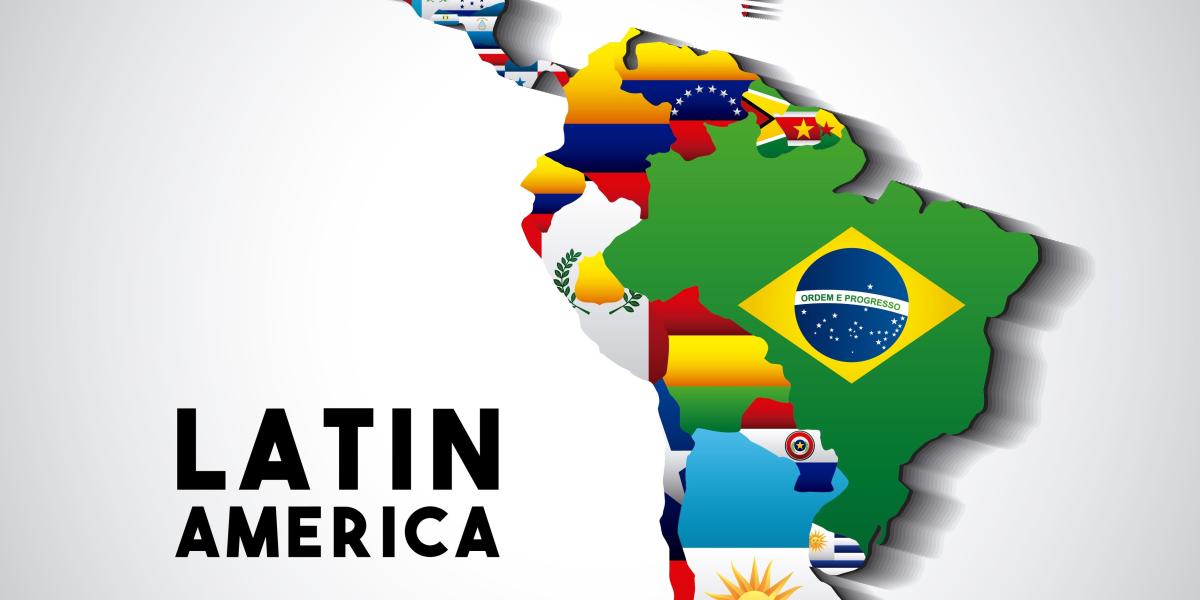
It was at the height of the Cold War that the CIA and the American government—fearing the weakening of the capitalist bloc in Latin America due to the influence of Liberation Theology in the southern part of the continent—began subsidizing Protestant missions, mostly of Pentecostal denomination, with the intent of diluting Catholic presence and preventing the spread of Marxist ideals through religion. Declassified CIA documents, State Department memoranda, and USAID (United States Agency for International Development) contracts indicate that, between the 1950s and 1980s, the US used Protestant missions as part of a counterinsurgency strategy.
But for what reasons were such measures taken? First of all, it is necessary to understand why the Catholic Church allowed “Marxist” interpretations of the Scriptures to gain space within its own structure.
Historically, it was the Church—with its rationalist doctrine propagated by Saint Thomas Aquinas, the late scholastics, and many others—that shaped a Europe, where natural law and private property became pillars of the social order. The influence of this rationalism can be perceived even today in the Austrian School of economics: from Menger, with his notion of subjectivity, to contemporary libertarians like Rothbard, who reinforced natural law and the centrality of private property.
The decisive change, however, would come only in the 20th century, more specifically in 1962, with the Second Vatican Council. On this Council alone, hundreds of books—favorable and critical—have been written and continue to be written. It suffices to say that, in it the Church adopted a more “liberal” stance regarding interpretations of the Sacred Scriptures, opening space both for pseudo-Protestant readings, such as those of charismatic groups, and for political approaches, like that of Liberation Theology.
Even though, a few years earlier, popes like Pius XII and Leo XIII had publicly condemned communism and applied automatic excommunication to those who supported it, the post-conciliar clergy—moved by a “pious zeal” in relation to the Council and its teachings—stopped acting against the theologians of LT, who were already spreading throughout Latin America. Even John Paul II—often remembered by conservatives as one of those responsible for the decline of socialism in Europe—never issued a specific excommunication or applied decisive sanctions against LT. Some leaders of the movement, like Leonardo Boff, suffered punishments, but there was never a definitive doctrinal condemnation.
In this scenario, during the Cold War, various Pentecostal hubs, supported by the US, began to emerge precisely in regions where LT had the greatest influence. The Campus Crusade for Christ (now CRU)—founded by Bill Bright and clearly anticommunist—received support from American embassies in Brazil during the military dictatorship, including the “Here’s Life” campaign in 1974, coordinated with consular officials to promote a depoliticized Christianity. The CIA also funded networks like Trans World Radio and HCJB in Ecuador, which broadcast anticommunist sermons to areas dominated by Liberation Theology. Materials from the USIA (United States Information Agency) labeled liberation theologians as Marxists and were distributed to religious leaders.
These initiatives are seen today as one of the main reasons for the growth of Protestantism in Latin America relative to Catholicism. Currently, the most popular Protestant variants are associated with the so-called “Prosperity Theology,” which, despite the controversies, is the one that attracts the most followers in Latin American Protestantism, emphasizing material prosperity as a divine promise.
Despite the results, the consequences of the constant growth of Protestantism in Latin America do not justify definitive peace. The Protestant doctrine, unlike the Catholic Thomistic one, lacks the rational foundation from which Austrian liberals draw. In contrast, evangelical churches increasingly adopt a more momentary position, which makes the evangelical movement in politics extremely dependent on the situation the right finds itself in. Contrasting with the religion-politics order that Catholicism promoted in Europe, Protestants end up at the mercy of politicians to adopt political movements. The definitive solution to the evils of communism lies in rationalism, the fruit of Catholicism and Austro-libertarianism, which walk in accordance with human instinct, its nature, and private property. Only these values can guarantee social order and freedom.