Lawmakers and taxpayers alike could be in for an unpleasant surprise in some states, as state taxA tax is a mandatory payment or charge collected by local, state, and national governments from individuals or businesses to cover the costs of general government services, goods, and activities. codes unexpectedly pick up and distort a new tax on international income. Some states that decoupled from the old tax on global intangible low-taxed income (GILTI) could easily sleepwalk into taxing net CFC-tested income (NCTI)—even worse, in fact, because there’s nothing “net” about the way the tax would flow through to states.
At the federal level, NCTI operates as a minimum tax, imposing compensatory US tax on income that is only minimally taxed abroad. The application of tax credits for foreign taxes paid ensures that the tax does not fall on businesses with foreign subsidies if those subsidiaries are subject to meaningful levels of foreign tax.
But states don’t provide foreign tax credits, so states that conform to NCTI will tax an apportioned share of all income of foreign subsidiaries of US parent corporations, no matter how significant their foreign tax liability, and even when that income has no association whatsoever with in-state activities. We have previously written about the many flaws of taxing NCTI at the state level, which states taxing GILTI are automatically in line to do.
But some states that don’t tax GILTI—which, in fact, affirmatively decoupled from GILTI—are on a glide path to taxing NCTI. And in 12 other states, conformity to NCTI is highly unlikely but could be pursued by aggressive tax administrators.
States that excluded GILTI from their tax baseThe tax base is the total amount of income, property, assets, consumption, transactions, or other economic activity subject to taxation by a tax authority. A narrow tax base is non-neutral and inefficient. A broad tax base reduces tax administration costs and allows more revenue to be raised at lower rates. did so in a variety of ways:
Excluding or offering a subtraction modification for the federal code sections (particularly IRC § 951A) that contained GILTI and now contain NCTI
Subtracting or decoupling from the tax on “global intangible low-taxed income” by name
Statutorily defining GILTI as dividend income or Subpart F income, with preexisting deductions for those categories of income
Applying similar statutory definitions, but for the code sections containing GILTI (and now NCTI) rather than GILTI by name
Administratively determining that GILTI constituted dividend or Subpart F income, for which there is a preexisting deduction
The problem here is obvious: if a modification or exclusion is explicitly tied to something called “global intangible low-taxed income,” it refers to a tax provision that no longer exists. While NCTI is its successor and was written to the same Internal Revenue Code sections, it is not GILTI, and, however much a continued deduction or subtraction modification may be true to the spirit of the existing state statute, it is quite possible (even likely) that revenue officials charged with enforcing state law will not agree.
States in which tax administrators concluded that GILTI constituted dividend income or was sufficiently akin to Subpart F income should reach the same determination regarding NCTI, since, while the taxes are different, they share the characteristics that led state revenue officials across the country to apply their rules for dividend or Subpart F income.
Iowa, Kansas, New Hampshire, and Tennessee decoupled from GILTI by name rather than statutory citation, and lawmakers in those states should amend these statutes to reference the relevant code section, IRC § 951A, to ensure that their tax code does not accidentally incorporate a much more aggressive tax on international income than the tax from which they previously decoupled. (Virginia decouples from § 951A but calls it GILTI in parentheses. The reference to § 951A should govern.)
Eight additional states and the District of Columbia relied on revenue officials’ determination that GILTI constituted deductible dividend income. One (Arizona) identifies GILTI as dividend income by statute, while two exempted GILTI under subtractions for Subpart F income.
In these states, the same determination should be applied to NCTI, though policymakers may wish to obtain assurances of this. They could, if desired, enshrine the intended decoupling from this international income provision into law to resolve any ambiguity or the possibility of future reversal. The states in which this is relevant are Arizona, Arkansas, Connecticut, Delaware, Kentucky, Louisiana, Massachusetts, Missouri, New Jersey, Oklahoma, Pennsylvania, and the District of Columbia.
In Arizona, state law provides for a deduction for dividend income of foreign corporations and enumerates some of the income sources meeting that standard, including “global intangible low-taxed income as defined in section 951A of the internal revenue code.” GILTI and NCTI should meet the definition of foreign dividend income with or without specific enumeration, but it is worth noting that lawmakers expressly identified GILTI in statute.
Of course, NCTI is bad policy in any state, and far more aggressive than GILTI ever was, so lawmakers in states that already taxed GILTI should also consider revisiting their state’s conformity to NCTI. But at least in these states, the tax won’t be a complete surprise.
Illinois, for instance, recently chose to tax GILTI and now intentionally taxes NCTI. Iowa made the opposite decision with similar intentionality, yet it is currently on track to join Illinois in taxing NCTI. Updating the state’s decoupling statute to reflect § 951A rather than GILTI is a technical fix, but an important one.
Based on our statutory analysis, the risk in Iowa, Kansas, New Hampshire, and Tennessee is straightforward. States in which GILTI was excluded through a determination that it constituted deductible dividend or Subpart F income should afford the same treatment to NCTI, but since there is no guarantee that tax administrators won’t revisit the question, it’s worth a quick technical aside to understand why the exclusion is appropriate.
Under federal law, while GILTI and NCTI are not included in the definition of Subpart F income (a category that includes income from a controlled foreign corporation that US investors must include on their own income tax returns), the amount of NCTI includable in gross incomeFor individuals, gross income is the total of all income received from any source before taxes or deductions. It includes wages, salaries, tips, interest, dividends, capital gains, rental income, alimony, pensions, and other forms of income.
For businesses, gross income (or gross profit) is the sum of total receipts or sales minus the cost of goods sold (COGS)—the direct costs of producing goods “shall be treated in the same manner as” Subpart F income per IRC § 951A(f)(1), a provision incorporated in the two states that exclude GILTI under their subtractions for Subpart F income. These states must provide the benefit of their Subpart F income subtraction to this similar provision because the tax code affirms that they are to be treated identically.
Similarly, while GILTI and NCTI are not necessarily dividends under the definition in IRC § 316, they fit the definition of what the courts have termed deemed dividends. States acknowledge this concept when they exclude Subpart F income based on their deductions for dividends, considering it a deemed dividend, and states followed this same approach in applying dividends received deductions to GILTI—which should now extend to NCTI. Indeed, even states that taxed GILTI acknowledged it as eligible for any deductions for dividends received, which served as the basis for reduced taxation of GILTI in several states with a partial rather than total exclusion of dividend income.
If lawmakers don’t want their states to tax NCTI, they should prioritize decoupling when sessions convene in 2026.
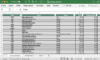
The table below indicates every state’s conformity or nonconformity to NCTI along with the relevant statutory citation.
State Tax Treatment of NCTI
Source: State statutes; Tax Foundation research.
Stay informed on the tax policies impacting you.
Subscribe to get insights from our trusted experts delivered straight to your inbox.
Subscribe
Share this article