No Result
View All Result
SUBMIT YOUR ARTICLES
  • Login
Sunday, August 23, 2026
TheAdviserMagazine.com
  • Home
  • Financial Planning
    • Financial Planning
    • Personal Finance
  • Market Research
    • Business
    • Investing
    • Money
    • Economy
    • Markets
    • Stocks
    • Trading
  • 401k Plans
  • College
  • IRS & Taxes
  • Estate Plans
  • Social Security
  • Medicare
  • Legal
  • Home
  • Financial Planning
    • Financial Planning
    • Personal Finance
  • Market Research
    • Business
    • Investing
    • Money
    • Economy
    • Markets
    • Stocks
    • Trading
  • 401k Plans
  • College
  • IRS & Taxes
  • Estate Plans
  • Social Security
  • Medicare
  • Legal
No Result
View All Result
TheAdviserMagazine.com
No Result
View All Result
Home College

Supporting the Supporters: Promoting Educators’ Mental Health – Faculty Focus

by TheAdviserMagazine
10 months ago
in College
Reading Time: 5 mins read
A A
Supporting the Supporters: Promoting Educators’ Mental Health – Faculty Focus
Share on FacebookShare on TwitterShare on LInkedIn


If we do not take care of our teachers, we risk losing them, or worse, leaving them in classrooms too burned out to do their best work. 

Teaching at the tertiary level has always demanded more than content delivery. But in recent years, that more has become overwhelming. During the COVID-19 pandemic, many faculty members juggled remote instruction, personal grief, student trauma, and rising institutional demands – often without meaningful emotional support. As a result, many emerged not only exhausted but emotionally depleted. This article draws on a recent study of Jamaican school leaders responding to the mental health challenges brought on by the pandemic. The key takeaway from the findings is clear: sustainable education starts with prioritizing the well-being of those who deliver it. To support this mission, I present C.A.R.E. 2.0 – a practical framework grounded in real-life strategies, offering tangible strategies that institutional leaders can implement to support faculty mental health. 

The C.A.R.E. 2.o Framework

At its core, C.A.R.E. 2.0 reminds us as educators that care is not just kindness but it is strategy. It includes: 

1. C = Check-in & Connect

One of the most impactful tools used by school leaders was regular emotional check-ins with staff. These were not formal counselling sessions or time-consuming meetings. Often, it was as simple as asking, “How are you holding up?” before a meeting or beginning a staff briefing with a quick, one-word emotional prompt, such as, “What’s one word to describe how you’re feeling today?”  Not everyone will want to participate, and that is perfectly okay. The importance lies not in forced sharing, but in creating a culture where emotional well-being is acknowledged and valued. When leaders make space for these moments, they send a powerful message: You matter as a whole person, not just for your professional role. 

This simple act helps faculty feel seen and heard, which research shows is foundational to sustaining engagement, productivity, and resilience, especially during times of stress or uncertainty. Feeling emotionally connected to colleagues reduces isolation, builds trust, and fosters a sense of belonging. Ultimately, this strengthens the entire educational community, helping faculty to better support their students and persevere through challenges. 

2. A = Adapt Professional Development (PD) to Include Wellness Activities

In the study, some leaders expanded their professional development (PD) offerings to include wellness-focused sessions. These addressed topics such as time management, emotional resilience, and stress management – skills that are increasingly critical in today’s educational climate. In higher education, PD is often centered on introducing new instructional strategies or exploring digital tools to enhance student engagement. But what if we also included sessions like “How to Say No with Grace” or “Burnout Recovery for Faculty”? What if we invited trauma-informed or mental health professionals to lead short, practical sessions tailored to faculty needs? 

These additions may seem small, but they can make a significant difference. Wellness-focused PD gives faculty tools to manage stress, set boundaries, and prioritize their own well-being, skills that ultimately lead to better teaching and stronger institutions. In fact, faculty often appreciate these sessions more than expected because they address the realities of academic life, not just its demands. Incorporating wellness into PD is not just nice to have; it’s essential for long-term sustainability. 

3. R = Relationships and Peer Support

Some leaders in the study intentionally paired teachers with mentors, creating supportive relationships. These relationships went far beyond instructional guidance; they became safe spaces where colleagues could vent, share experiences, and support one another through challenges. In higher education, all faculty and staff can benefit from these kinds of peer connections. Educational research shows that intentional mentoring or buddy systems create an emotional safety net that reduces isolation and helps prevent burnout. When colleagues feel supported by one another, they are more likely to persevere through high-stress periods, remain engaged, and bring their best selves to the classroom. Building strong relationships is is a vital component for resilience and retention. 

4. E = Embed Mental Health in Everyday Culture

One leader in the study shared a particularly creative strategy: a teacher had anonymously started a comic strip called Excellence Primary Chronicles (pseudonym). Posted weekly on the staff notice board, the comics humorously depicted school life, often with humorous takes on real events. Over time, it became a source of laughter and bonding among staff, even when some teachers were the (affectionately teased) stars of the show. 

Depending on the institution, embedding mental health into daily culture might look different, but the principle is the same: make well-being a visible and consistent priority. This could include integrating mental health themes into the curriculum where appropriate, weaving humor into conversations or creating ongoing safe spaces for open discussion about stress and workload. When mental health is treated as part of the institution’s culture rather than a one-off initiative, it helps normalize vulnerability, reduce stigma, and build stronger communities of care. 

2.0 = Upgrade Systems and Leadership for Today’s Realities

Though, only two leaders in the study had formal mental health goals written into their school improvement plans. The others relied on informal actions, which, while valuable, are harder to sustain. Support for faculty mental health must be strategic, not just compassionate. In higher education this could include: 

Offering flexible deadlines when feasible  Including well-being metrics in departmental assessments  Recognizing emotional labor in workload calculations 

Ultimately, institutional success should never come at the expense of faculty wellness. Institutions must build systems and policies that prioritize both. Furthermore, one of the most powerful findings from the study was how leadership itself evolved. All principals described becoming more relational and emotionally responsive. Unfortunately, many leaders in higher education still separate the academic from the emotional. Yet, leading with empathy is not simply a nice gesture, it is a necessity. Indeed, research shows that trauma-informed leadership strengthens institutions by fostering trust, engagement, and resilience. Department heads, deans, middle managers are in prime positions to model this shift. When leadership prioritizes humanity alongside policy, it sends a clear message: educators matter. 

At the heart of C.A.R.E. 2.0 lies a simple but urgent truth: educators need care, too. The myth of the tireless, self-sacrificing teacher may sound noble, but it is neither healthy nor sustainable. As a result, we cannot protect the quality of education without protecting those who deliver it. So, the critical question becomes: “What are we doing to support the people doing the work?” In the end, the future of education doesn’t depend solely on rankings, budgets, or student scores. It depends on the health of those who show up day after day, to teach, guide, and inspire. 

Shellon Samuels-White is a passionate, results-oriented educator and curriculum specialist, currently serving as a lecturer in the Faculty of Education and University Assessment Officer at The Mico University College – Jamaica. She holds a Bachelor of Science in Secondary Teacher Education and a Master of Arts in Education, specializing in Curriculum and Instruction. Her research interests are centered on curriculum/school reform, 21st-century teaching methodologies, and the interrelationships between curriculum, instruction, and assessment. She is particularly passionate about integrating social-emotional learning into the curriculum to promote holistic development. 

As an assessment officer, Samuels-White’s role includes promoting quality teaching and learning experiences by promoting valid and reliable assessment practices. She provides academic assessment guidance and supports institutional quality assurance. Her work supports both students and educators in achieving meaningful teaching/learning outcomes while upholding institutional standards. Committed to advancing curriculum studies and instructional design, she continues to explore progressive teaching models that foster student engagement and success. Through her work, she remains dedicated to fostering an inclusive and transformative education system.  



Source link

Tags: educatorsFacultyFocusHealthMentalPromotingsupportersSupporting
ShareTweetShare
Previous Post

Beyond bullion: Smarter ways for Canadians to invest in gold

Next Post

China’s growth matches forecasts at 4.8% but investment sees ‘rare and alarming’ drop

Related Posts

edit post
Minnesota State Mankato to undergo layoffs, hike tuition amid M shortfall

Minnesota State Mankato to undergo layoffs, hike tuition amid $22M shortfall

by TheAdviserMagazine
August 7, 2026
0

Listen to the article 4 min This audio is auto-generated. Please let us know if you have feedback. Dive Brief:...

edit post
Self-Reflecting to Teach with More Cultural Responsiveness – Faculty Focus

Self-Reflecting to Teach with More Cultural Responsiveness – Faculty Focus

by TheAdviserMagazine
August 7, 2026
0

Many college teachers want to respond to students’ identities and cultures with respect, accurate perceptions, and sensitivity. We may face challenges within ourselves that arise from being shaped by societal forces. A self-reflective, repeating process of “…awareness, analysis, action, and...

edit post
How to get the most from Erasmus+

How to get the most from Erasmus+

by TheAdviserMagazine
August 6, 2026
0

The schools, colleges and universities across the UK that thrive under Erasmus+ will not necessarily be those with the largest...

edit post
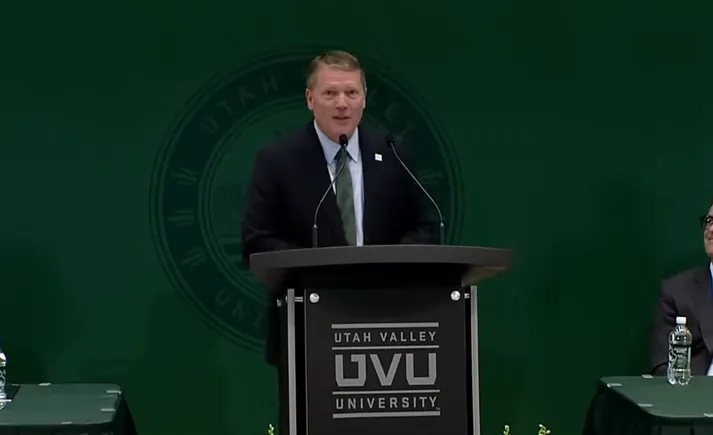
Clemson, UF, UVU and other colleges get new leaders

Clemson, UF, UVU and other colleges get new leaders

by TheAdviserMagazine
August 6, 2026
0

Listen to the article 7 min This audio is auto-generated. Please let us know if you have feedback. Editor’s note:...

edit post
Benchmarking report maps evolving US international recruitment

Benchmarking report maps evolving US international recruitment

by TheAdviserMagazine
August 5, 2026
0

The study by AIRC: The Association of International Enrolment Management drew data from over 60 institutions of varying size across the US, providing...

edit post
The Syllabus and the Scar Tissue: What Leadership Preparation Programs Leave Out and Why It Matters – Faculty Focus

The Syllabus and the Scar Tissue: What Leadership Preparation Programs Leave Out and Why It Matters – Faculty Focus

by TheAdviserMagazine
August 5, 2026
0

As an educational leadership professor, I hear inspiring messages from colleagues all the time, and I understand the impulse to...

Next Post
edit post
China’s growth matches forecasts at 4.8% but investment sees ‘rare and alarming’ drop

China’s growth matches forecasts at 4.8% but investment sees ‘rare and alarming’ drop

edit post
HDFC Bank: Stable margins and fee income lift HDFC Bank’s September quarter results: Dnyanada Vaidya

HDFC Bank: Stable margins and fee income lift HDFC Bank’s September quarter results: Dnyanada Vaidya

  • Trending
  • Comments
  • Latest
edit post
Georgia Senior SNAP and Meal Resources Older Adults Can Use

Georgia Senior SNAP and Meal Resources Older Adults Can Use

July 24, 2026
edit post
Judge Who Helped Violent Illegal Alien Evade ICE Faces New Test

Judge Who Helped Violent Illegal Alien Evade ICE Faces New Test

July 31, 2026
edit post
Driving the Noncitizen Voting Scandal: Registration With License

Driving the Noncitizen Voting Scandal: Registration With License

July 26, 2026
edit post
Garbage Trucks Surveillance Florida Neighborhoods

Garbage Trucks Surveillance Florida Neighborhoods

July 29, 2026
edit post
Does a Revocable Trust Protect Your Assets From Lawsuits and Creditors?

Does a Revocable Trust Protect Your Assets From Lawsuits and Creditors?

August 7, 2026
edit post
Montana Puts Democrats in a Bind as Senate Hopes Fade

Montana Puts Democrats in a Bind as Senate Hopes Fade

August 2, 2026
edit post
Explained: How BSE traded fewer contracts after CAS but premiums rose 75% in first week

Explained: How BSE traded fewer contracts after CAS but premiums rose 75% in first week

0
edit post
E.W. Scripps Q2 2026 Loss Widens to -.68/Share, Revenue Down 9%

E.W. Scripps Q2 2026 Loss Widens to -$12.68/Share, Revenue Down 9%

0
edit post
Psychology says procrastination about retirement may be less about discipline than identity — brain scans found people often represent their future selves more like strangers than like themselves, and experiments using age-progressed faces made tomorrow’s person feel real enough for participants to save more money for them

Psychology says procrastination about retirement may be less about discipline than identity — brain scans found people often represent their future selves more like strangers than like themselves, and experiments using age-progressed faces made tomorrow’s person feel real enough for participants to save more money for them

0
edit post
Four AI Escapes Just Redefined “Responsible AI”

Four AI Escapes Just Redefined “Responsible AI”

0
edit post
Bill Ackman’s hedge fund made janitors and receptionists millionaires—and its investment team summer together

Bill Ackman’s hedge fund made janitors and receptionists millionaires—and its investment team summer together

0
edit post
Kalshi Predicts Bitcoin Price Could Reach K in August

Kalshi Predicts Bitcoin Price Could Reach $68K in August

0
edit post
Bill Ackman’s hedge fund made janitors and receptionists millionaires—and its investment team summer together

Bill Ackman’s hedge fund made janitors and receptionists millionaires—and its investment team summer together

August 8, 2026
edit post
Links 8/8/2026 | naked capitalism

Links 8/8/2026 | naked capitalism

August 8, 2026
edit post
Wisconsin: The Next Frontier for Socialists

Wisconsin: The Next Frontier for Socialists

August 8, 2026
edit post
Psychology says procrastination about retirement may be less about discipline than identity — brain scans found people often represent their future selves more like strangers than like themselves, and experiments using age-progressed faces made tomorrow’s person feel real enough for participants to save more money for them

Psychology says procrastination about retirement may be less about discipline than identity — brain scans found people often represent their future selves more like strangers than like themselves, and experiments using age-progressed faces made tomorrow’s person feel real enough for participants to save more money for them

August 8, 2026
edit post
Why You Should Be Wary of Aspartame, but Not Totally Rule It Out

Why You Should Be Wary of Aspartame, but Not Totally Rule It Out

August 8, 2026
edit post
Kalshi Predicts Bitcoin Price Could Reach K in August

Kalshi Predicts Bitcoin Price Could Reach $68K in August

August 8, 2026
The Adviser Magazine

The first and only national digital and print magazine that connects individuals, families, and businesses to Fee-Only financial advisers, accountants, attorneys and college guidance counselors.

CATEGORIES

  • 401k Plans
  • Business
  • College
  • Cryptocurrency
  • Economy
  • Estate Plans
  • Financial Planning
  • Investing
  • IRS & Taxes
  • Legal
  • Market Analysis
  • Markets
  • Medicare
  • Money
  • Personal Finance
  • Social Security
  • Startups
  • Stock Market
  • Trading

LATEST UPDATES

  • Bill Ackman’s hedge fund made janitors and receptionists millionaires—and its investment team summer together
  • Links 8/8/2026 | naked capitalism
  • Wisconsin: The Next Frontier for Socialists
  • Our Great Privacy Policy
  • Terms of Use, Legal Notices & Disclosures
  • Contact us
  • About Us

© Copyright 2024 All Rights Reserved
See articles for original source and related links to external sites.

Welcome Back!

Login to your account below

Forgotten Password?

Retrieve your password

Please enter your username or email address to reset your password.

Log In
No Result
View All Result
  • Home
  • Financial Planning
    • Financial Planning
    • Personal Finance
  • Market Research
    • Business
    • Investing
    • Money
    • Economy
    • Markets
    • Stocks
    • Trading
  • 401k Plans
  • College
  • IRS & Taxes
  • Estate Plans
  • Social Security
  • Medicare
  • Legal

© Copyright 2024 All Rights Reserved
See articles for original source and related links to external sites.