No Result
View All Result
SUBMIT YOUR ARTICLES
  • Login
Saturday, August 8, 2026
TheAdviserMagazine.com
  • Home
  • Financial Planning
    • Financial Planning
    • Personal Finance
  • Market Research
    • Business
    • Investing
    • Money
    • Economy
    • Markets
    • Stocks
    • Trading
  • 401k Plans
  • College
  • IRS & Taxes
  • Estate Plans
  • Social Security
  • Medicare
  • Legal
  • Home
  • Financial Planning
    • Financial Planning
    • Personal Finance
  • Market Research
    • Business
    • Investing
    • Money
    • Economy
    • Markets
    • Stocks
    • Trading
  • 401k Plans
  • College
  • IRS & Taxes
  • Estate Plans
  • Social Security
  • Medicare
  • Legal
No Result
View All Result
TheAdviserMagazine.com
No Result
View All Result
Home Market Research Business

Deutsche Bank on ‘the summer AI turned ugly’: ‘more sober’ than the dotcom bubble, with som troubling data-center math

by TheAdviserMagazine
11 months ago
in Business
Reading Time: 25 mins read
A A
Deutsche Bank on ‘the summer AI turned ugly’: ‘more sober’ than the dotcom bubble, with som troubling data-center math
Share on FacebookShare on TwitterShare on LInkedIn


Deutsche Bank analysts have been watching Amazon Prime, it seems. Specifically, the “breakout” show of the summer, “The Summer I Turned Pretty.” In the AI sphere, analysts Adrian Cox and Stefan Abrudan wrote, it was the summer AI “turned ugly,” with several emerging themes that will set the course for the final quarter of the year. Paramount among them: The rising fear over whether AI has driven Big Tech stocks into the kind of frothy territory that precedes a sharp drop.

The AI news cycle of the summer captured themes including the challenge of starting a career, the importance of technology in the China/U.S. trade war, and mounting anxiety about the impact of the technology. But in terms of finance and investing, Deutsche Bank sees markets “on edge” and hoping for a soft landing amid bubble fears. In part, it blames tech CEOs for egging on the market with overpromises, leading to inflated hopes and dreams, many spurred on by tech leaders’ overpromises. It also sees a major impact from the venture capital space, boosting startups’ valuations, and from the lawyers who are very busy filing lawsuits for all kinds of AI players. It’s ugly out there. But the market is actually “more sober” in many ways than the situation from the late 1990s, the German bank argues.

Still, Wall Street is not Main Street, and Deutsche Bank notes troubling math about the data centers sprouting up on the outskirts of your town. Specifically, the bank flags a back-of-the-envelope analysis from hedge fund Praetorian Capital that suggests hyperscalers’ massive data center investments could be setting up the market for negative returns, echoing past cycles of “capital destruction.”

AI hype and market volatility

AI has captured the market’s imagination, with Cox and Abrudan noting, “it’s clear there is a lot of hype.” Web searches for AI are 10 times as high as they ever were for crypto, the bank said, citing Google Trends data, while it also finds that S&P 500 companies mentioned “AI” over 3,300 times in their earnings calls this past quarter.

Stock valuations overall have soared alongside the “Magnificent Seven” tech firms, which collectively comprise a third of the S&P 500’s market cap. (The most magnificent: Nvidia, now the world’s most valuable company at a market cap exceeding $4 trillion.) Yet Deutsche Bank points out that today’s top tech players have healthier balance sheets and more resilient business models than the high flyers of the dotcom era.

By most ratios, the bank said, valuations “still look more sober than those for hot stocks at the height of the dot-com bubble,” when the Nasdaq more than tripled in less than 18 months to March 2000, then lost 75% of its value by late 2002. By price-to-earnings ratio, Alphabet and Meta are in the mid-20x range, while Amazon and Microsoft trade in the mid-30x range. By comparison, Cisco surpassed 200x during the dotcom bubble, and even Microsoft reached 80x. Nvidia is “only” 50x, Deutsche Bank noted.

Those data centers, though

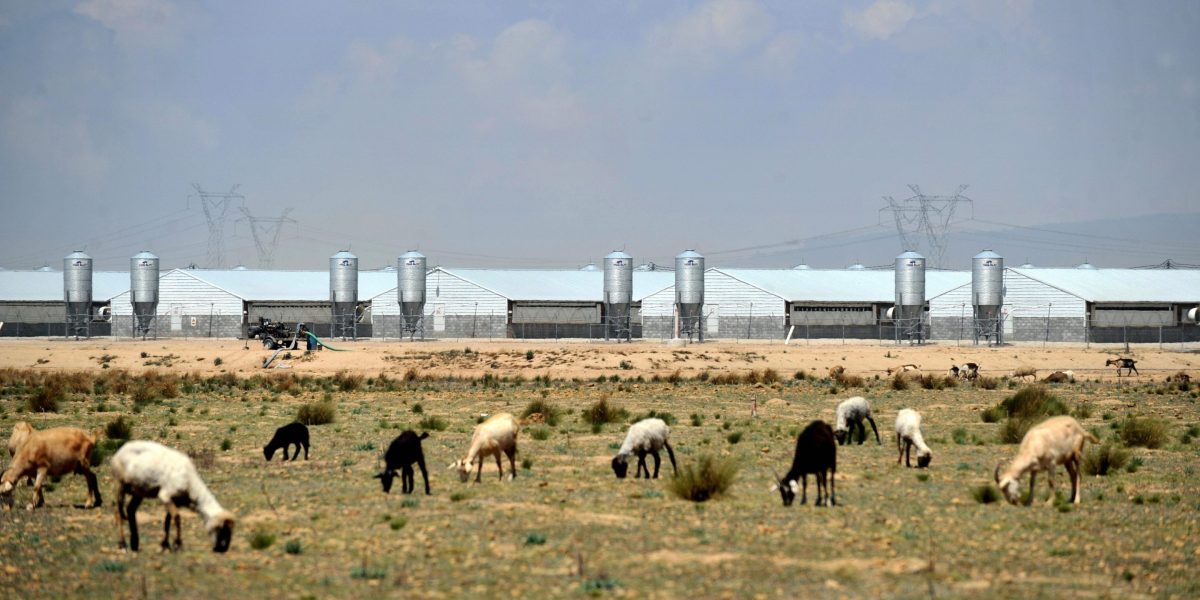
Despite the relative restraint in share prices, AI’s real risk may be lurking away from its stock-market valuations, in the economics of its infrastructure. Deutsche Bank cites a blog post by Praetorian Capital “that has been doing the rounds.” The post in “Kuppy’s Korner,” named for the fund’s CEO Harris “Kuppy” Kupperman, estimates that hyperscalers’ total data-center spending for 2025 could hit $400 billion, and the bank notes that is roughly the size of the GDP of Malaysia or Egypt. The problem, according to the hedge fund, is that the data centers will depreciate by roughly $40 billion per year, while they currently generate no more than $20 billion of annual revenue. How is that supposed to work?

“Now, remember, revenue today is running at $15 to $20 billion,” the blog post says, explaining that revenue needs to grow at least tenfold just to cover the depreciation. Even assuming future margins rise to 25%, the blog post estimates that the sector would require a stunning $160 billion in annual revenue from the AI powered by those data centers just to break even on depreciation—and nearly $480 billion to deliver a modest 20% return on invested capital. For context, even giants like Netflix and Microsoft Office 365 at their peaks brought in less than a fraction of that figure. Even at that level, “you’d need $480 billion of AI revenue to hit your target return … $480 billion is a LOT of revenue for guys like me who don’t even pay a monthly fee today for the product.” Going from $20 billion to $480 billion could take a long time, if ever, is the implication, and sometime before the big AI platforms reach those levels, their earnings, and presumably their shares, could take a hit.

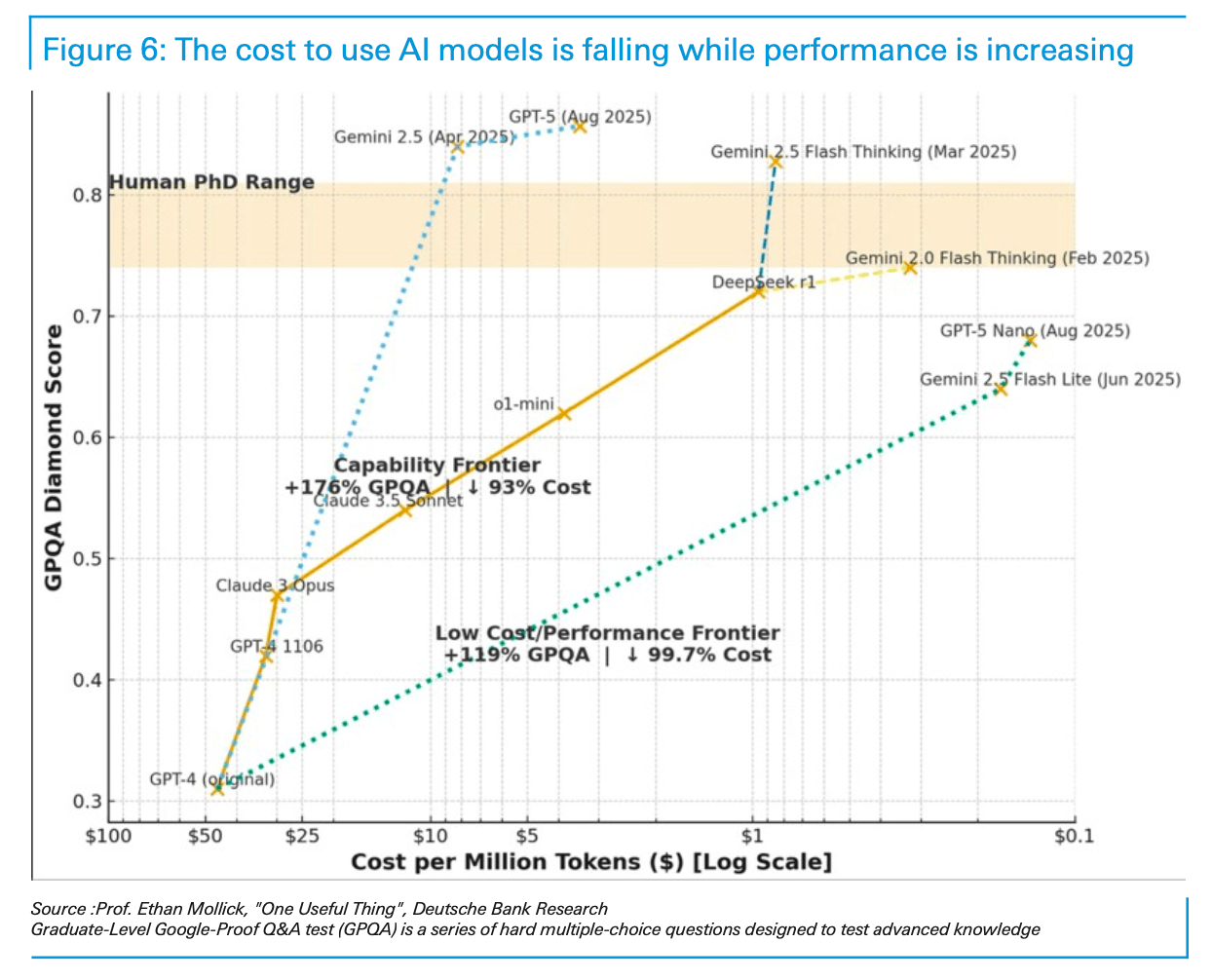
Deutsche Bank itself isn’t as pessimistic. The bank notes that the data-center buildout is producing a greatly reduced cost for each use of an AI model, as startups are reaching “meaningful scale in cloud consumption.” Also, consumer AI such as ChatGPT and Gemini is growing fast, with OpenAI saying in August that ChatGPT had over 700 million weekly users, plus 5 million paying business users, up from 3 million three months earlier. The cost to query an AI model (subsidized by the venture capital sector, to be sure) has fallen by around 99.7% in the two years since the launch of ChatGPT and is still headed downward.
Echoes of prior bubbles

Praetorian Capital draws two historical parallels to the current situation: the dotcom era’s fiber buildout, which led to the bankruptcy of Global Crossing, and the more recent capital bust of shale oil. In each case, the underlying technology is real and transformative—but overzealous spending with little regard for returns could leave investors holding the bag if progress stalls.

The “arms race” mentality now gripping the hyperscalers’ massive capex buildout mirrors the capital intensity of those past crises, and as Praetorian notes, “even the MAG7 will not be immune” if shareholder patience runs out. Per Kuppy’s Korner, “the megacap tech names are forced to lever up to keep buying chips, after having outrun their own cash flows; or they give up on the arms race, writing off the past few years of capex … Like many things in finance, it’s all pretty obvious where this will end up, it’s the timing that’s the hard part.”

This cycle, Deutsche Bank argues, is being sustained by robust earnings and more conservative valuations than the dotcom era, but “periodic corrections are welcome, releasing some steam from the system and guarding against complacency.” If revenue growth fails to keep up with depreciation and replacement needs, investors may force a harsh reckoning—one characterized not by spectacular innovation but by a slow realization of negative returns.


Fortune Global Forum returns Oct. 26–27, 2025 in Riyadh. CEOs and global leaders will gather for a dynamic, invitation-only event shaping the future of business. Apply for an invitation.


Source link

Tags: bankBubbledatacenterDeutschedotcomMathsobersomsummertroublingTurnedugly
ShareTweetShare
Previous Post

Elliott’s plan for PepsiCo includes investing in some of its iconic brands, shedding others

Next Post

Why Do Some Retirees Stop Wearing Jewelry Altogether?

Related Posts

edit post
Trump tries again to fire Fed governor Lisa Cook, renewing battle over central bank independence

Trump tries again to fire Fed governor Lisa Cook, renewing battle over central bank independence

by TheAdviserMagazine
August 7, 2026
0

The Trump administration is moving ahead with its efforts to fire Federal Reserve governor Lisa Cook, two months after the...

edit post
Meet the 82-year-old Kentucky grandma who turned down M to turn her farm into a data center

Meet the 82-year-old Kentucky grandma who turned down $26M to turn her farm into a data center

by TheAdviserMagazine
August 7, 2026
0

Ida Huddleston has lived on the same stretch of farmland outside Maysville, Ky., since she was 16. She and her...

edit post
US stocks: S&P closes at record high as soft jobs report eases rate-hike concerns

US stocks: S&P closes at record high as soft jobs report eases rate-hike concerns

by TheAdviserMagazine
August 7, 2026
0

U.S. stocks advanced on Friday, with the S&P closing at a record high to cap off a strong week of...

edit post
The deportation economy is backfiring on American workers, top economist warns

The deportation economy is backfiring on American workers, top economist warns

by TheAdviserMagazine
August 7, 2026
0

As the Trump administration continues to purge hundreds of thousands of workers from the country, Americans aren’t simply taking their...

edit post
CoreWeave’s CEO Sells Company Stock Worth .2 Million. Here’s What That Means for Investors.

CoreWeave’s CEO Sells Company Stock Worth $28.2 Million. Here’s What That Means for Investors.

by TheAdviserMagazine
August 7, 2026
0

Michael N. Intrator, Chief Executive Officer and President of CoreWeave, Inc. (NASDAQ:CRWV), sold ~308,000 shares of Class A Common Stock...

edit post
Palantir CEO drops 11-word bombshell for stock market investors

Palantir CEO drops 11-word bombshell for stock market investors

by TheAdviserMagazine
August 7, 2026
0

Software stocks have had a rough year. The fear driving them down is real: AI agents are getting good enough...

Next Post
edit post
ARK Invest Buys BitMine and Bullish Stock Across Flagship ETFs

ARK Invest Buys BitMine and Bullish Stock Across Flagship ETFs

edit post
Why Are More Seniors Requesting Anonymous Mailboxes?

Why Are More Seniors Requesting Anonymous Mailboxes?

  • Trending
  • Comments
  • Latest
edit post
Georgia Senior SNAP and Meal Resources Older Adults Can Use

Georgia Senior SNAP and Meal Resources Older Adults Can Use

July 24, 2026
edit post
New Jersey Tax-Relief Events: Three July Dates Near Seniors

New Jersey Tax-Relief Events: Three July Dates Near Seniors

July 13, 2026
edit post
Judge Who Helped Violent Illegal Alien Evade ICE Faces New Test

Judge Who Helped Violent Illegal Alien Evade ICE Faces New Test

July 31, 2026
edit post
2 judges suspended in separate cases after being indicted on criminal charges

2 judges suspended in separate cases after being indicted on criminal charges

July 9, 2026
edit post
Driving the Noncitizen Voting Scandal: Registration With License

Driving the Noncitizen Voting Scandal: Registration With License

July 26, 2026
edit post
Garbage Trucks Surveillance Florida Neighborhoods

Garbage Trucks Surveillance Florida Neighborhoods

July 29, 2026
edit post
Meet the 82-year-old Kentucky grandma who turned down M to turn her farm into a data center

Meet the 82-year-old Kentucky grandma who turned down $26M to turn her farm into a data center

0
edit post
Proof That Small Gains Add Up Over Time

Proof That Small Gains Add Up Over Time

0
edit post
The self-improvement industry sells becoming your best self through grit and mindset, but the large meta-analyses are deflating: grit turns out to be mostly conscientiousness renamed, and growth-mindset programmes move academic results only slightly

The self-improvement industry sells becoming your best self through grit and mindset, but the large meta-analyses are deflating: grit turns out to be mostly conscientiousness renamed, and growth-mindset programmes move academic results only slightly

0
edit post
Partner Portal Software: A Strategic Guide for 2026

Partner Portal Software: A Strategic Guide for 2026

0
edit post
Midterm Manipulation: How Both Parties Game the System

Midterm Manipulation: How Both Parties Game the System

0
edit post
Does a Revocable Trust Protect Your Assets From Lawsuits and Creditors?

Does a Revocable Trust Protect Your Assets From Lawsuits and Creditors?

0
edit post
The self-improvement industry sells becoming your best self through grit and mindset, but the large meta-analyses are deflating: grit turns out to be mostly conscientiousness renamed, and growth-mindset programmes move academic results only slightly

The self-improvement industry sells becoming your best self through grit and mindset, but the large meta-analyses are deflating: grit turns out to be mostly conscientiousness renamed, and growth-mindset programmes move academic results only slightly

August 8, 2026
edit post
Even China is finding economic growth harder to come by these days

Even China is finding economic growth harder to come by these days

August 7, 2026
edit post
All signs are pointing to the total and imminent collapse of the United States housing market.

All signs are pointing to the total and imminent collapse of the United States housing market.

August 7, 2026
edit post
Partner Portal Software: A Strategic Guide for 2026

Partner Portal Software: A Strategic Guide for 2026

August 7, 2026
edit post
nLIGHT Releases Q2 2026 Financial Results

nLIGHT Releases Q2 2026 Financial Results

August 7, 2026
edit post
Most advice on becoming happier assumes it is up to you, but the evidence is humbler: much of the variation is dispositional, the claim that 40 per cent sits within your control does not hold up, and what works best points outward, towards other people

Most advice on becoming happier assumes it is up to you, but the evidence is humbler: much of the variation is dispositional, the claim that 40 per cent sits within your control does not hold up, and what works best points outward, towards other people

August 7, 2026
The Adviser Magazine

The first and only national digital and print magazine that connects individuals, families, and businesses to Fee-Only financial advisers, accountants, attorneys and college guidance counselors.

CATEGORIES

  • 401k Plans
  • Business
  • College
  • Cryptocurrency
  • Economy
  • Estate Plans
  • Financial Planning
  • Investing
  • IRS & Taxes
  • Legal
  • Market Analysis
  • Markets
  • Medicare
  • Money
  • Personal Finance
  • Social Security
  • Startups
  • Stock Market
  • Trading

LATEST UPDATES

  • The self-improvement industry sells becoming your best self through grit and mindset, but the large meta-analyses are deflating: grit turns out to be mostly conscientiousness renamed, and growth-mindset programmes move academic results only slightly
  • Even China is finding economic growth harder to come by these days
  • All signs are pointing to the total and imminent collapse of the United States housing market.
  • Our Great Privacy Policy
  • Terms of Use, Legal Notices & Disclosures
  • Contact us
  • About Us

© Copyright 2024 All Rights Reserved
See articles for original source and related links to external sites.

Welcome Back!

Login to your account below

Forgotten Password?

Retrieve your password

Please enter your username or email address to reset your password.

Log In
No Result
View All Result
  • Home
  • Financial Planning
    • Financial Planning
    • Personal Finance
  • Market Research
    • Business
    • Investing
    • Money
    • Economy
    • Markets
    • Stocks
    • Trading
  • 401k Plans
  • College
  • IRS & Taxes
  • Estate Plans
  • Social Security
  • Medicare
  • Legal

© Copyright 2024 All Rights Reserved
See articles for original source and related links to external sites.